The Complete Guide to Modern Eyeglass Lenses
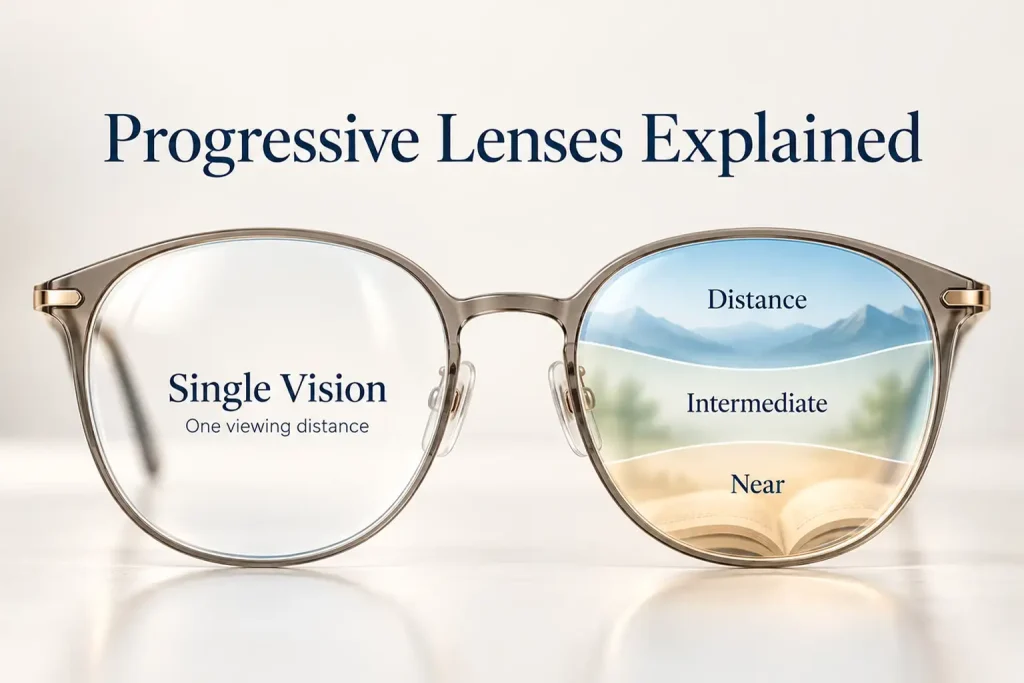
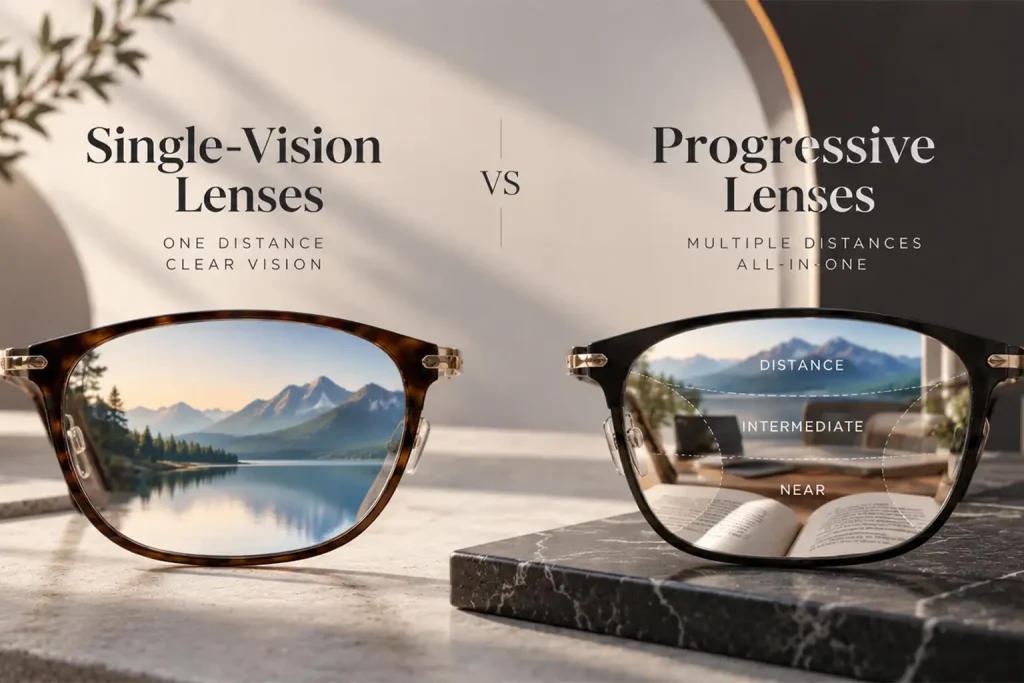
Choosing the right eyeglass lenses depends on your prescription, lifestyle, and how you use your glasses every day. Single vision lenses are designed for one viewing distance, while progressive lenses can support distance, intermediate, and near vision within a single pair of glasses.
Lens materials also matter. They can affect the thickness, weight, durability, and appearance of your glasses, especially if you have a stronger prescription. Additional options such as anti-reflective, UV-protective, photochromic, and other specialized treatments can further improve comfort and everyday performance.
By understanding the differences between eyeglass lens types, materials, and coatings, choosing the best lens for your vision needs becomes easier, whether you need glasses for reading, driving, computer work, outdoor activities, or everyday wear.
How Eyeglass Lenses Shape the Way You See
An eyeglass lens is an optical component positioned in front of the eye to control the way light enters the visual system.
For clear vision, incoming light must be focused accurately onto the retina at the back of the eye. When the natural optical system of the eye does not focus light in the correct location, objects may appear blurred at certain distances.
Prescription lenses compensate for these focusing errors by altering the path of incoming light before it reaches the eye. The result is clearer and more comfortable vision based on the wearer’s prescription.
Today’s lenses may also incorporate additional features intended to improve everyday use, including:
- Reduced reflections and glare
- Ultraviolet protection
- Improved resistance to minor scratches
- Enhanced comfort during digital activities
- Thinner and lighter lens designs
- Better visual performance across different viewing distances
Advances in digital lens production have also made it possible to manufacture lenses with considerably greater precision and personalization than traditional manufacturing techniques.
Understanding the Vision Problems Lenses Can Correct
Different prescriptions require different optical corrections. Some of the most common conditions corrected with eyeglasses include myopia, hyperopia, astigmatism, and presbyopia.
Myopia: Clear Near Vision, Blurred Distance Vision
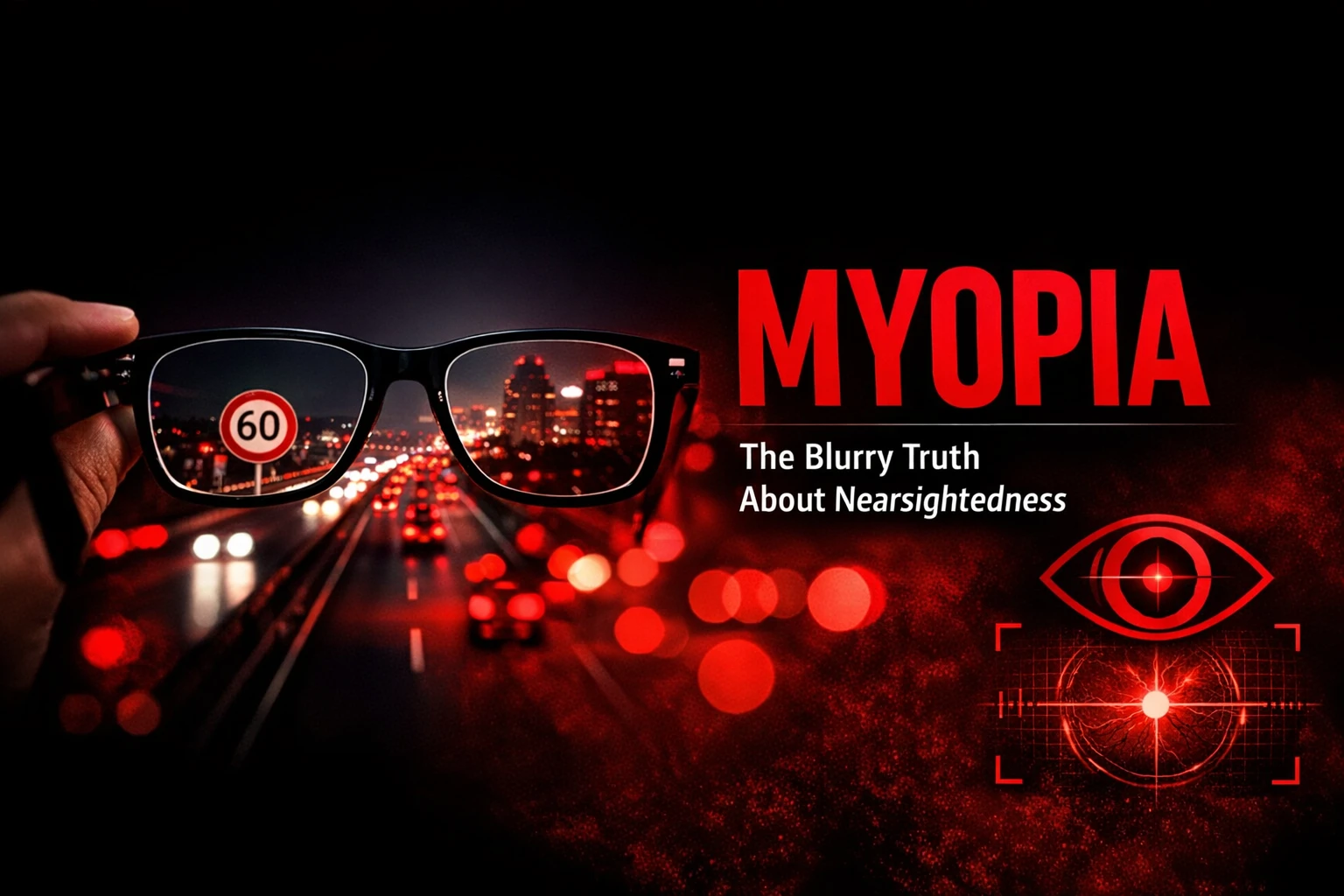
Myopia, commonly called nearsightedness, usually causes distant objects to appear blurry while objects at shorter distances remain clearer. Lenses prescribed for myopia modify incoming light so that the image can be focused more accurately on the retina.
Hyperopia: When Near Vision Becomes Difficult
Hyperopia, or farsightedness, can make focusing on nearby objects more difficult. Corrective lenses help adjust the optical focus so that near-vision tasks such as reading can become clearer and more comfortable.
Astigmatism and Uneven Visual Focus
Astigmatism is associated with irregular curvature within the eye’s optical system. Because light may not focus evenly, vision can appear blurred or distorted. Prescription lenses designed for astigmatism compensate for these irregularities and provide more stable visual correction.
Presbyopia and Age-Related Near Vision Changes
Presbyopia develops as the eye gradually loses some of its ability to focus at close distances with age. It commonly becomes noticeable around or after the age of 40. People experiencing presbyopia may require an optical solution that provides support for near vision or several viewing distances.
Exploring the Main Eyeglass Lens Designs
Lens design is one of the most important factors affecting how a pair of glasses performs. Different designs are intended for different visual tasks.
Single Vision Lenses for Everyday Correction
Single vision lenses contain one prescription power across the usable lens area. They may be prescribed specifically for:
- Distance vision
- Reading
- Computer work
- Other single-distance visual requirements
Because of their straightforward optical design, single vision lenses remain one of the most commonly used prescription lens options.
Progressive Lenses for Multiple Viewing Distances
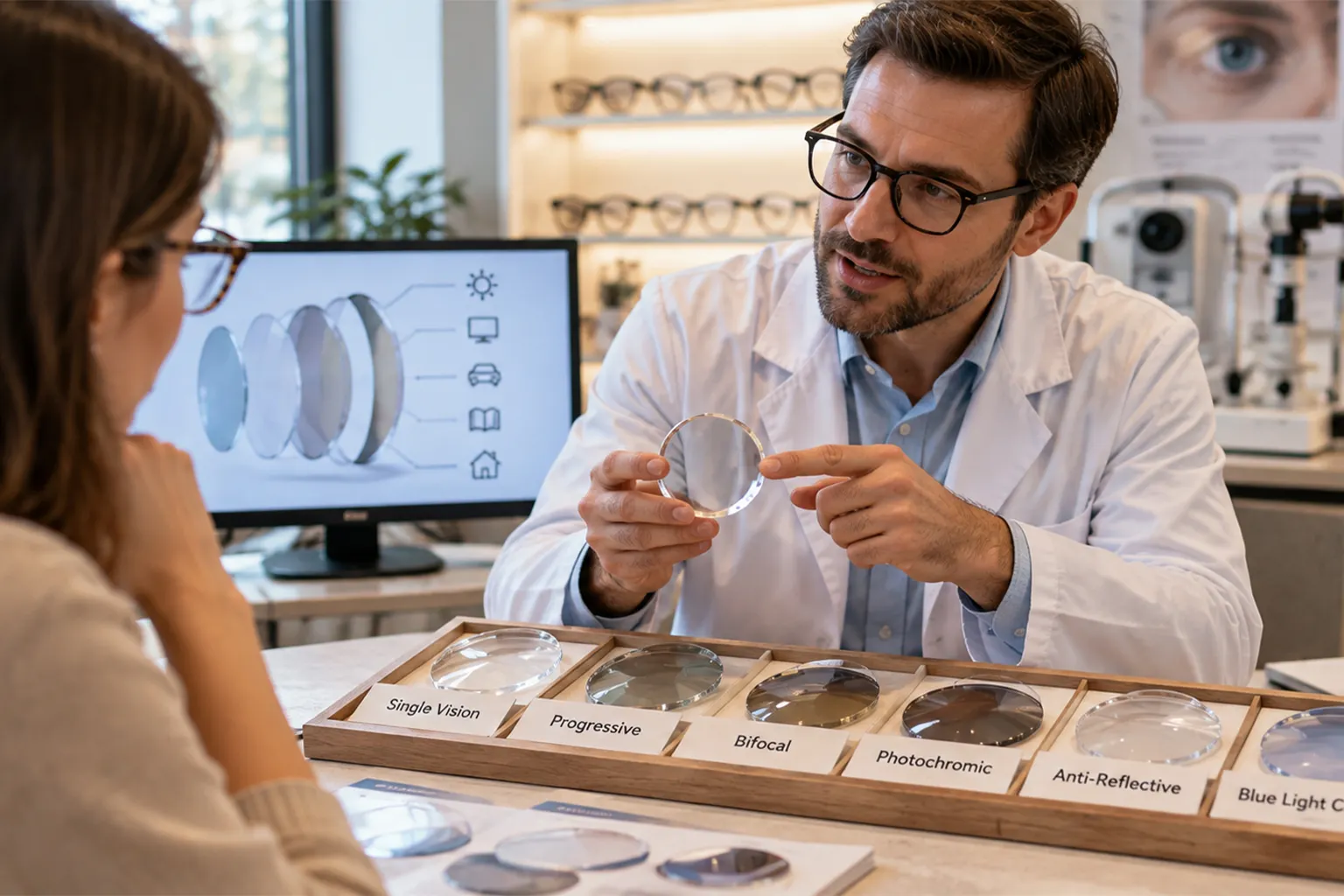
Progressive lenses are designed for people who need correction at more than one viewing distance. Instead of separating the lens into clearly visible sections, the optical power changes gradually from one area to another.
A progressive lens can provide correction for:
- Far vision
- Intermediate distances
- Near vision
This makes progressive lenses especially suitable for activities that require frequent changes in focus, such as driving, using a computer, checking a smartphone, and reading.
Another important difference between progressive and traditional bifocal designs is appearance. Progressive lenses do not have the visible dividing line normally associated with bifocals.
Bifocal Lenses and Dual-Zone Vision
Bifocal lenses use two distinct optical areas within one lens. In a typical design, the upper part of the lens supports distance vision, while another section is dedicated to near tasks.
Bifocals continue to be used for certain prescriptions, although progressive designs provide an alternative for wearers who prefer a gradual transition between viewing distances.
Photochromic Lenses for Changing Light Conditions
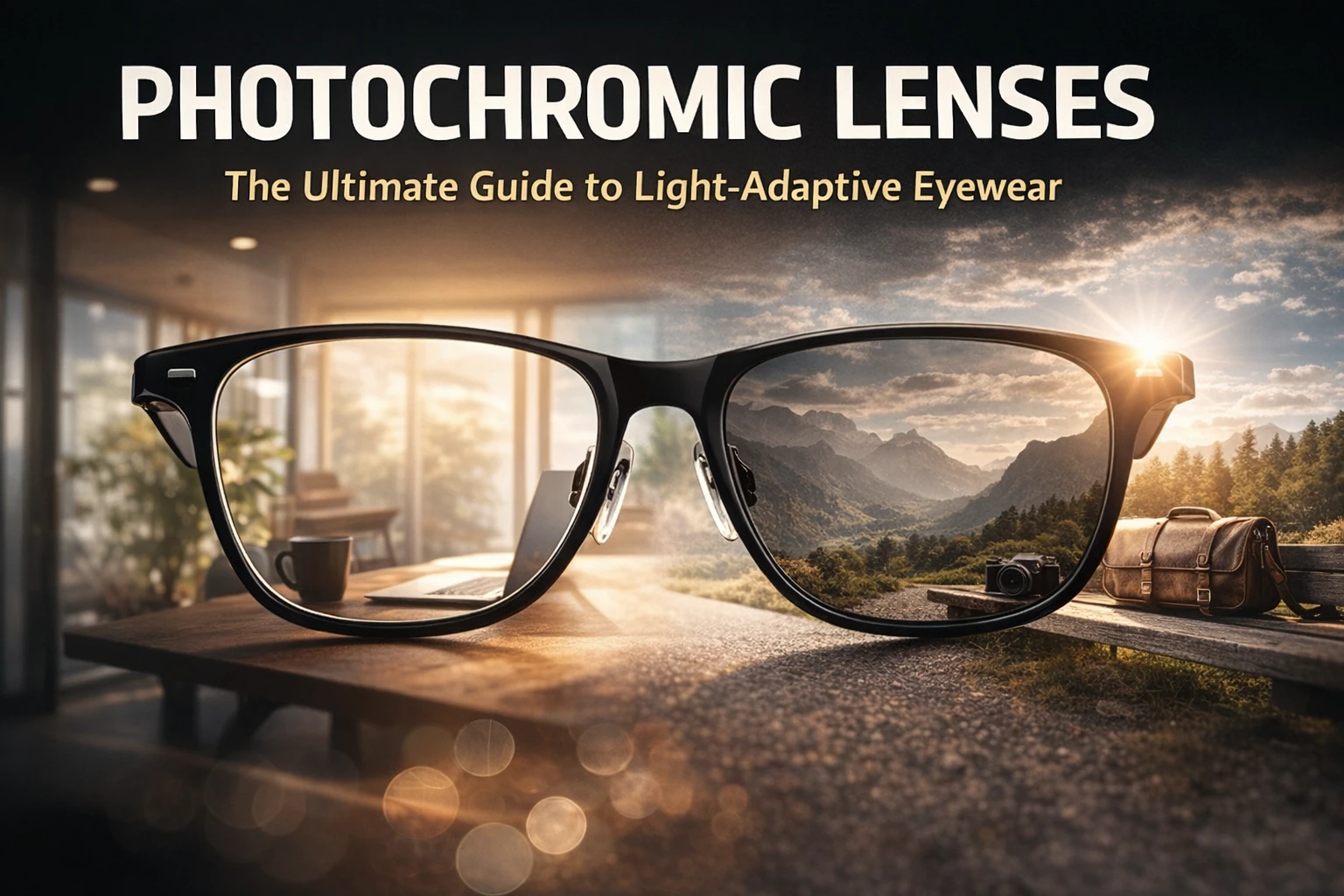
Photochromic lenses respond to changes in light conditions. They become darker when exposed to outdoor light and gradually return toward a clearer state indoors. For people who regularly move between indoor and outdoor environments, this adaptive characteristic can offer additional convenience.
Lens Options Designed for Digital Lifestyles
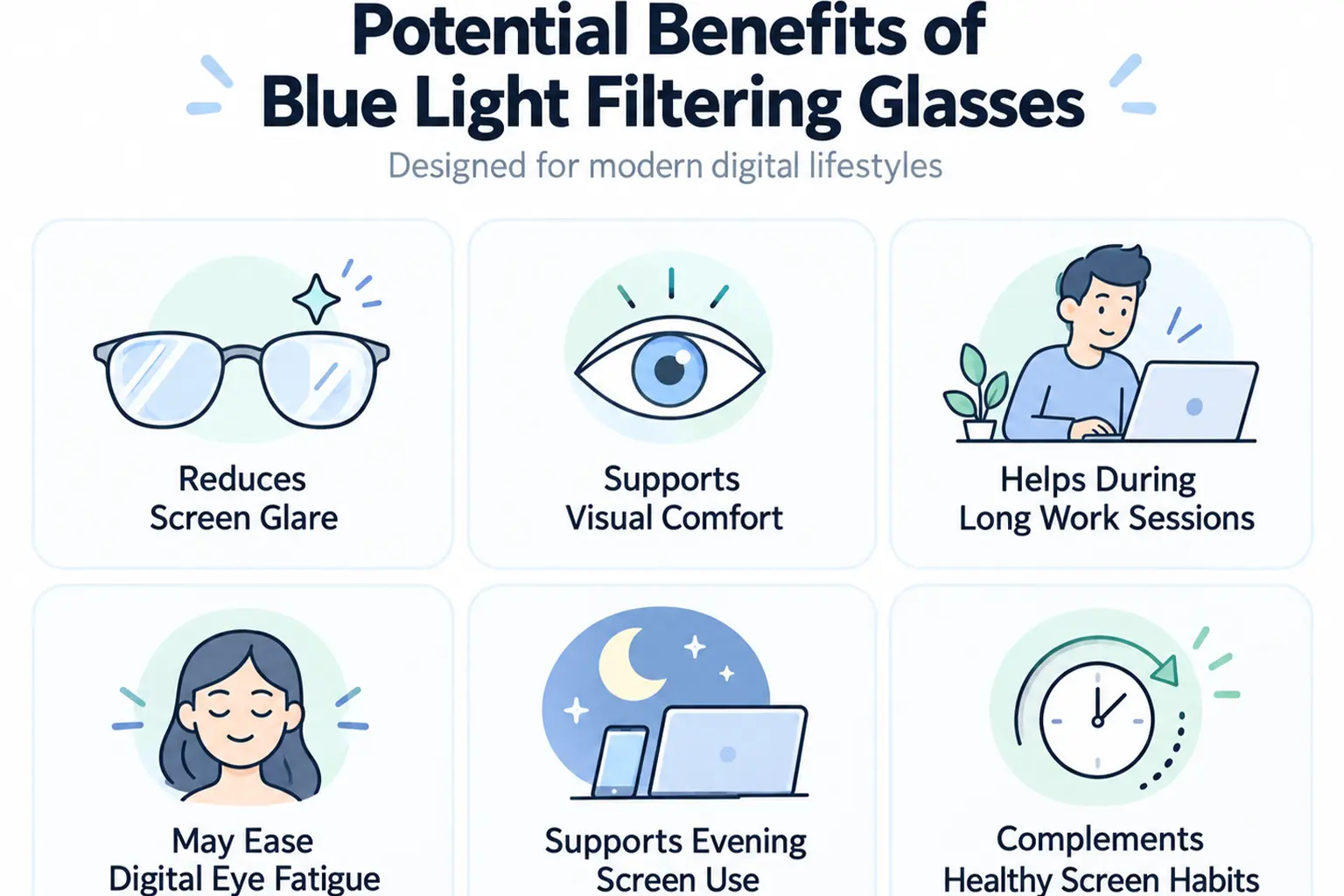
Extended use of computers, smartphones, tablets, and other digital displays has increased the amount of time many people spend looking at screens. Blue light filtering lens technologies are designed with digital visual comfort in mind and are frequently selected by people who spend considerable time using screens.
Common users include:
- Office professionals
- Students
- Gamers
- Frequent computer users
- People who regularly use smartphones and tablets
Lens selection for digital use should still be based on individual visual requirements and the recommendation of an eye-care professional.
Choosing the Right Lens Material
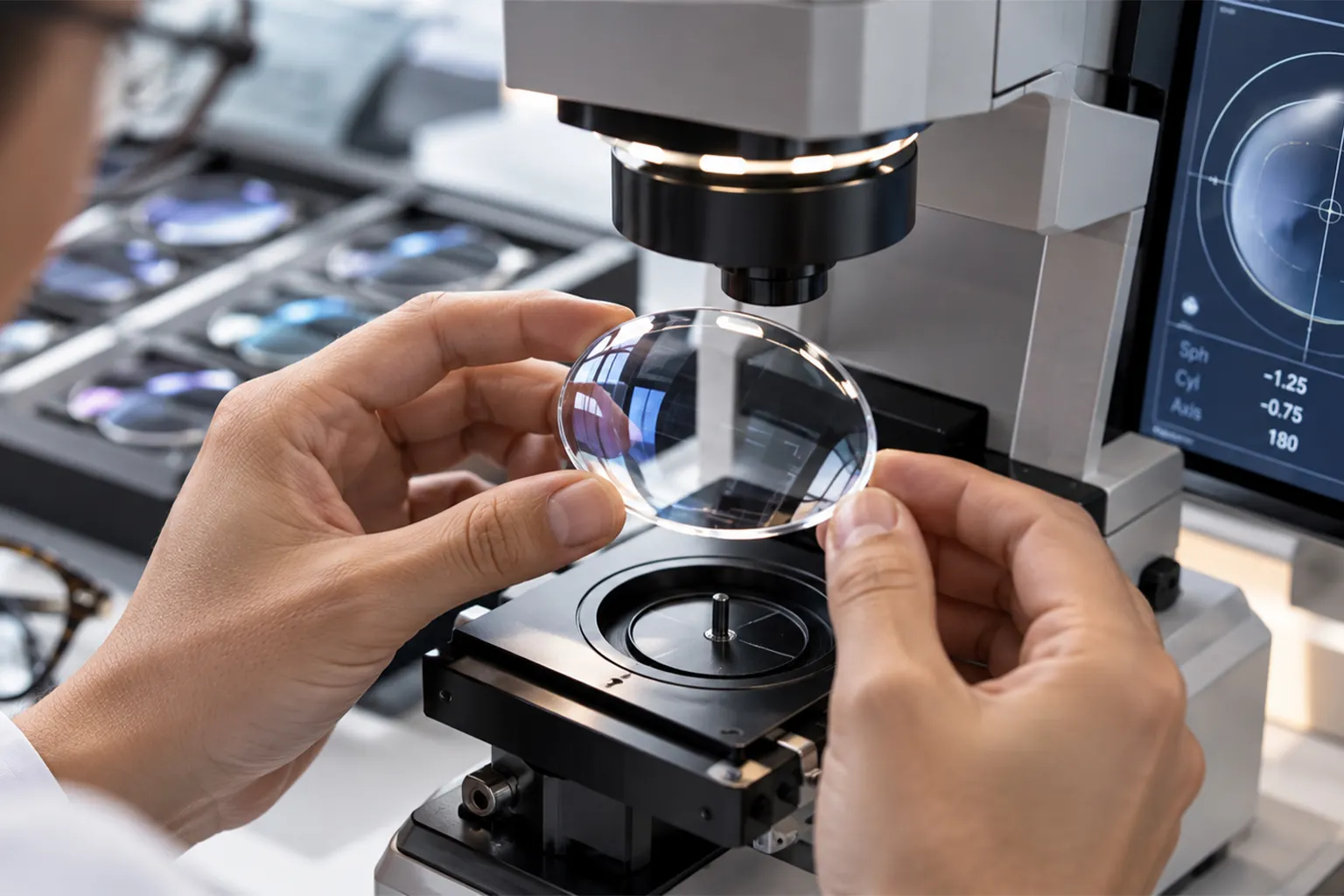
Two lenses with the same prescription can feel very different depending on the material from which they are produced. Material selection can affect lens thickness, weight, durability, and appearance.
Standard Plastic Lenses
Conventional plastic lenses offer a practical combination of light weight and affordability. They are suitable for many everyday prescriptions and continue to be widely used.
Polycarbonate for Lightweight Durability
Polycarbonate is known for its relatively high impact resistance and lighter construction. Because of these characteristics, it is often considered for applications such as:
- Children’s eyewear
- Sports glasses
- Eyewear used during active lifestyles
High-Index Lenses for Stronger Prescriptions
As prescription strength increases, conventional lens materials may become noticeably thicker. High-index materials are designed to bend light more efficiently, allowing stronger prescriptions to be produced with a thinner profile than many standard materials.
This can improve both the appearance and wearing comfort of glasses with higher prescriptions.
Lens Coatings That Improve Everyday Performance
The performance of an eyeglass lens is not determined only by its prescription and material. Different surface treatments can also influence durability, clarity, glare, and everyday comfort.
Reducing Glare with Anti-Reflective Coatings
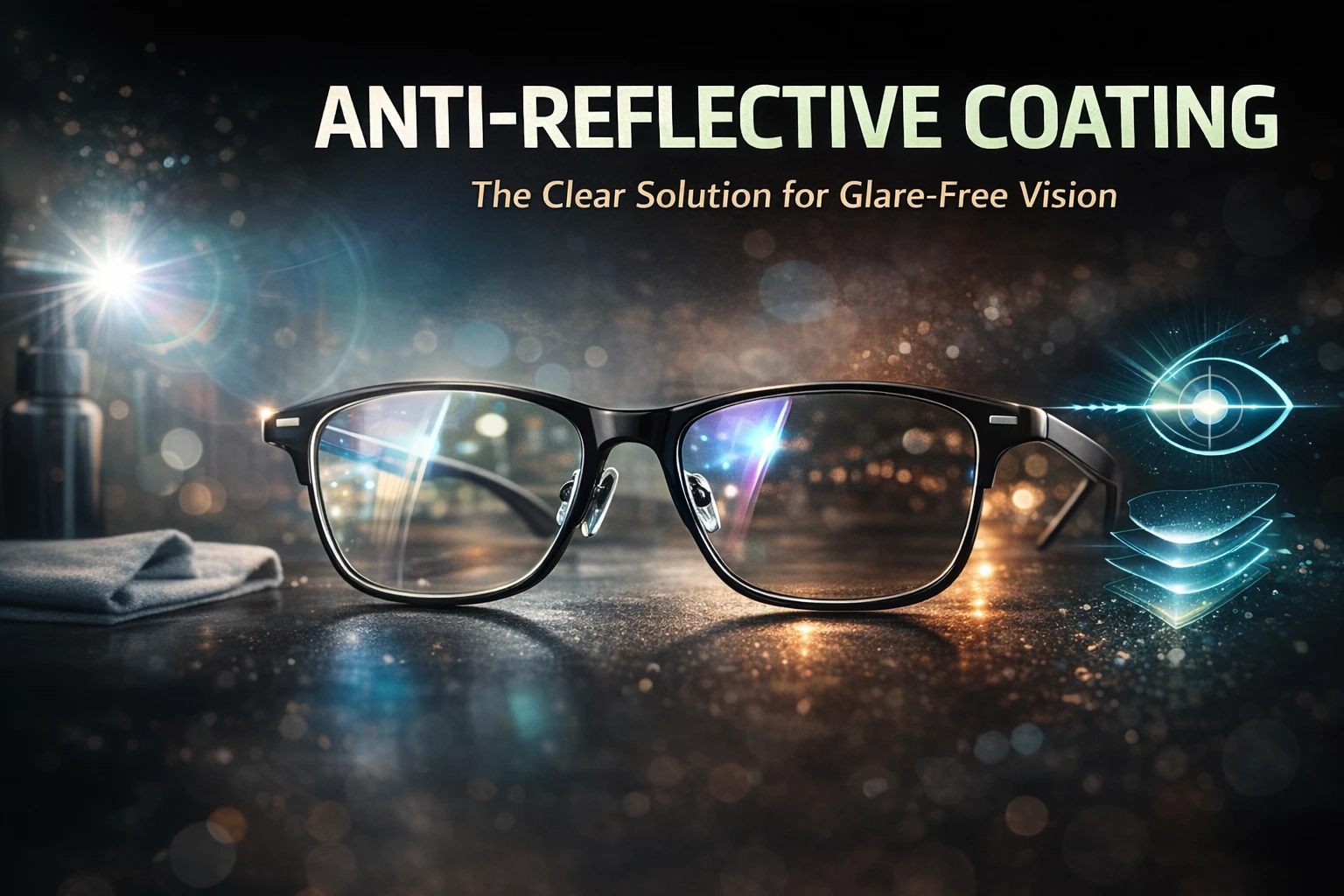
Reflections from artificial lighting, vehicle headlights, computer displays, and other light sources can interfere with visual comfort. An anti-reflective coating is designed to minimize unwanted reflections on the surfaces of the lens.
Potential advantages include improved lens transparency, reduced glare, more comfortable screen viewing, and better cosmetic appearance because the wearer’s eyes can be seen more clearly through the lenses.
Anti-reflective technology can also be particularly useful during nighttime driving when glare from headlights and street lighting becomes more noticeable.
Improving Durability with Scratch-Resistant Treatments
Eyeglass lenses are exposed to frequent handling and everyday wear. Scratch-resistant treatments add an additional protective surface intended to reduce minor damage during normal use.
They do not make lenses completely scratch-proof, but they can help improve durability when lenses are properly handled and cleaned.
UV Protection and Outdoor Eye Comfort
Ultraviolet protection is another important consideration when selecting lenses. Many modern lens materials and treatments are designed to reduce the amount of harmful ultraviolet radiation reaching the eyes.
For people who spend considerable time outdoors, UV protection can be an important feature to consider alongside prescription performance.
How Digital Technology Is Transforming Eyeglass Lenses
Lens manufacturing has evolved significantly from conventional production methods. Digital surfacing and freeform manufacturing allow the lens surface to be produced with a high degree of precision.
Depending on the lens design, prescription, and fitting parameters, modern manufacturing can provide benefits such as:
- More precise optical correction
- Improved clarity toward different areas of the lens
- Smoother transitions between viewing zones
- Greater personalization
- Better overall wearing comfort
This is especially relevant for advanced progressive lenses, where small differences in design and manufacturing accuracy can significantly affect the wearer’s experience.
Modern lens development is therefore increasingly focused not simply on correcting prescription power but on optimizing how the lens performs during real-world visual activities.
What to Consider Before Choosing Your Lenses
There is no single lens that is ideal for every wearer. The correct choice depends on a combination of prescription requirements, daily activities, and personal preferences.
Your Prescription
The type and strength of the prescription can influence which lens designs and materials are most appropriate. Higher prescriptions, for example, may benefit from materials designed to reduce lens thickness.
Your Daily Visual Routine
Someone who spends most of the day using a computer may have different visual requirements from someone who drives frequently or works primarily outdoors. Understanding how the glasses will actually be used is therefore an important part of the selection process.
Screen and Computer Use
Frequent use of digital devices can increase the importance of comfortable intermediate vision and appropriate lens treatments.
Outdoor Activities
People who spend significant time outdoors may place greater importance on ultraviolet protection or adaptive lens technologies.
Driving Needs
Glare, reflections, and visual clarity can become especially important during driving, particularly at night. Anti-reflective treatments may therefore be worth considering for drivers.
Lens Thickness and Weight
For stronger prescriptions, lens material can have a noticeable effect on the final thickness and weight of the glasses. Choosing an appropriate index can make the finished eyewear look and feel more refined.
Budget and Lens Features
Different lens designs, materials, coatings, and customization technologies can affect cost. The goal should be to identify the features that provide meaningful benefits for the wearer’s actual visual requirements rather than selecting features based only on price or marketing terminology.
Why Lens Quality Matters as Much as Frame Design
Frames naturally receive a lot of attention because they determine the visible style of the glasses. However, the optical performance of the eyewear depends primarily on the lenses.
Lens quality can influence:
- Clarity
- Visual comfort
- Adaptation
- Peripheral vision
- Lens thickness
- Glare
- Long-term satisfaction with the glasses
For this reason, selecting eyewear based exclusively on the frame may overlook the component that has the greatest impact on everyday vision. A well-designed frame combined with correctly selected lenses creates a much more complete optical solution.
The Shift Toward Personalized Optical Solutions
Visual habits have changed considerably. People now move continuously between smartphones, computer displays, dashboards, printed material, indoor environments, and outdoor spaces.
As a result, modern lenses increasingly need to support a broader range of visual tasks. Advanced optical technologies such as digitally surfaced and freeform lenses make it possible to develop more sophisticated lens geometries and optimize visual performance for specific requirements.
Brands such as Smart Vision focus on developing optical solutions that combine modern lens manufacturing with the visual demands of contemporary lifestyles.
Common Questions About Eyeglass Lenses
What is the difference between single vision and progressive lenses?
Single vision lenses generally provide one prescription correction throughout the lens, while progressive lenses provide several viewing distances through a gradual change in optical power.
Are thinner lenses always better?
Not necessarily. Lens thickness depends on factors including prescription, lens material, frame dimensions, and lens design. High-index materials can be useful for stronger prescriptions, but the most suitable material should be selected according to individual requirements.
What does anti-reflective coating do?
Anti-reflective technology reduces reflections from the lens surfaces. This can improve transparency and visual comfort, particularly under artificial lighting or during nighttime driving.
Who may benefit from photochromic lenses?
Photochromic lenses can be convenient for people who frequently transition between indoor and outdoor environments because the lenses automatically respond to changing light conditions.
Why is lens material important?
Lens material can influence thickness, weight, impact resistance, appearance, and wearing comfort. The ideal material therefore depends on the prescription and intended use.
Making a Smarter Choice for Everyday Vision
Understanding eyeglass lenses makes it easier to make informed decisions when purchasing new eyewear.
Instead of viewing all prescription lenses as essentially the same, it is useful to consider the complete combination of lens design, material, optical technology, surface treatments, and individual visual requirements.
Single vision, progressive, bifocal, photochromic, and other modern lens solutions are designed for different needs. Likewise, material choices such as standard plastic, polycarbonate, and high-index options can influence the final appearance and comfort of the glasses.
Modern manufacturing has also made lens personalization increasingly sophisticated, allowing optical solutions to be designed around a wider range of everyday activities.
Ultimately, the best eyeglass lens is not simply the most advanced or expensive option. It is the one that appropriately matches the wearer’s prescription, lifestyle, visual habits, and comfort requirements.
How Eyeglass Lenses Shape the Way You See
How Eyeglass Lenses Shape the Way You See