How to Know What Glasses You Need: A Guide to Choosing the Right Lenses
Finding the Right Glasses Starts With Your Lifestyle
Choosing glasses is often treated as a simple question of whether your vision is blurry. In reality, the process is more personal than that.
Two people can have similar prescriptions and still need completely different glasses because their work, screen habits, driving routines, age, visual priorities, and daily environments are different.
That is why the better question is not simply:
“Do I need glasses?”
It is:
“What kind of visual support does my everyday life actually require?”
A professional eye examination is always necessary for an accurate prescription, but understanding how your eyes behave throughout the day can make the conversation with your optometrist much more useful.
This guide looks at glasses from a practical perspective: what your symptoms may be telling you, how daily activities affect lens choice, and how modern types of eyeglass lenses can be matched to different visual situations.
Your Vision Problems May Appear Before You Notice Blurriness
Many people assume they only need glasses when they can no longer read a sign or see small text clearly.
But reduced visual comfort often begins earlier.
Your eyes may still be able to produce a clear image while using extra effort to do so. That effort can appear as fatigue, headaches, concentration problems, or discomfort rather than obvious blurred vision.
Common warning signs include:
-
Repeated headaches after reading or computer work
-
Needing to move text closer or farther away
-
Squinting when looking across a room
-
Difficulty recognizing road signs at night
-
Tired or heavy eyes in the evening
-
Trouble switching focus between a phone and distant objects
-
Feeling that one eye sees more clearly than the other
-
Increasing dependence on brighter light for reading
Instead of judging your vision only by sharpness, pay attention to how much effort your eyes require.
Start With the Distance That Gives You Trouble
One of the easiest ways to understand your visual needs is to think about where the problem happens.
When Distant Objects Lose Definition
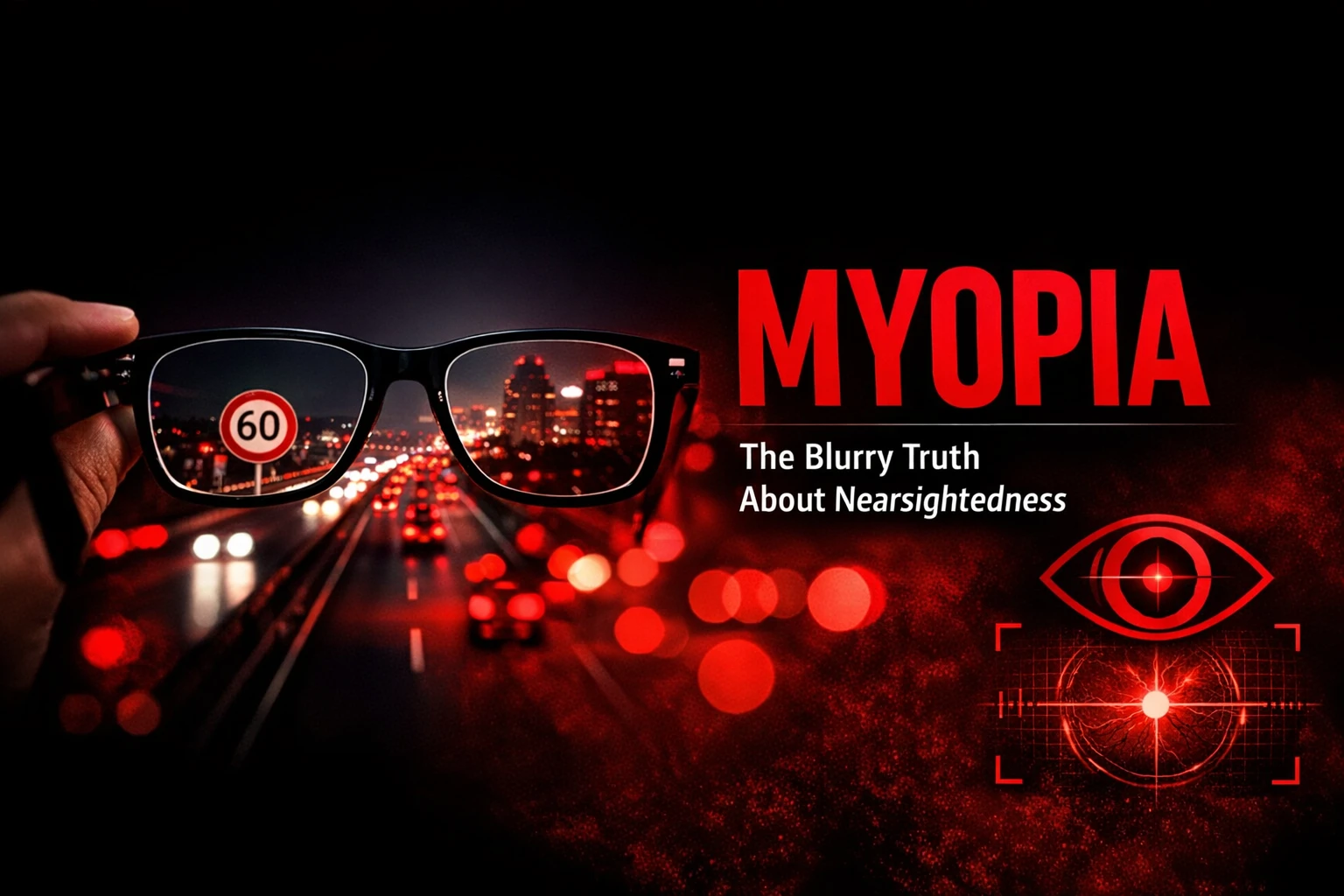
If road signs, television subtitles, presentation screens, or faces across a room appear unclear, the problem may be related to myopia or another distance-vision refractive error.
Some people notice this first while driving.
Others notice it in classrooms, meetings, cinemas, or outdoor environments.
Distance blur does not automatically mean that you should simply buy “distance glasses.” Your prescription, astigmatism, visual balance between the two eyes, and daily activities should also be considered.
When Near Work Becomes More Difficult
If books, menus, phones, labels, or close-up tasks become uncomfortable, several factors may be involved.
For younger users, hyperopia or focusing issues may contribute.
For adults, especially from the early-to-mid forties onward, presbyopia becomes increasingly common as the natural focusing ability of the eye changes.
You may notice yourself:
-
Holding your phone farther away
-
Increasing screen font size
-
Searching for brighter light
-
Taking more breaks while reading
These changes are useful clues during an eye examination.
When Vision Feels Distorted Rather Than Simply Blurry
Astigmatism can affect both near and distance vision.
Instead of one specific viewing distance becoming blurry, objects may appear stretched, shadowed, uneven, or slightly distorted.
Nighttime lights may also appear less defined.
Because this type of visual problem may occur together with myopia or hyperopia, a professional refraction test is important.
Think About Your Day as a Series of Viewing Zones
A useful way to select glasses is to divide your day into visual distances.
For example, someone working in an office may spend the day moving between:
30–40 cm: smartphone or documents
60–80 cm: laptop or desktop screen
2–5 meters: coworkers, meetings, room surroundings
Long distance: driving, walking, outdoor activities
If your day involves only one dominant distance, a simple lens solution may work very well.
If you constantly move between several distances, a more advanced lens design may provide greater convenience.
This is one reason two people with similar prescriptions may receive different lens recommendations.
Match the Lens to the Job You Expect It to Do
Once your prescription is known, lens selection becomes a question of purpose.
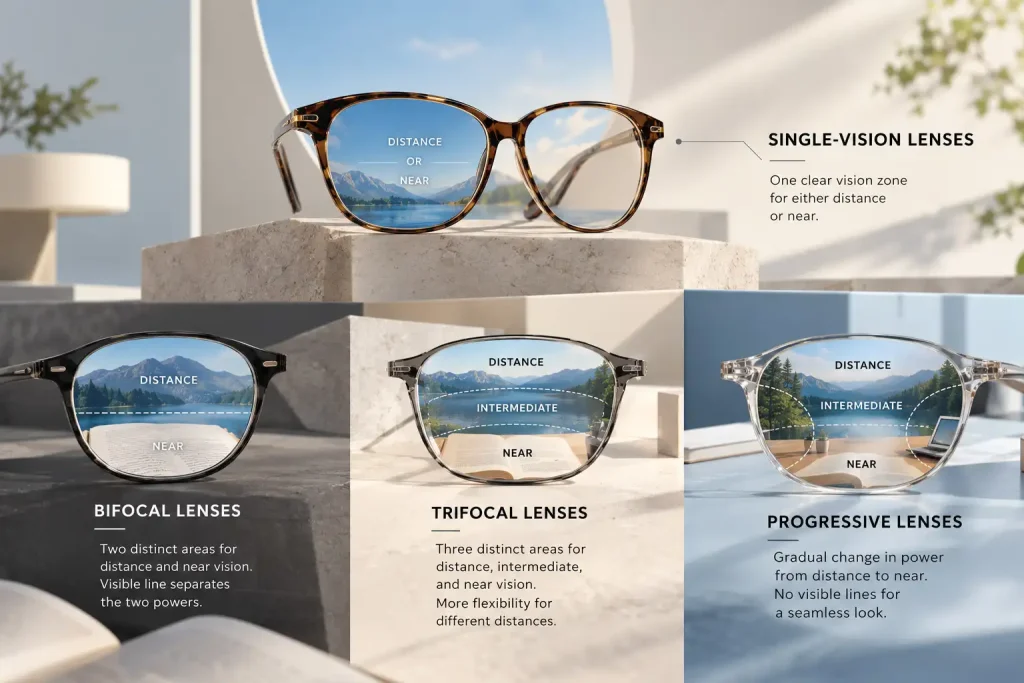
One Main Viewing Distance: Single Vision Lenses
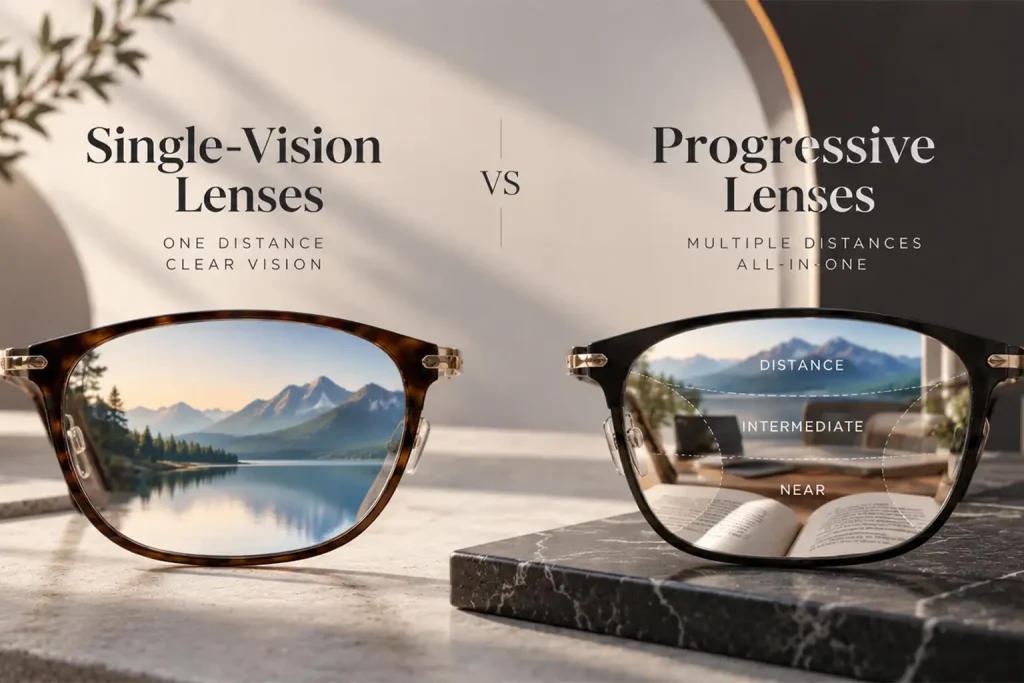
Single vision lenses contain one main optical correction across the lens.
Depending on the prescription, they may be used for:
They are often an efficient choice when only one viewing range requires correction.
Single vision does not necessarily mean “basic.” Modern digital surfacing, aspheric designs, optimized materials, and premium coatings can substantially affect the final wearing experience.
When One Pair Needs to Handle Several Distances
For people who need both distance and near correction, changing between separate pairs of glasses can become inconvenient.
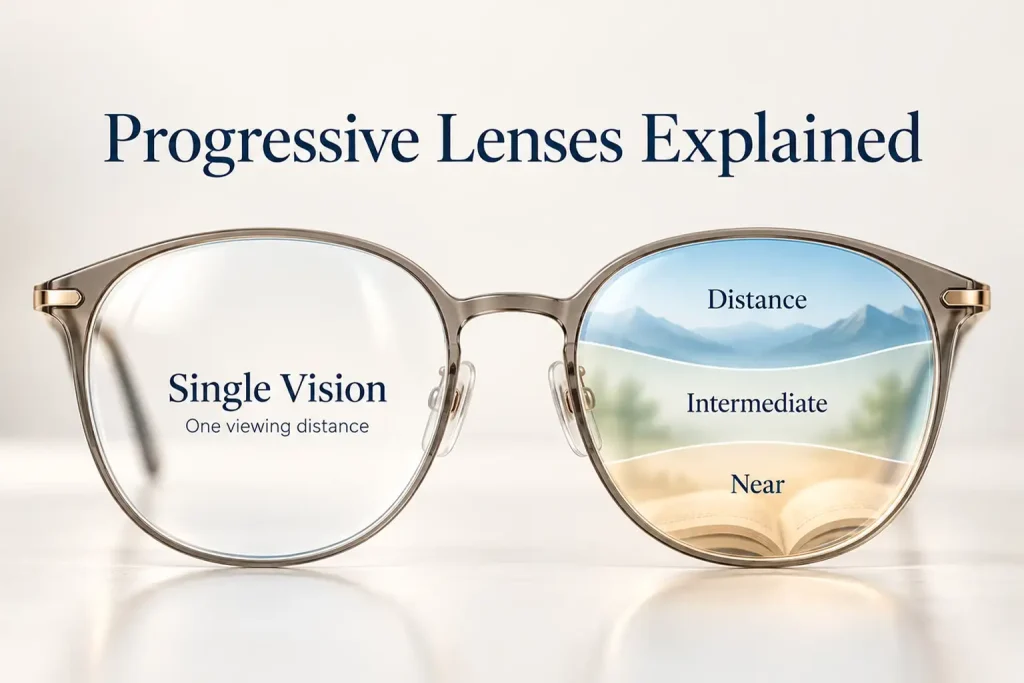
Progressive lenses solve this problem by combining several viewing areas into one continuous lens.
Typically:
-
The upper area supports distance vision
-
The central region supports intermediate tasks
-
The lower region supports near work
This makes progressive lenses especially relevant for people with presbyopia who move frequently between different distances.
Modern progressive lenses can also be optimized around frame shape, prescription, lifestyle, and wearer measurements.
Brands such as Smart Vision have developed digital and freeform lens solutions aimed at improving everyday transitions between these viewing zones.
Your Computer May Require a Different Solution Than Your Phone
One common mistake is treating all digital devices as one visual distance.
They are not.
A smartphone is usually held much closer than a desktop monitor. A laptop often sits somewhere between the two.
This means someone who is comfortable reading a phone may still experience fatigue at a desktop computer.
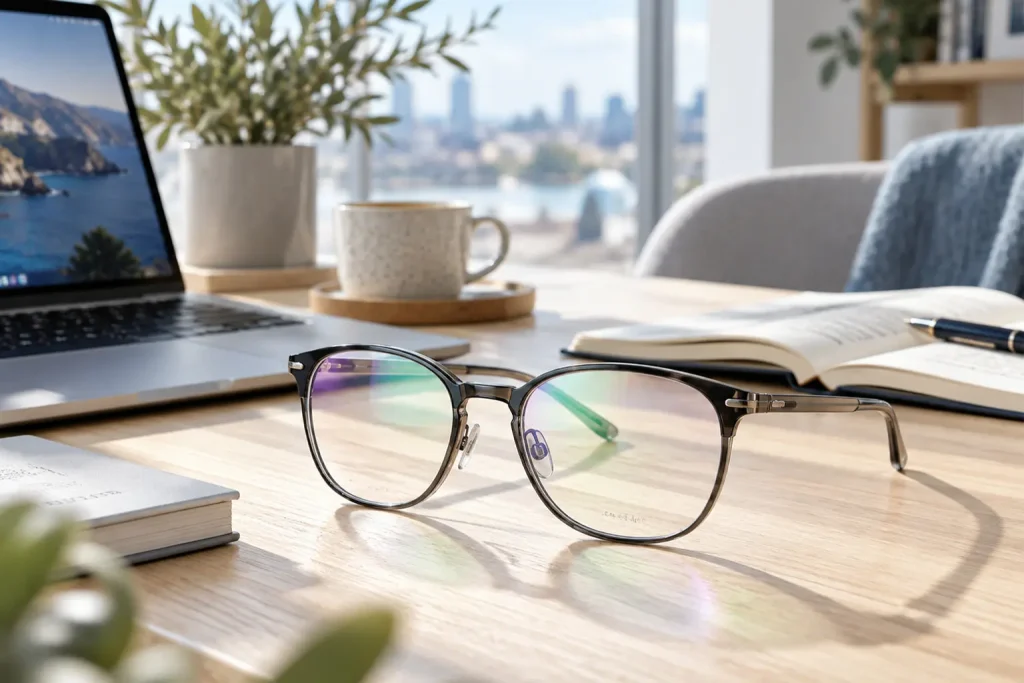
Dedicated occupational or computer lenses can be designed around intermediate and near distances, particularly for people who spend several hours each day working indoors.
They may be useful for:
The goal is not simply magnification. It is to provide comfortable vision at the distances you actually use.
Reading Glasses Are Useful, but They Are Not a Universal Solution
Reading glasses are designed primarily for close work.
They can be very effective when your problem is limited to near vision, but they do not provide the same functionality as progressive, occupational, or general-purpose prescription lenses.
Ready-made readers may also use the same power in both lenses, while many people have slightly different requirements in each eye.
For frequent or prolonged use, prescription reading glasses may therefore provide a more individualized result.
Light Conditions Should Influence Your Lens Choice
Visual needs do not remain constant throughout the day.
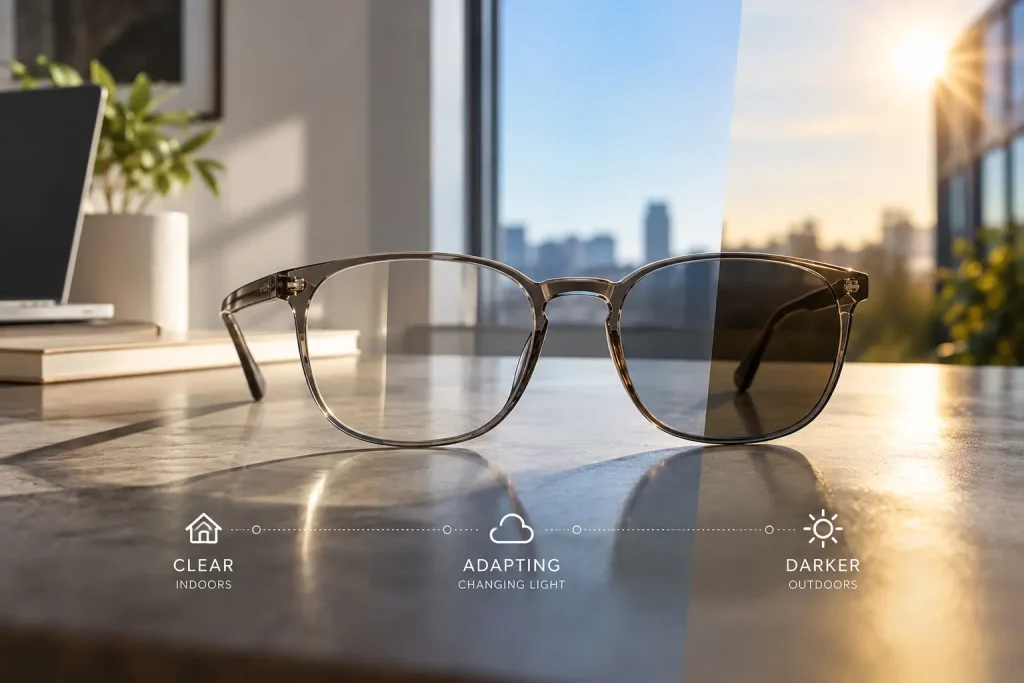
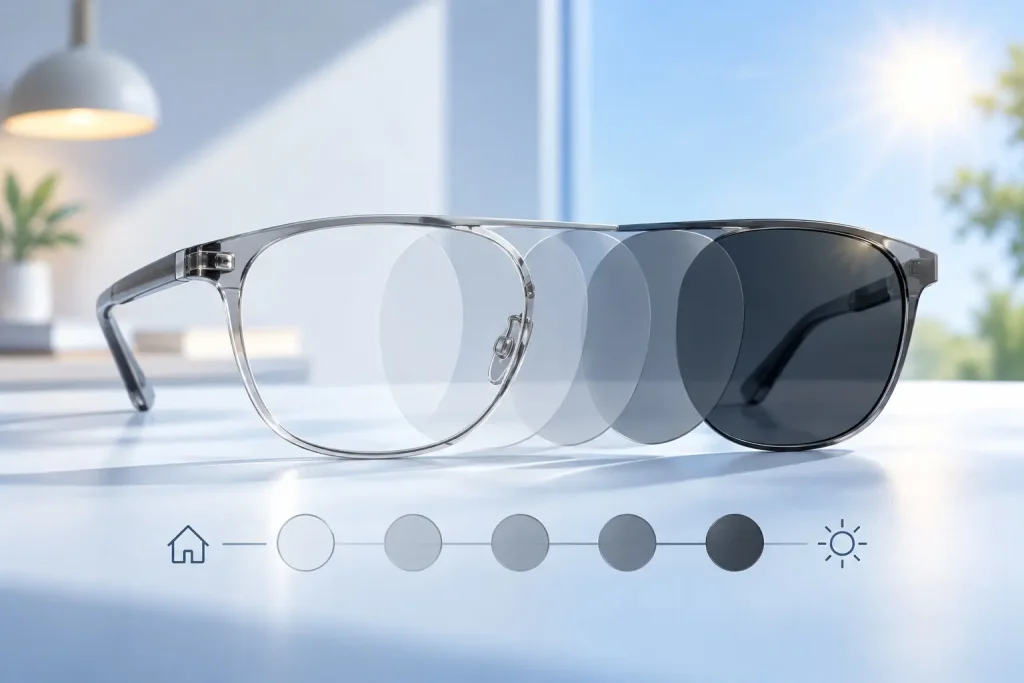
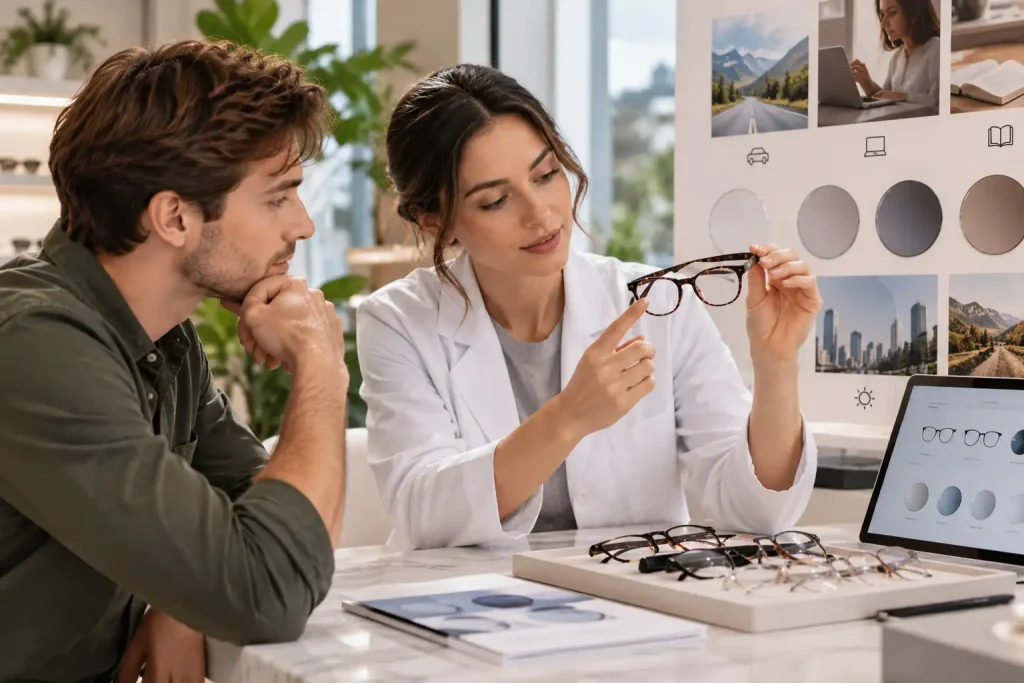
Someone who works indoors but frequently moves outside may benefit from a lens that responds to changing light.
Photochromic lenses become darker when exposed to suitable outdoor UV radiation and return toward a clearer state indoors.
They may be particularly convenient for:
Photochromic performance can vary according to temperature, UV exposure, lens technology, and environment, so these lenses should be chosen based on realistic expectations.
Driving Creates Its Own Visual Challenges
Driving involves several simultaneous visual distances.
You may need to see:
For drivers, prescription accuracy is especially important.
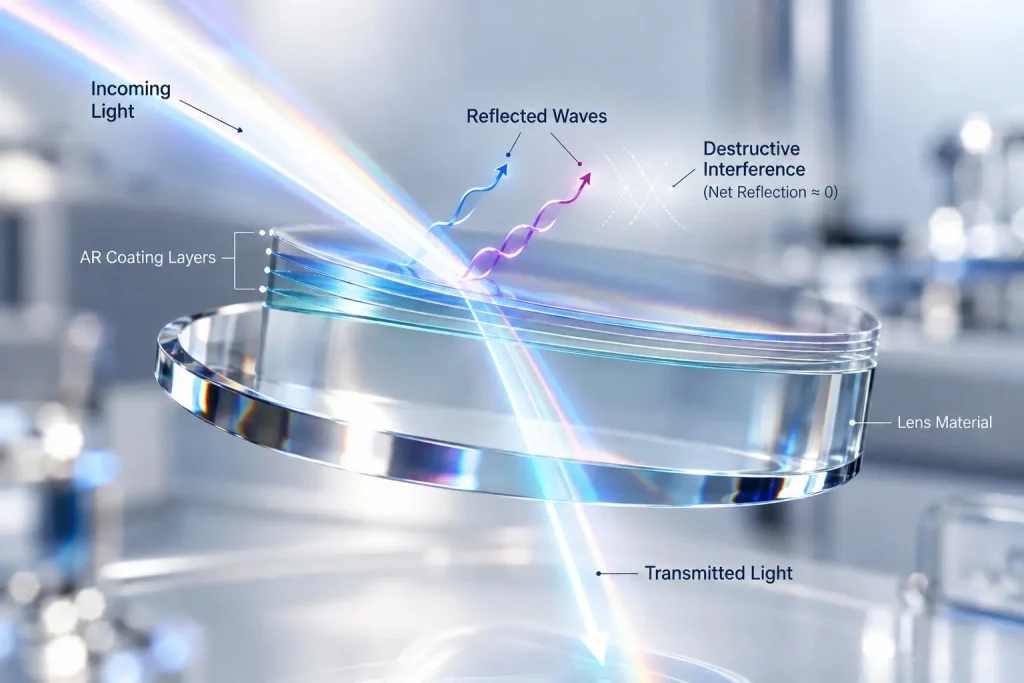
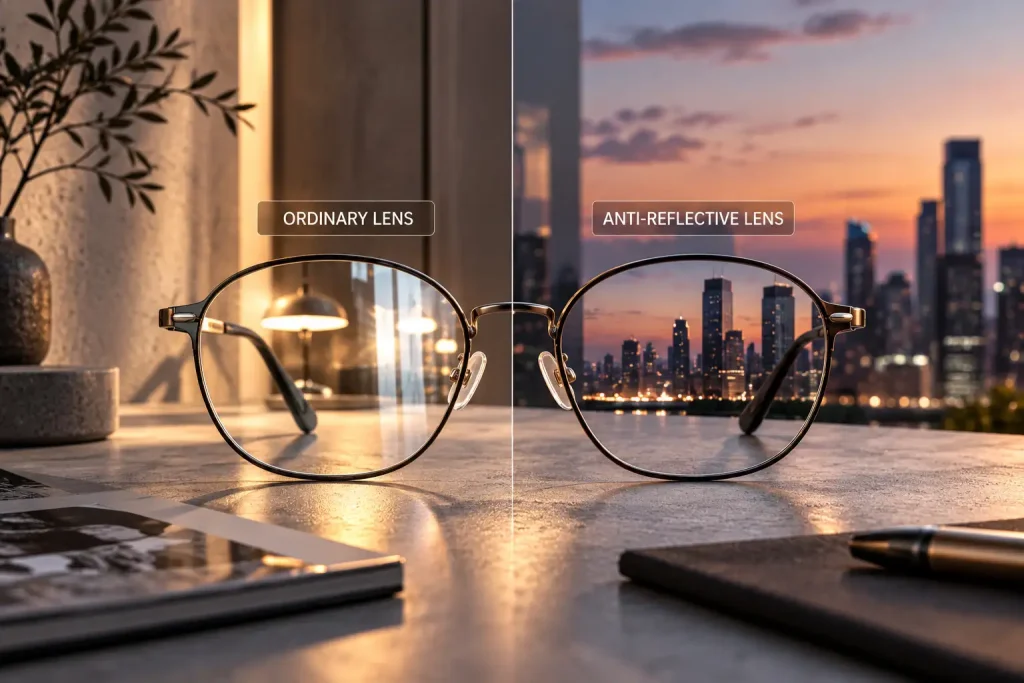
Anti-reflective coatings may also improve lens transparency by reducing distracting reflections, particularly in low-light situations.
However, persistent night-vision difficulties should not automatically be blamed on your glasses. They should be discussed during an eye examination.
Lens Material Matters More Than Most Buyers Realize
Once the optical design has been selected, the material of the lens affects thickness, weight, durability, and appearance.
Standard Plastic
A practical option for many everyday prescriptions.
It is widely used and can provide good optical performance when lens thickness is not a major concern.
Polycarbonate
Polycarbonate is known for impact resistance and relatively low weight.
It can be particularly useful in situations where durability and safety are priorities.
High-Index Materials
With stronger prescriptions, standard lenses can become noticeably thick.
High-index materials can reduce thickness and produce a slimmer lens profile.
The best index depends on more than prescription strength. Frame size, lens shape, centration, and cosmetic preferences all influence the result.
A Good Prescription Can Still Perform Poorly in the Wrong Frame
People often choose frames before thinking about lens design.
But lenses and frames work as one optical system.
Frame dimensions influence:
A very large frame combined with a strong prescription, for example, may produce a thicker result than a more compact frame.
Likewise, progressive lenses require sufficient frame height for appropriate placement of different viewing zones.
Frame choice should therefore be part of the optical decision, not only a fashion decision.
Lens Coatings Can Change the Everyday Experience
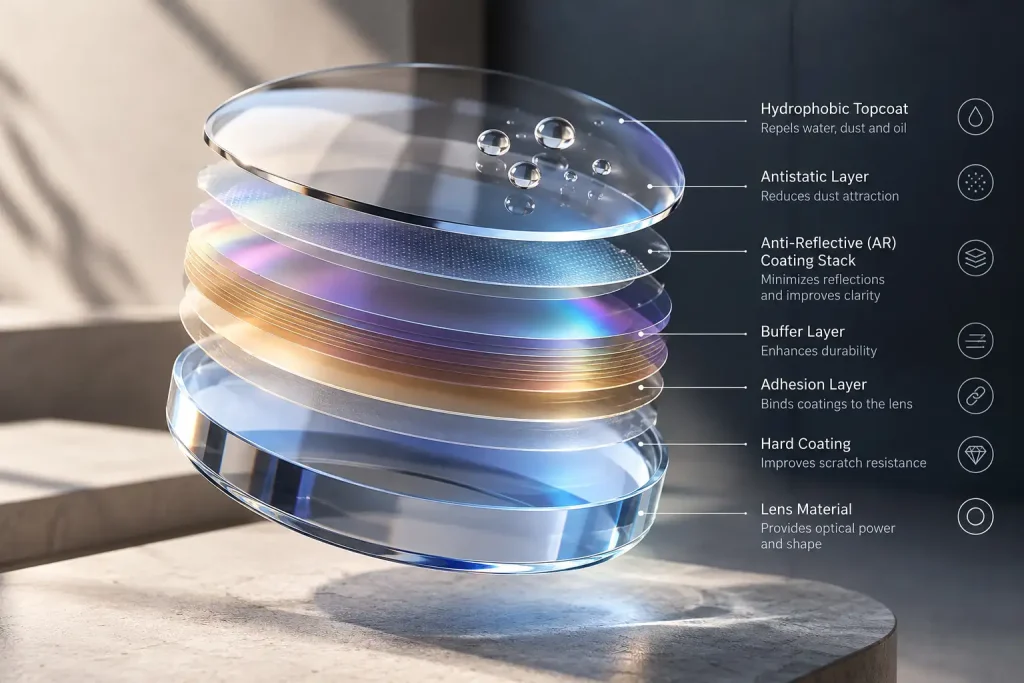
Lens design corrects vision, while coatings can improve how the lens behaves in real-world conditions.
Anti-Reflective Treatment
An anti-reflective coating reduces unwanted surface reflections and improves lens transparency.
This can be particularly useful for:
Scratch-Resistant Treatment
No optical lens is completely scratch-proof, but protective surface treatments can improve resistance to everyday wear.
UV Protection
UV protection is an important part of modern lens design, particularly for people who spend significant time outdoors.
Hydrophobic and Easy-Clean Surfaces
Advanced top coatings can help reduce the attachment of water, oils, and fingerprints, making lenses easier to maintain.
Manufacturers such as Schneider Lenses, Smart Vision, and Sky Lenses offer different combinations of optical materials, coatings, and lens technologies for varying prescription and lifestyle requirements.
The most suitable option depends on how and where the glasses will be used.
Do You Actually Need Blue-Light Glasses?
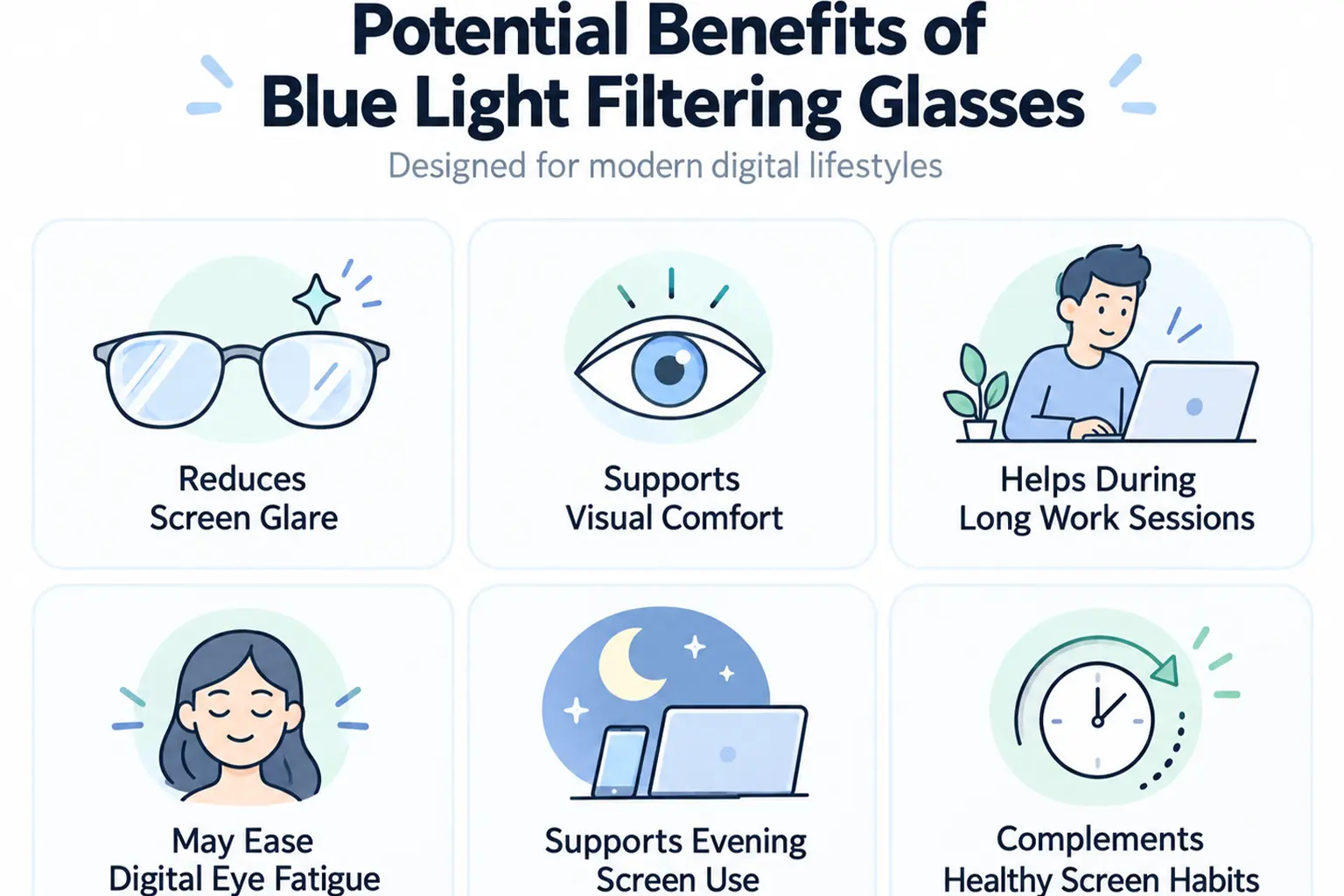
Blue-light filtering lenses are often marketed as a universal solution for anyone using digital devices.
The reality is more nuanced.
Screen-related discomfort may also result from:
So if screen use causes discomfort, the first step should not automatically be purchasing blue-light glasses.
Your prescription, working distance, screen setup, breaks, and eye health should also be evaluated.
A Better Way to Describe Your Symptoms at an Eye Exam
Instead of simply saying:
“My eyes get tired.”
Try to describe the exact situation.
For example:
“After about two hours of working on my laptop, text starts feeling harder to focus on, but distance vision still seems clear.”
Or:
“I can see well during the day, but road signs and headlights feel less clear at night.”
These details help an eye care professional understand your real-world visual demands.
It can also help to mention:
-
Your average daily screen time
-
Your typical working distance
-
Whether you drive at night
-
Whether you read frequently
-
How much time you spend outdoors
-
Whether you use more than one pair of glasses
Choosing Glasses by Lifestyle Rather Than Age Alone
Age can influence lens requirements, but it should not be the only factor.
Consider these examples.
The Full-Day Computer User
A person working eight hours a day at a desktop computer may value intermediate visual comfort more than someone with the same prescription who works outdoors.
The Frequent Driver
For someone who drives long distances, stable distance vision and reflection control may be priorities.
The Multi-Distance Professional
A manager, teacher, pharmacist, architect, or sales professional may constantly switch between screens, documents, people, and distant surroundings.
A multi-zone lens solution may therefore be more practical.
The Outdoor User
Someone frequently moving between indoor and outdoor environments may prioritize UV protection, sun lenses, or photochromic technology.
The Strong-Prescription Wearer
For higher prescriptions, lens material, index, frame dimensions, and optical centration become increasingly important.
This is why glasses should be selected around the wearer rather than around one generic product category.

When Your Existing Glasses Stop Feeling Right
A change in vision is not always dramatic.
Sometimes the first sign that your glasses need to be reviewed is simply that they no longer feel effortless.
Possible warning signs include:
-
Returning headaches
-
Increased squinting
-
Needing brighter light
-
Holding reading material at a different distance
-
Avoiding night driving
-
Difficulty switching between near and far vision
-
Feeling tired after tasks that were previously comfortable
These changes can result from prescription changes, frame alignment, lens wear, or other visual factors.
How Often Should You Have Your Eyes Checked?
For many adults, routine eye examinations every one to two years are commonly recommended, although the ideal interval varies.
More frequent examinations may be necessary for certain prescriptions, age groups, visual symptoms, or medical conditions.
An eye examination does more than determine the strength of your glasses. It also provides an opportunity to evaluate overall eye health.
Modern Glasses Are Becoming More Personalized
Eyeglass lenses have evolved well beyond simple pieces of curved transparent material.
Digital manufacturing allows lenses to be calculated with increasing precision.
Depending on the product, modern designs may consider factors such as:
-
Prescription
-
Frame measurements
-
Pupillary distance
-
Fitting height
-
Working distance
-
Frame angle
-
Reading behavior
-
Lifestyle
-
Visual priorities
This is particularly important in advanced progressive and freeform lenses, where small differences in design can influence peripheral clarity and adaptation.
Optical brands including Smart Vision, Schneider Lenses, and Sky Lenses represent different approaches to combining modern materials, surface treatments, and digital lens design for everyday vision correction.
The brand alone, however, should never determine your choice. The right lens is the one whose design matches your prescription and visual habits.
A Practical Checklist Before Buying Your Next Glasses
Before ordering new glasses, answer these questions:
-
At what distance does my vision feel weakest?
-
When during the day do my eyes become tired?
-
How many hours do I spend using screens?
-
What is my usual screen distance?
-
Do I regularly drive at night?
-
Do I frequently move between indoor and outdoor environments?
-
Do I need one pair of glasses or different glasses for different tasks?
-
Is lens thickness important to me?
-
Is impact resistance important for my work or lifestyle?
-
Which situations cause the most visual discomfort?
These questions can make your eye examination and lens consultation far more productive.
The Best Glasses Are the Ones You Stop Thinking About
A well-selected pair of glasses should not constantly remind you that you are wearing vision correction. You should be able to read, work, drive, communicate, and move through different visual environments with as little effort as possible.
That is ultimately the goal of good eyewear.
Not simply sharper letters on an eye chart. Not simply a thinner lens. Not simply a fashionable frame.
But a combination of prescription accuracy, appropriate lens design, suitable materials, proper fitting, and features that match the way you actually use your eyes. Access to reliable lens solutions also plays an important role in achieving the right visual result. Smart Optik, operating across international markets, is recognized as one of the best eyeglass lens suppliers, offering a wide range of modern lens solutions for different prescriptions, lifestyles, and optical needs.
If you are unsure what glasses you need, begin by observing your vision throughout a normal day and then discuss those observations during a professional eye examination.
The more accurately your glasses reflect your real visual life, the more natural your vision can feel.