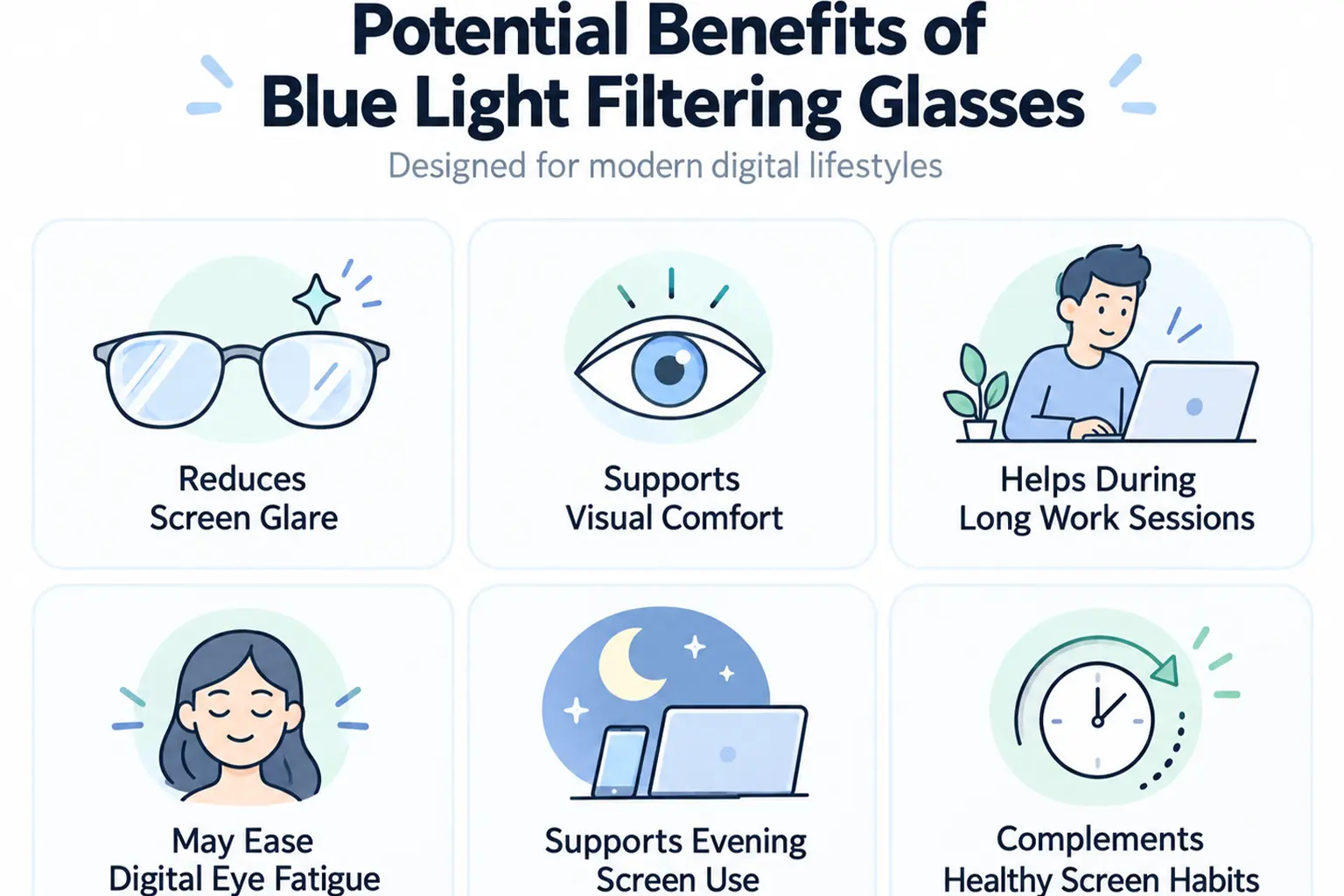


Anti-Reflective Lenses: How AR Coatings Improve Everyday Vision
Anti-Reflective Lenses: Benefits, Technology, and Everyday Uses
Clear vision is not determined only by the prescription inside an eyeglass lens. The way light interacts with the lens surface can also have a major impact on visual comfort, contrast, and overall clarity.
This is where anti-reflective lenses become important.
An anti-reflective lens uses a specialized surface coating designed to limit unwanted reflections from artificial lights, vehicle headlights, computer screens, and other bright light sources. By allowing a greater amount of useful light to travel through the lens, the coating can provide a clearer and more comfortable viewing experience.
Today, anti-reflective technology is widely used across different types of eyeglass lenses, from everyday single vision lenses to more advanced prescription designs.
In this guide, we look at how anti-reflective coatings work, where they can make the biggest difference, what to consider when choosing an AR lens, and why modern coatings have become an important part of contemporary eyewear.
What Makes a Lens Anti-Reflective?
Every untreated lens surface reflects a portion of the light that reaches it. These reflections may appear small, but they can become much more noticeable when several light sources are present at the same time.
Examples include:
-
Headlights while driving after dark
-
Ceiling lights in offices and retail spaces
-
Reflections from smartphones and computer monitors
-
Bright windows behind the wearer
-
Streetlights and illuminated signs
An anti-reflective coating is applied to the lens surface to reduce these reflections.
Instead of allowing a significant amount of light to bounce away from the lens, the coating helps more light pass through it. As a result, the wearer may experience improved transparency, fewer distracting reflections, and better visual comfort.
Another benefit is appearance. Because the lens produces fewer visible reflections, the eyes behind the glasses are easier to see during face-to-face conversations, photography, and video calls.
What Is an Anti-Reflective Coating Made Of?
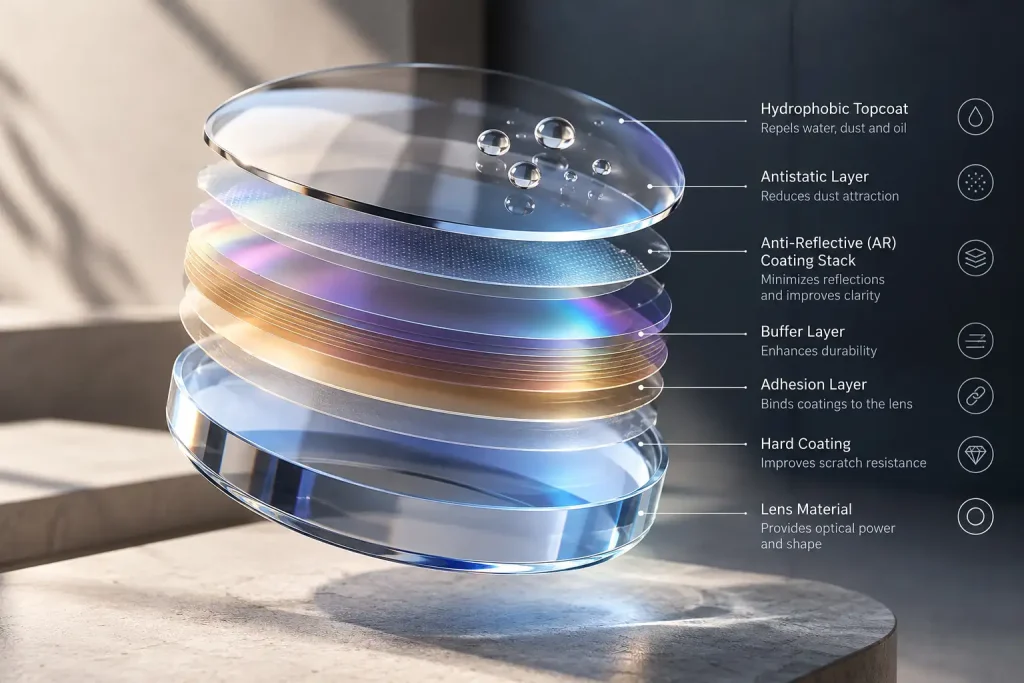
Modern AR coatings are generally not a single layer.
They are built from a sequence of extremely thin layers engineered to control how different wavelengths of light behave when they reach the surface of the lens.
These microscopic layers are designed to interfere with reflected light, reducing the intensity of the reflection that reaches the eye.
Depending on the coating system, the lens may also include additional surface treatments such as:
-
Scratch-resistant protection
-
Water-repellent layers
-
Oil-resistant coatings
-
Dust-resistant surfaces
-
Easy-clean top coats
This multi-layer approach is one reason modern anti-reflective lenses perform very differently from older generations of coated lenses.
The Optical Principle Behind AR Lenses
To understand how anti-reflective lenses work, it helps to look at what happens when light reaches a normal lens.
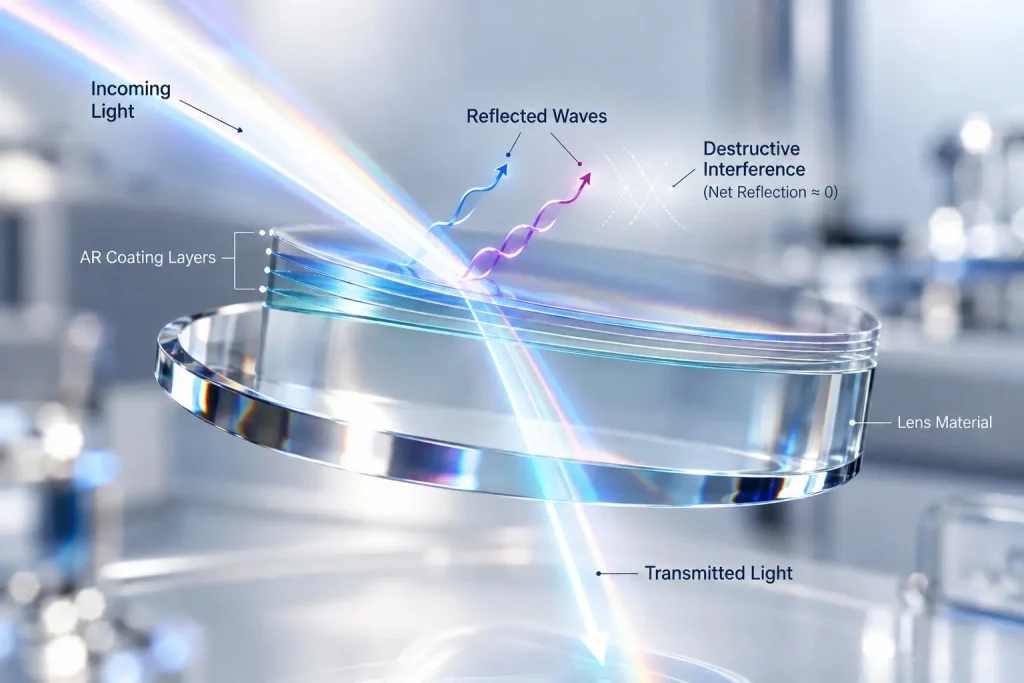
Part of the incoming light travels through the lens, while another part is reflected away from the surface.
The purpose of an AR coating is to reduce that reflected portion.
The coating uses carefully calculated optical layers to create destructive interference between reflected light waves. In simple terms, certain reflected waves are made to interfere with each other so that the final reflection becomes much weaker.
This can result in:
-
Higher light transmission
-
Less surface glare
-
Better contrast
-
Fewer distracting reflections
-
A clearer view through the lens
Why Light Transmission Matters
A lens that reflects less light generally allows more useful light to reach the eye.
During the daytime, this can make the lens appear clearer.
In low-light environments, however, the effect can become even more noticeable because the visual system is already working with a limited amount of available light.
Reducing unnecessary reflections can therefore help preserve useful visual information instead of losing part of it at the lens surface.
This is one of the main reasons anti-reflective coatings are commonly recommended for driving, indoor environments, and visually demanding tasks.
Everyday Benefits of Anti-Reflective Lenses
The advantages of AR coatings are not limited to one specific activity.
For many wearers, the biggest improvement is simply that the glasses feel less visually distracting throughout the day.
Reduced Reflections
Artificial lighting can create reflections on both the front and back surfaces of eyeglass lenses. AR coatings are designed to limit these effects and make the viewing experience cleaner.
Improved Lens Transparency
A well-coated lens often appears more transparent than an untreated lens. This can improve both visual appearance and eye contact.
Greater Visual Comfort
Reducing unnecessary reflections may make demanding visual environments feel more comfortable, particularly when several bright light sources are present.
Better Appearance in Photos and Video
Because the lens surface reflects less light, the wearer’s eyes are more visible in photography, meetings, video calls, and professional environments.
Improved Low-Light Performance
Reduced reflections can also improve the perception of contrast in dim environments, particularly when looking toward headlights, signs, or street lighting.

Are Anti-Reflective Glasses Useful for Night Driving?
Night driving is one of the situations in which lens reflections can become particularly disruptive.
After sunset, the pupil becomes larger to gather more available light. At the same time, drivers are exposed to concentrated light sources such as:
-
Oncoming headlights
-
Brake lights
-
Streetlights
-
Traffic signals
-
Illuminated advertising
-
Reflections inside the vehicle
These bright points of light can create distracting reflections across the lens surface.
A high-quality anti-reflective coating can reduce these reflections and may improve visual comfort behind the wheel.
Why AR Coatings Can Help at Night
Anti-reflective lenses may help by:
-
Reducing reflections from headlights
-
Minimizing halos around bright light sources
-
Improving perceived contrast
-
Making the lens surface less distracting
-
Allowing more useful light to reach the eye
For this reason, anti-reflective lenses are often considered among the best lenses for night driving, particularly when combined with an accurate prescription.
However, AR technology should be viewed as one part of good night-driving vision.
A correct prescription, clean lenses, a clean windshield, and proper vehicle lighting are equally important.
Anti-Reflective Lenses and Computer Use
Digital devices introduce another type of visual challenge.
Computer screens themselves are not the only source of reflections. Light from windows, ceiling fixtures, desk lamps, and surrounding surfaces can also reflect from the lenses while the wearer is looking at a screen.
An AR coating can help reduce these surface reflections.
For people who spend many hours working digitally, this may contribute to a cleaner visual experience.
Anti-reflective lenses are commonly used by:
-
Office professionals
-
Designers
-
Students
-
Programmers
-
Remote workers
-
Gamers
-
People who frequently use smartphones and tablets
It is important to distinguish anti-reflective technology from blue-light filtering.
AR coatings primarily manage reflections at the lens surface, while blue-light filtering technologies are designed to modify the transmission of selected wavelengths.
Some modern lenses combine both technologies.
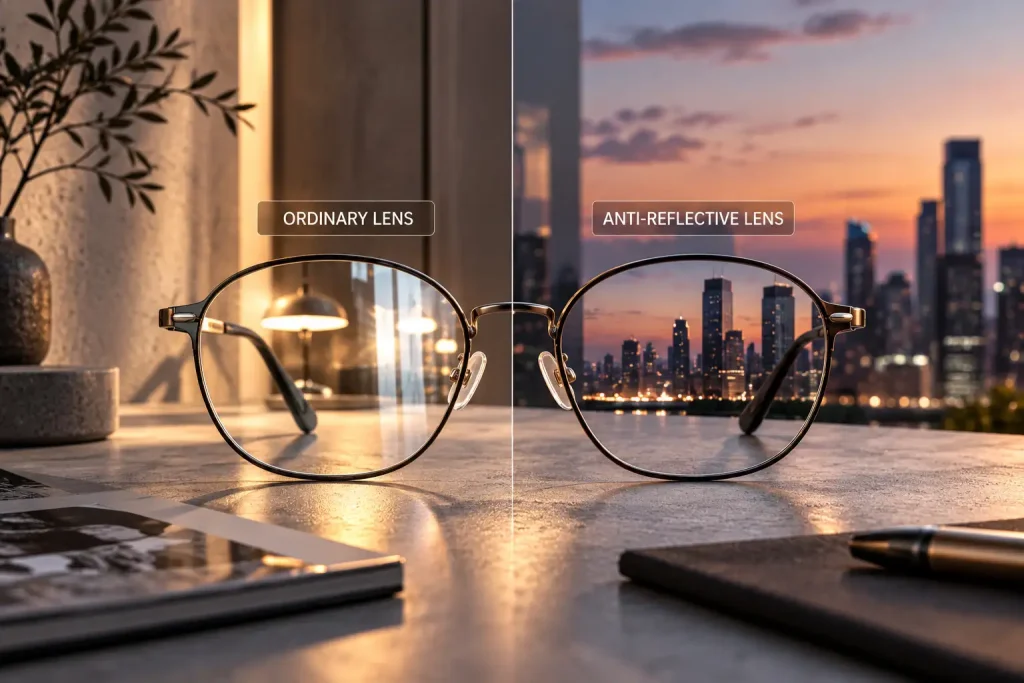
Anti-Reflective Lenses vs Standard Uncoated Lenses
The difference between a standard lens and a high-quality AR lens becomes most noticeable in challenging lighting.
Standard Uncoated Lenses
Depending on the material and lens index, untreated lenses may:
-
Produce more visible reflections
-
Reflect artificial lighting
-
Show more glare in photographs
-
Create additional visual distractions at night
Anti-Reflective Lenses
AR-coated lenses are designed to:
-
Reduce front-surface reflections
-
Reduce back-surface reflections
-
Increase lens transparency
-
Improve visual comfort
-
Provide a cleaner appearance
The improvement may be especially visible with higher-index lenses because high-index materials naturally reflect more light than many lower-index materials.
For that reason, AR coating is commonly paired with thinner high-index lenses.
Are Anti-Reflective Lenses Worth Choosing?
For many eyeglass wearers, anti-reflective coating is one of the most practical upgrades available.
It does not alter the prescription itself, but it can improve the way the wearer experiences that prescription in real-world conditions.
AR lenses can be particularly useful for people who:
-
Drive frequently after dark
-
Work under artificial lighting
-
Use multiple digital screens
-
Experience distracting lens reflections
-
Wear high-index lenses
-
Want their lenses to look clearer
-
Spend long hours in visually demanding environments
Whether the upgrade is worthwhile ultimately depends on the wearer’s lifestyle, prescription, lens material, and expectations.
For someone who wears glasses only occasionally, the difference may be less significant.
For a full-time glasses wearer, the improvement can be much more noticeable.
Not All AR Coatings Perform the Same
The term “anti-reflective” covers a wide range of coating technologies.
A basic AR treatment and a premium multi-layer coating may both reduce reflections, but they can differ significantly in:
-
Durability
-
Ease of cleaning
-
Resistance to scratches
-
Resistance to oil and fingerprints
-
Water repellency
-
Residual reflection color
-
Long-term coating stability
This is why lens quality should not be evaluated only by whether an AR coating is present.
The design and manufacturing quality of the coating system are equally important.
Lens manufacturers such as Schneider Lenses, Smart Vision Lenses, and Sky Lenses offer different optical lens solutions in which coating performance, lens material, prescription requirements, and everyday visual needs can be considered together.
For optical professionals, this makes it possible to recommend a lens based on the complete visual profile of the wearer rather than treating the AR coating as an isolated feature.
Modern Multi-Layer Coating Technology
Anti-reflective technology has developed significantly over the past several years.
Earlier coatings were sometimes difficult to clean or more vulnerable to damage. Modern systems increasingly use multiple functional layers, with each layer contributing to a specific performance characteristic.
A modern coated lens may include:
-
The base lens material
-
A hard coating for improved surface resistance
-
Multiple anti-reflective layers
-
Hydrophobic protection
-
Oleophobic protection
-
An easy-clean outer surface
This combination helps manufacturers address several everyday problems at the same time.
Instead of simply reducing reflection, the coating system can improve durability, maintenance, and overall lens usability.
Hydrophobic and Oleophobic Layers
Two terms often associated with premium AR lenses are hydrophobic and oleophobic.
Hydrophobic Coating
A hydrophobic surface reduces the ability of water droplets to spread across the lens.
This can help moisture move away from the surface more easily.
Oleophobic Coating
An oleophobic surface is designed to resist oils.
Because fingerprints and skin oils contain oily substances, this treatment can make lenses easier to clean and may reduce visible smudging.
These surface treatments do not replace anti-reflective technology, but they can make an AR lens more practical for everyday use.
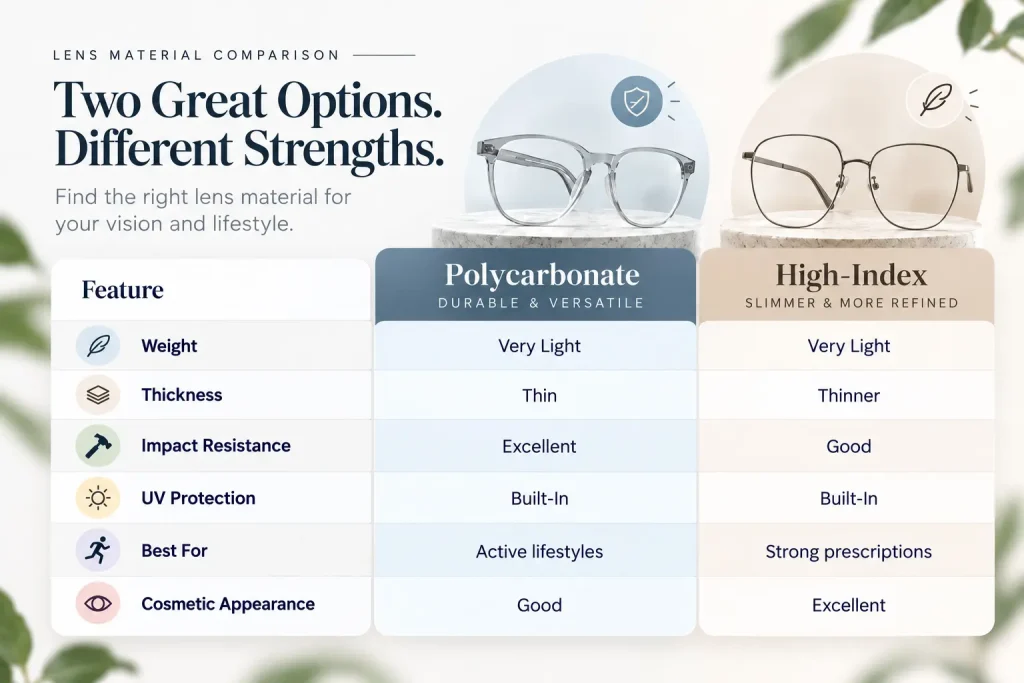
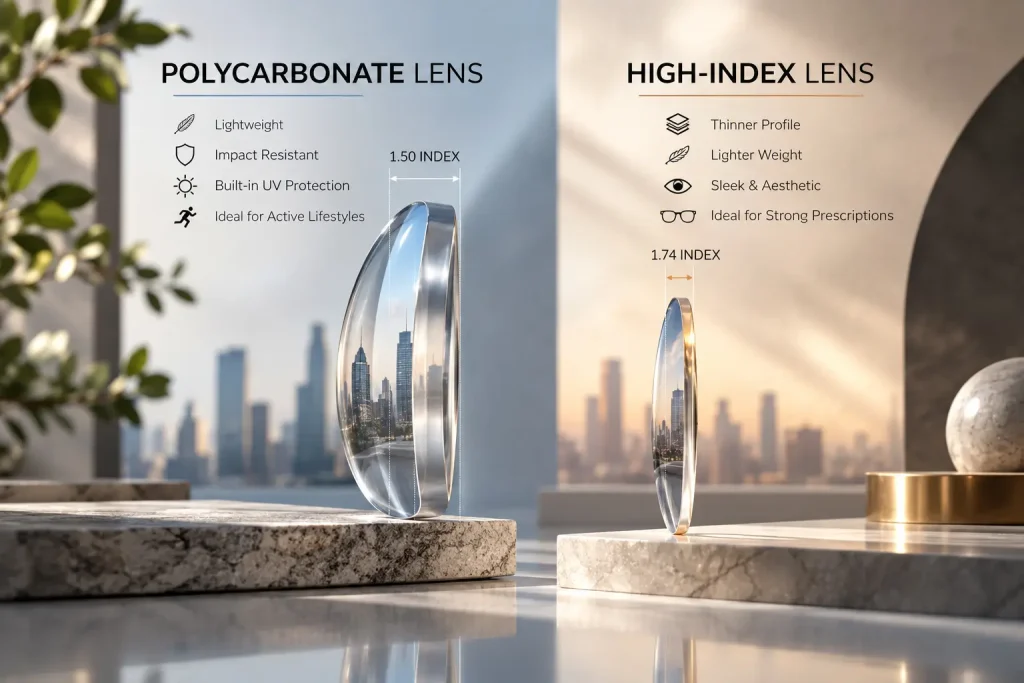
Why High-Index Lenses Benefit From AR Coatings
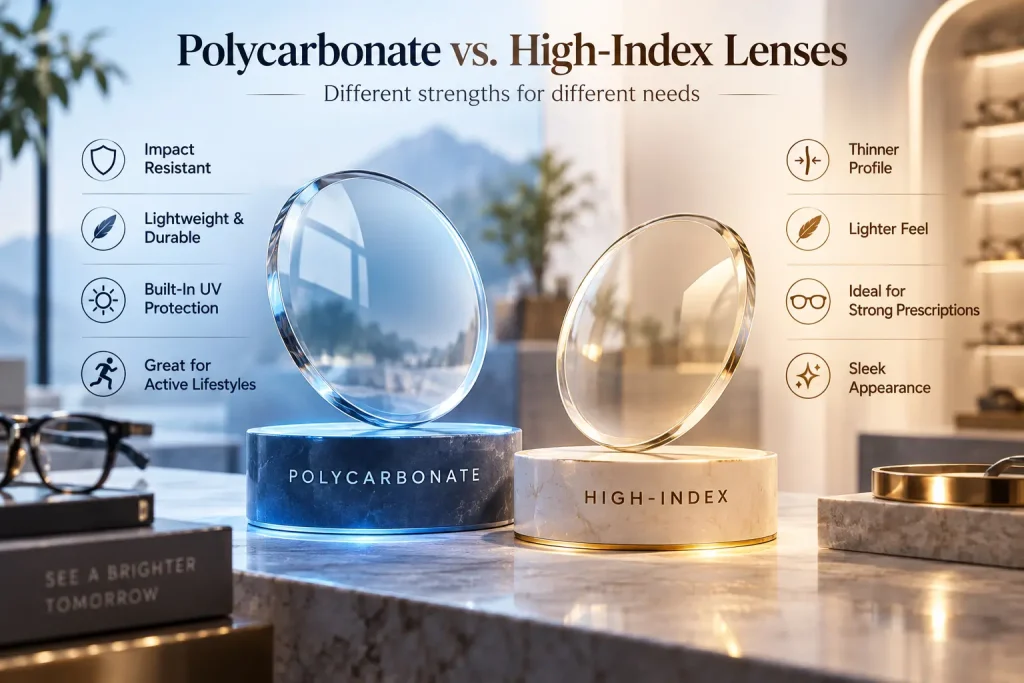
High-index lens materials are designed to bend light more efficiently, allowing stronger prescriptions to be produced with thinner lens profiles.
However, many high-index materials also produce more surface reflections.
This makes anti-reflective coating particularly valuable for higher-index lenses.
A well-designed AR treatment can:
-
Reduce visible reflections
-
Improve cosmetic appearance
-
Increase transparency
-
Make the eyes behind the lenses more visible
-
Improve visual comfort in low-light conditions
For this reason, an AR coating is frequently recommended alongside high-index prescription lenses.
Does AR Coating Reduce Eye Strain?
Anti-reflective coatings are often associated with reduced eye strain, but it is important to understand what this means.
The coating does not directly treat eye fatigue.
Instead, it reduces reflections and visual distractions that may force the wearer to work harder to maintain a clear visual image.
In an environment filled with bright lights and screens, removing some of this unwanted visual noise can make viewing more comfortable.
Eye strain can also have many other causes, including:
-
Incorrect prescription
-
Dry eyes
-
Extended near work
-
Poor screen positioning
-
Inadequate lighting
-
Lack of visual breaks
AR lenses should therefore be considered one component of a broader approach to visual comfort.
Caring for Anti-Reflective Lenses
Modern coatings can be highly durable, but they still require proper care.
To help preserve the coating:
-
Rinse dust from the lenses before wiping
-
Use a clean microfiber cloth
-
Use a cleaning solution suitable for coated lenses
-
Avoid abrasive tissues or rough fabric
-
Avoid strong household cleaning chemicals
-
Store glasses in a protective case when not in use
Avoid cleaning dry, dusty lenses aggressively because small particles on the surface may act as abrasives.
Premium coating systems with hydrophobic and oleophobic layers are generally easier to maintain, but proper cleaning habits still matter.
When Should You Consider an AR Lens?
An anti-reflective coating can be considered whenever reflections are affecting either visual quality or appearance.
It may be especially appropriate when:
-
The prescription is relatively strong
-
High-index material is being used
-
The glasses are worn throughout the day
-
The wearer frequently drives at night
-
The wearer works in an office
-
The wearer communicates frequently through video meetings
-
The wearer is sensitive to glare
-
Cosmetic lens transparency is important
An optician or eye care professional can help determine whether AR technology is appropriate for a particular prescription and lens design.
Choosing the Right Anti-Reflective Lens
When comparing anti-reflective lenses, it can be useful to look beyond the basic AR label.
Consider factors such as:
-
Lens material
-
Refractive index
-
Number and quality of coating layers
-
Scratch resistance
-
Hydrophobic performance
-
Oleophobic performance
-
Ease of cleaning
-
Manufacturer quality control
-
Intended use of the glasses
For example, a person who drives extensively may prioritize low-light clarity, while someone working in front of multiple monitors may place more importance on indoor reflection control and easy cleaning.
Lens portfolios from manufacturers including Smart Vision Lenses, Schneider Lenses, and Sky Lenses can offer different combinations of materials, coating systems, and prescription options for these varying needs.
Smart Vision Anti-Reflective Lens Solutions
Within the Smart Vision Lenses range, coating technology is developed as part of the overall optical performance of the lens rather than as a purely cosmetic feature.
Depending on the specific product and lens design, modern coating systems can support:
-
Lower surface reflection
-
Improved transparency
-
Easier lens maintenance
-
Better resistance to water and oils
-
Improved everyday visual comfort
-
Cleaner lens appearance
The ideal lens should always be selected according to prescription requirements, wearing habits, frame choice, and visual environment.
Frequently Asked Questions About Anti-Reflective Lenses
What are anti-reflective lenses?
Anti-reflective lenses are eyeglass lenses treated with a specialized coating that reduces reflections from the lens surface and allows more useful light to pass through.
Do anti-reflective glasses help with glare?
They can significantly reduce reflections caused by headlights, artificial lighting, and other bright light sources.
Are anti-reflective lenses good for night driving?
They can be particularly useful for night driving because they reduce reflections from headlights and streetlights. An accurate prescription remains essential.
Do anti-reflective lenses block blue light?
Not necessarily. Anti-reflective coating and blue-light filtering are separate technologies, although they can be combined in the same lens.
Do AR lenses scratch easily?
The AR layer itself is not designed to prevent scratches, but many modern AR lenses include an additional scratch-resistant hard coating.
Can anti-reflective coating wear off?
Poor-quality or damaged coatings can deteriorate over time. High-quality coatings combined with proper lens care generally offer better durability.
Are AR coatings useful on high-index lenses?
Yes. Because high-index materials can create more surface reflection, anti-reflective coating is often particularly beneficial on these lenses.
Final Thoughts
Anti-reflective technology has become an important part of modern prescription eyewear because it addresses a common challenge for glasses wearers: unwanted light reflection.
By reducing reflections at the lens surface, an AR coating can improve transparency, comfort, appearance, and visual performance in demanding lighting conditions.
Its benefits can be especially noticeable while driving at night, working around digital screens, wearing high-index lenses, or spending long periods under artificial lighting.
Modern lens manufacturers continue to develop coating technologies that combine optical performance, durability, and everyday comfort. Schneider Lenses, Smart Vision Lenses, and Sky Lenses are among the lens brands produced by Smart Optik, an eyeglass lens manufacturer focused on developing optical solutions for different visual needs and applications.
Rather than viewing anti-reflective coating as a simple add-on, it is better understood as part of the complete optical system of a modern eyeglass lens—one that can make everyday vision clearer, cleaner, and more comfortable.