

Photochromic Eyeglass Lenses Explained: How Adaptive Lenses Respond to Light
Eyeglass lenses are no longer designed only to correct vision. Modern lens technologies can also respond to environmental conditions, reduce discomfort caused by bright light, and make everyday eyewear more convenient. A complete guide to modern eyeglass lenses can help users better understand these technologies and compare the different options available today.
One of the best-known examples of this technology is the photochromic lens.
These lenses can change their level of darkness depending on the amount of light they are exposed to, allowing wearers to move between indoor and outdoor environments without constantly changing glasses.
For anyone comparing modern lens options, understanding how photochromic technology works can make it easier to decide whether it fits their visual needs and daily routine.
What Makes a Lens Photochromic?
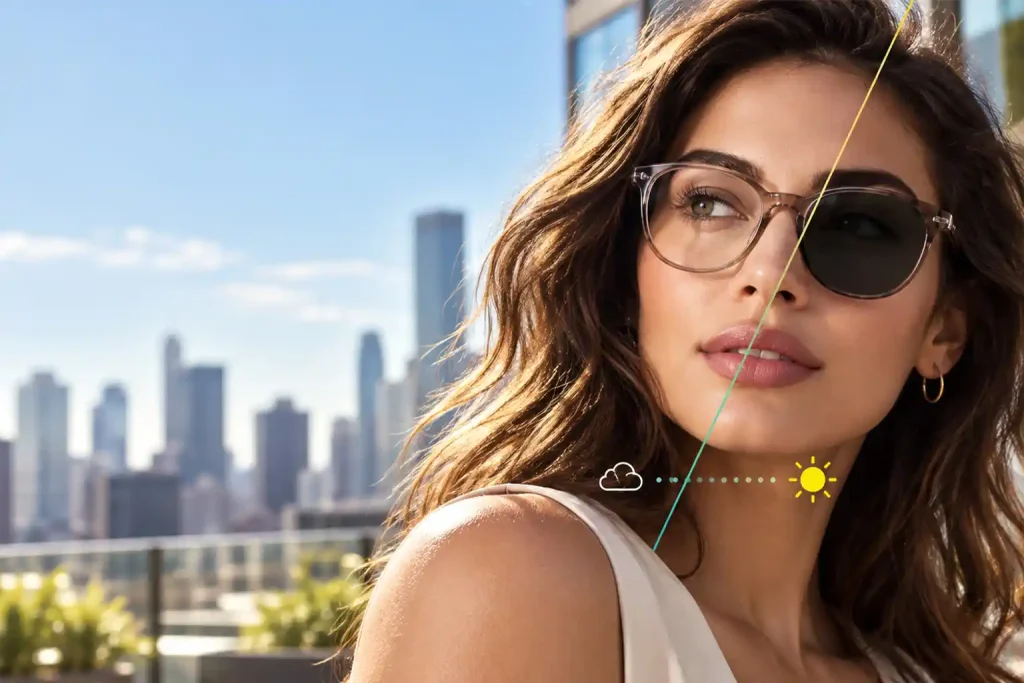
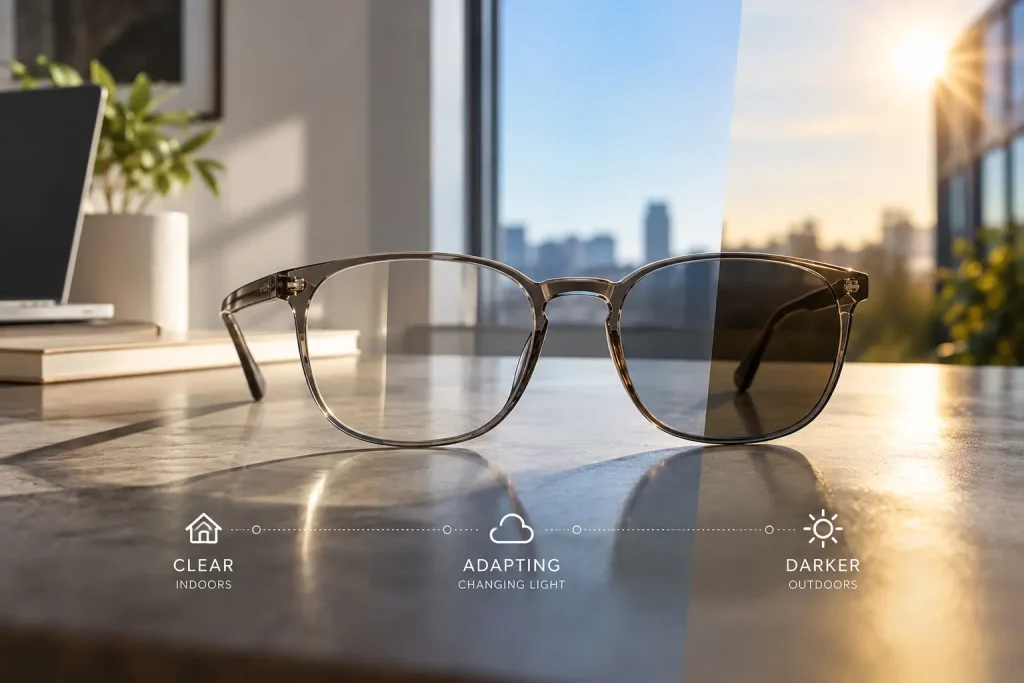
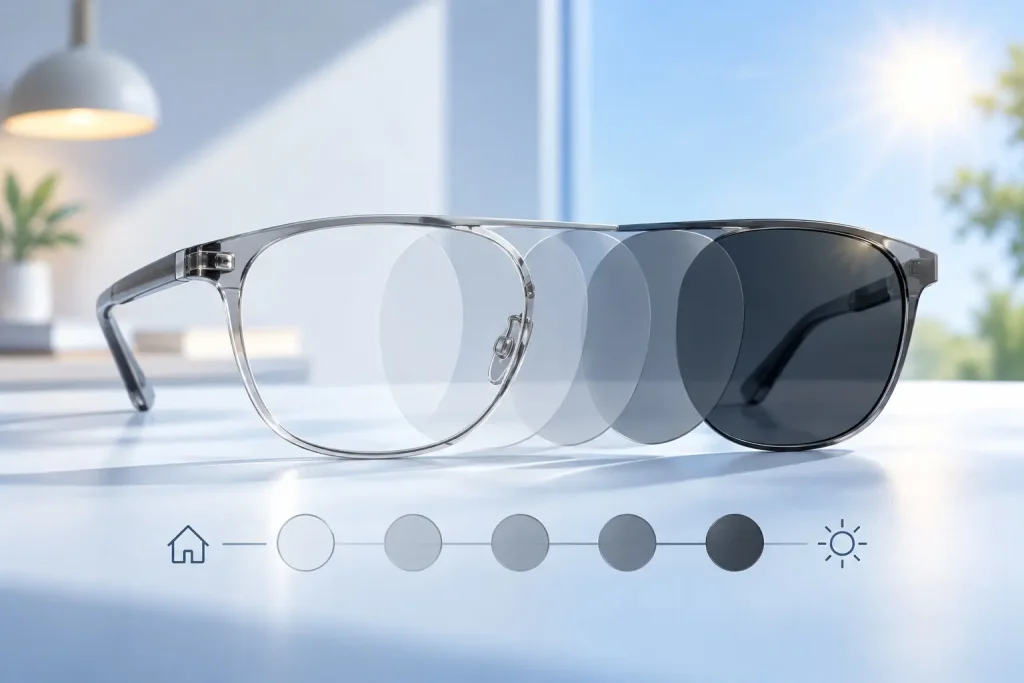
A photochromic lens is designed to become darker when exposed to certain types of light, particularly ultraviolet radiation, and then gradually return to a clearer appearance when the wearer moves indoors.
Unlike permanently tinted sunglasses, photochromic lenses continuously adjust throughout the day.
Their appearance can therefore change depending on the surrounding environment:
-
Indoors, they remain mostly clear
-
Outdoors, they become darker
-
In changing light conditions, they gradually adjust their tint
Because of this behavior, photochromic lenses are often described as light-adaptive, light-responsive, or transition-style lenses.
They are particularly appealing to wearers who want prescription eyewear that can serve both indoor and outdoor use.
How Photochromic Lenses Shift from Clear to Dark
The Science Behind Light-Adaptive Lenses
Photochromic performance depends on light-sensitive compounds incorporated into the lens material or added through specialized lens treatments.
When these compounds are exposed to sufficient ultraviolet radiation, their molecular structure changes.
This reaction causes the lens to absorb more visible light, which makes it appear darker.
When UV exposure drops, the molecules gradually return to their previous state and the lens becomes clearer again.
The process can be summarized in three stages:
-
The lens is exposed to UV radiation.
-
Photochromic molecules react and increase light absorption.
-
The lens returns toward its clear state after UV exposure decreases.
This reaction is reversible and can occur repeatedly throughout normal daily use.
Newer lens technologies have made this transition faster and more consistent than many earlier photochromic products.
Why Do People Choose Photochromic Lenses?
The main appeal of photochromic lenses is not simply that they become darker outdoors.
Their real advantage comes from combining several everyday functions into a single pair of glasses.
Easier Movement Between Indoor and Outdoor Spaces
For people who regularly move between buildings and outdoor environments, changing between prescription glasses and sunglasses can become inconvenient.
Photochromic lenses reduce the need for this constant switching.
A person can wear the same pair while:
-
Working indoors
-
Walking outside
-
Commuting
-
Shopping
-
Traveling between different lighting environments
This makes adaptive lenses especially practical for active daily routines.
Everyday Protection from Ultraviolet Light
Another important advantage of many photochromic lenses is UV protection.
Ultraviolet exposure is an important consideration when selecting eyewear for regular outdoor use.
Modern photochromic lens systems are generally designed to help reduce exposure to harmful ultraviolet radiation while also adapting their tint under brighter conditions.
For wearers who spend time outdoors throughout the day, this combination of light adaptation and UV protection can make photochromic lenses a practical everyday option.
More Comfortable Vision in Bright Environments
Bright daylight can make vision uncomfortable, especially for people who are sensitive to changing light levels.
By reducing the amount of visible light reaching the eyes outdoors, photochromic lenses can help create a more comfortable viewing experience.
This can be useful during activities such as:
-
Walking outdoors
-
Urban commuting
-
Traveling
-
Outdoor social activities
-
Moving between shaded and sunny environments
Unlike fixed-tint sunglasses, the lens darkness changes automatically as environmental light changes.
Can Light-Adaptive Lenses Help Reduce Visual Discomfort?
Frequent changes in lighting conditions may require the eyes to constantly readjust.
Although photochromic lenses do not eliminate every source of visual fatigue, their ability to moderate sudden changes in brightness may improve comfort for some wearers.
This can be especially noticeable for people who frequently move between indoor environments and strong daylight.
How Do Photochromic Lenses Perform While Driving?
Driving is one of the most important considerations when choosing adaptive eyewear.
Standard photochromic lenses primarily react to ultraviolet radiation.
However, modern vehicle windshields are designed to block much of the UV radiation that would normally activate a photochromic lens outdoors.
As a result, some photochromic lenses may remain relatively light inside a vehicle.
This does not mean all photochromic products behave the same way.
Newer technologies may also respond to parts of the visible light spectrum, allowing some level of darkening behind a windshield.
Even so, wearers who regularly drive in intense daylight or glare may still prefer eyewear specifically designed for driving.
Possible alternatives include:
-
Prescription sunglasses
-
Polarized sunglasses
-
Dedicated driving lenses
The most suitable option depends on driving habits, lighting conditions, and individual visual preferences.
Who Is a Good Candidate for Photochromic Eyewear?
Photochromic lenses can be particularly useful for people who value convenience and regularly experience different light environments during the day.
They may be suitable for:
-
People who spend part of the day outdoors
-
Office workers who regularly leave and re-enter buildings
-
Students and commuters
-
Wearers sensitive to bright daylight
-
People who prefer not to carry separate sunglasses
However, someone who spends long periods in extremely bright conditions may still prefer dedicated sunglasses in addition to regular eyewear.
Common Photochromic Lens Colors
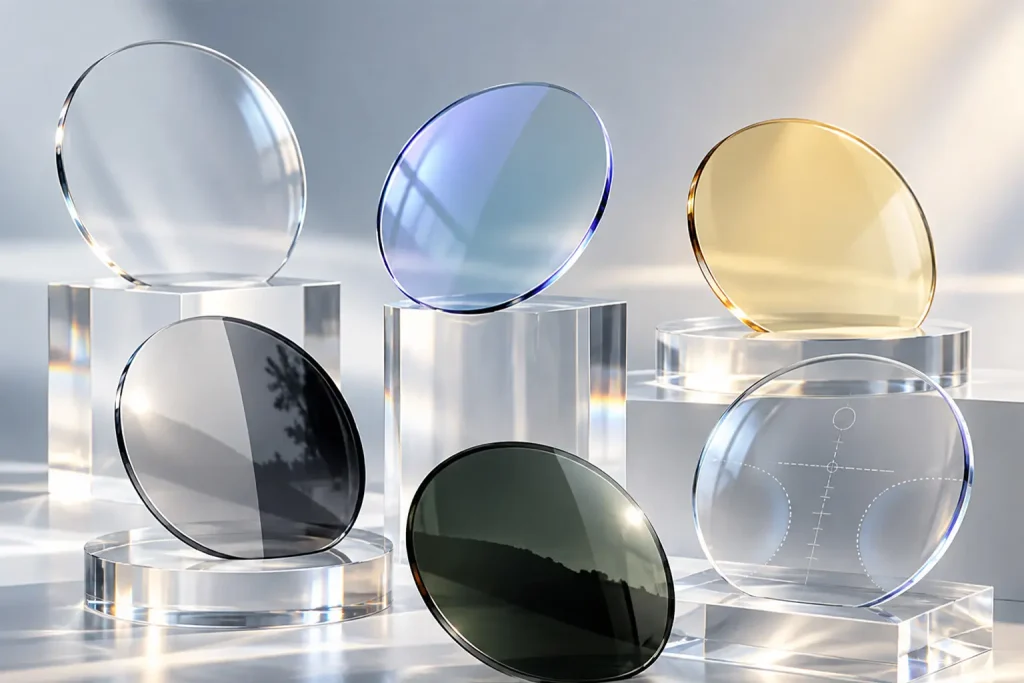
Photochromic technology can be produced in several tint options.
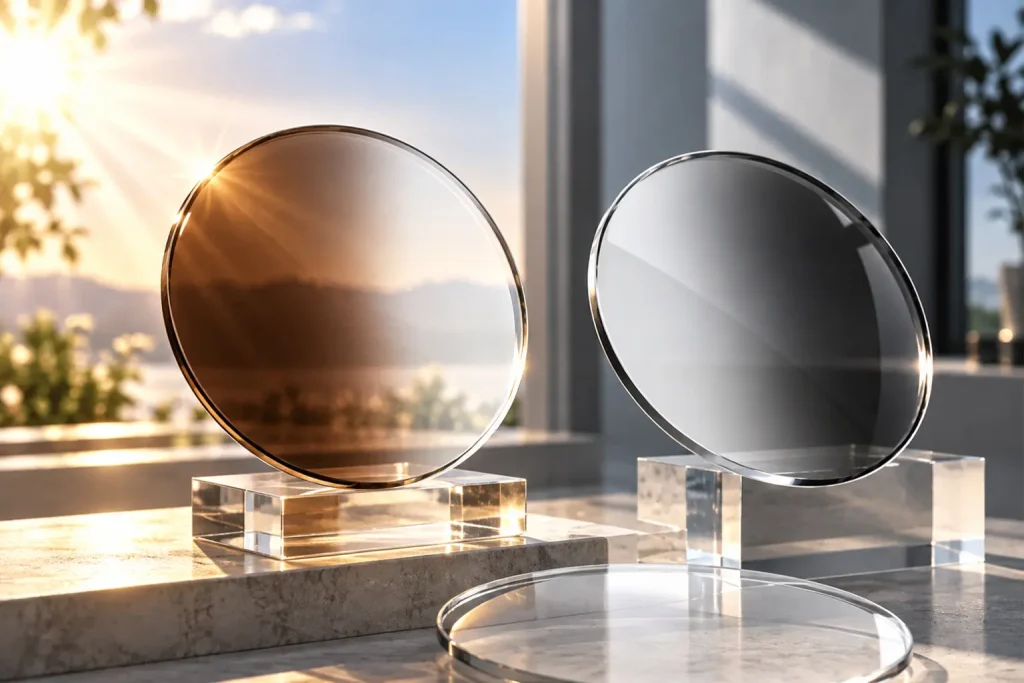
The two most familiar choices are gray and brown.
Gray Light-Adaptive Lenses
Gray photochromic lenses are popular because they tend to maintain relatively neutral color perception.
They are suitable for general daily use and provide a balanced visual appearance when the lens becomes darker.
Brown Light-Adaptive Lenses
Brown lenses create a warmer visual tone.
They may provide greater perceived contrast in certain environments and are often preferred by wearers who like warmer lens colors.
Can Progressive Lenses Also Be Photochromic?
Yes.
Photochromic technology is not limited to single-vision lenses.
Many progressive lens designs can also be combined with photochromic treatments or materials.
This allows wearers to combine:
-
Distance vision
-
Intermediate vision
-
Near vision
-
Light adaptation
-
UV protection
within the same pair of glasses.
For people who already wear progressive lenses, this can reduce the need for a separate pair of prescription sunglasses.
Photochromic Lenses with Additional Lens Technologies
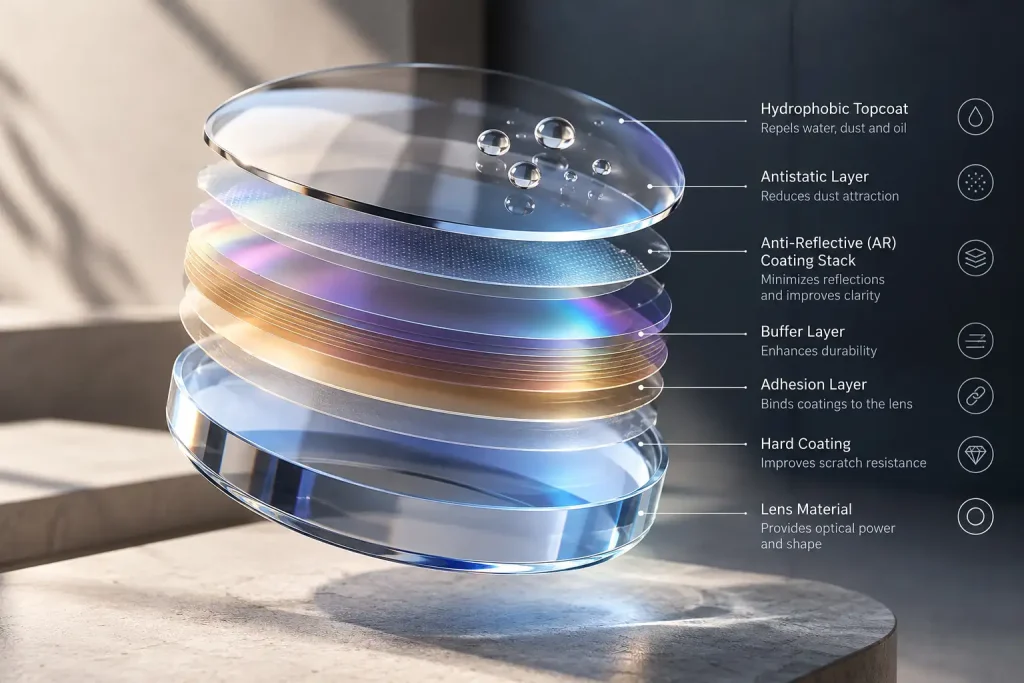
Modern lens products may combine several technologies within one lens.
Depending on the product, photochromic lenses may also include:
-
Anti-reflective coatings
-
Scratch-resistant treatments
-
Hydrophobic coatings
-
UV protection
-
Blue-light filtering features
These combinations are designed to improve overall lens performance rather than relying on photochromic technology alone.
Modern Light-Adaptive Lens Designs
Important Limitations to Consider
Photochromic lenses offer significant convenience, but they are not ideal for every situation.
Understanding their limitations can help wearers set realistic expectations.
Temperature Can Influence Lens Performance
Environmental temperature can affect how quickly certain photochromic lenses darken or return to their clear state.
Depending on the lens technology, cold and hot conditions may influence:
-
Transition speed
-
Maximum darkness
-
Recovery time
Different lens manufacturers address this issue in different ways.
They May Not Become Fully Dark Inside a Car
One of the most common misconceptions about photochromic eyewear is that it will always perform like sunglasses while driving.
Because many windshields filter UV radiation, conventional photochromic lenses may receive less of the light needed to activate fully.
For frequent drivers, this is an important factor to consider before choosing a lens.
Some Lenses May Retain a Slight Indoor Tint
Not every photochromic lens becomes completely colorless indoors.
Depending on the material and photochromic technology, a small residual tint may remain.
Modern products have improved significantly in this area, but the final indoor appearance can still vary between lens systems.
How New Technology Has Improved Photochromic Performance
Earlier generations of photochromic lenses were sometimes associated with long transition times and inconsistent color changes.
Modern manufacturing methods have improved several aspects of light-adaptive eyewear.
Today’s advanced photochromic lenses can offer:
-
Faster activation
-
Faster fading indoors
-
More uniform tint changes
-
Improved optical clarity
-
Better coating compatibility
-
More natural indoor appearance
-
Greater durability during repeated transitions
These improvements have helped make photochromic lenses more practical for everyday wear than many older designs.
Choosing Photochromic Lenses for Everyday Use
Before selecting a photochromic lens, it is useful to consider how the glasses will actually be used.
Someone who spends most of the day indoors may have different requirements from someone who frequently works or travels outdoors.
Important questions include:
-
How often do you move between indoor and outdoor environments?
-
Do you drive frequently during daylight hours?
-
Are you sensitive to bright sunlight?
-
Do you already use prescription sunglasses?
-
Do you prefer gray or brown lens tones?
-
Do you need single-vision or progressive lenses?
Answering these questions can make it easier to determine whether adaptive lenses fit your lifestyle.
Smart Vision Photochromic Lens Technology
Smart Vision develops lens solutions designed around changing visual demands and modern daily routines.
Photochromic lens options are intended to combine visual correction with automatic light adaptation, providing wearers with greater flexibility across different lighting environments.
Depending on the lens design, Smart Vision photochromic solutions can offer benefits such as:
-
Automatic response to changing light
-
UV protection
-
Greater comfort in outdoor environments
-
Everyday optical clarity
-
Compatibility with modern lens coatings
-
Reduced need to switch between multiple pairs of eyewear
Adaptive Eyewear for Modern Lifestyles
Is a Photochromic Lens the Right Choice for You?
Photochromic lenses are particularly valuable for wearers who want one pair of glasses that can respond automatically to changing light conditions.
They provide a practical balance between clear everyday eyewear and outdoor light protection.
However, they should not automatically be considered a complete replacement for sunglasses in every environment.
For extremely bright sunlight, prolonged outdoor exposure, or demanding driving conditions, dedicated sunglasses may still provide advantages.
The best lens choice depends on prescription requirements, lifestyle, sensitivity to light, and individual expectations.
Final Perspective
Photochromic technology has changed the way prescription eyewear can respond to the surrounding environment.
Instead of maintaining one fixed level of tint, these lenses continuously adapt as lighting conditions change.
Modern photochromic lenses are faster, clearer, and more versatile than earlier generations, making them a useful solution for many everyday wearers.
For people looking for convenient eyewear that combines vision correction, UV protection, and automatic light adaptation, photochromic lenses can offer a flexible option for modern life. Smart Optic is an eyeglass lens distributor offering a range of modern lens solutions for different visual needs and everyday applications.