
The Complete Guide to Modern Eyeglass Lenses

Different eyeglass lenses for everyday vision needs

The Complete Guide to Modern Eyeglass Lenses

Choosing the right eyeglass lenses depends on your prescription, lifestyle, and how you use your glasses every day. Single vision lenses are designed for one viewing distance, while progressive lenses can support distance, intermediate, and near vision within a single pair of glasses.

Lens materials also matter. They can affect the thickness, weight, durability, and appearance of your glasses, especially if you have a stronger prescription. Additional options such as anti-reflective, UV-protective, photochromic, and other specialized treatments can further improve comfort and everyday performance.

By understanding the differences between eyeglass lens types, materials, and coatings, choosing the best lens for your vision needs becomes easier, whether you need glasses for reading, driving, computer work, outdoor activities, or everyday wear.

How Eyeglass Lenses Shape the Way You See

An eyeglass lens is an optical component positioned in front of the eye to control the way light enters the visual system.

For clear vision, incoming light must be focused accurately onto the retina at the back of the eye. When the natural optical system of the eye does not focus light in the correct location, objects may appear blurred at certain distances.

Prescription lenses compensate for these focusing errors by altering the path of incoming light before it reaches the eye. The result is clearer and more comfortable vision based on the wearer’s prescription.

Today’s lenses may also incorporate additional features intended to improve everyday use, including:

  • Reduced reflections and glare
  • Ultraviolet protection
  • Improved resistance to minor scratches
  • Enhanced comfort during digital activities
  • Thinner and lighter lens designs
  • Better visual performance across different viewing distances

Advances in digital lens production have also made it possible to manufacture lenses with considerably greater precision and personalization than traditional manufacturing techniques.
Understanding the Vision Problems Lenses Can Correct

Different prescriptions require different optical corrections. Some of the most common conditions corrected with eyeglasses include myopia, hyperopia, astigmatism, and presbyopia.

Myopia: Clear Near Vision, Blurred Distance Vision

Myopia, commonly called nearsightedness, usually causes distant objects to appear blurry while objects at shorter distances remain clearer. Lenses prescribed for myopia modify incoming light so that the image can be focused more accurately on the retina.

Hyperopia: When Near Vision Becomes Difficult

Hyperopia, or farsightedness, can make focusing on nearby objects more difficult. Corrective lenses help adjust the optical focus so that near-vision tasks such as reading can become clearer and more comfortable.

Astigmatism and Uneven Visual Focus

Astigmatism is associated with irregular curvature within the eye’s optical system. Because light may not focus evenly, vision can appear blurred or distorted. Prescription lenses designed for astigmatism compensate for these irregularities and provide more stable visual correction.

Presbyopia and Age-Related Near Vision Changes

Presbyopia develops as the eye gradually loses some of its ability to focus at close distances with age. It commonly becomes noticeable around or after the age of 40. People experiencing presbyopia may require an optical solution that provides support for near vision or several viewing distances.

Exploring the Main Eyeglass Lens Designs

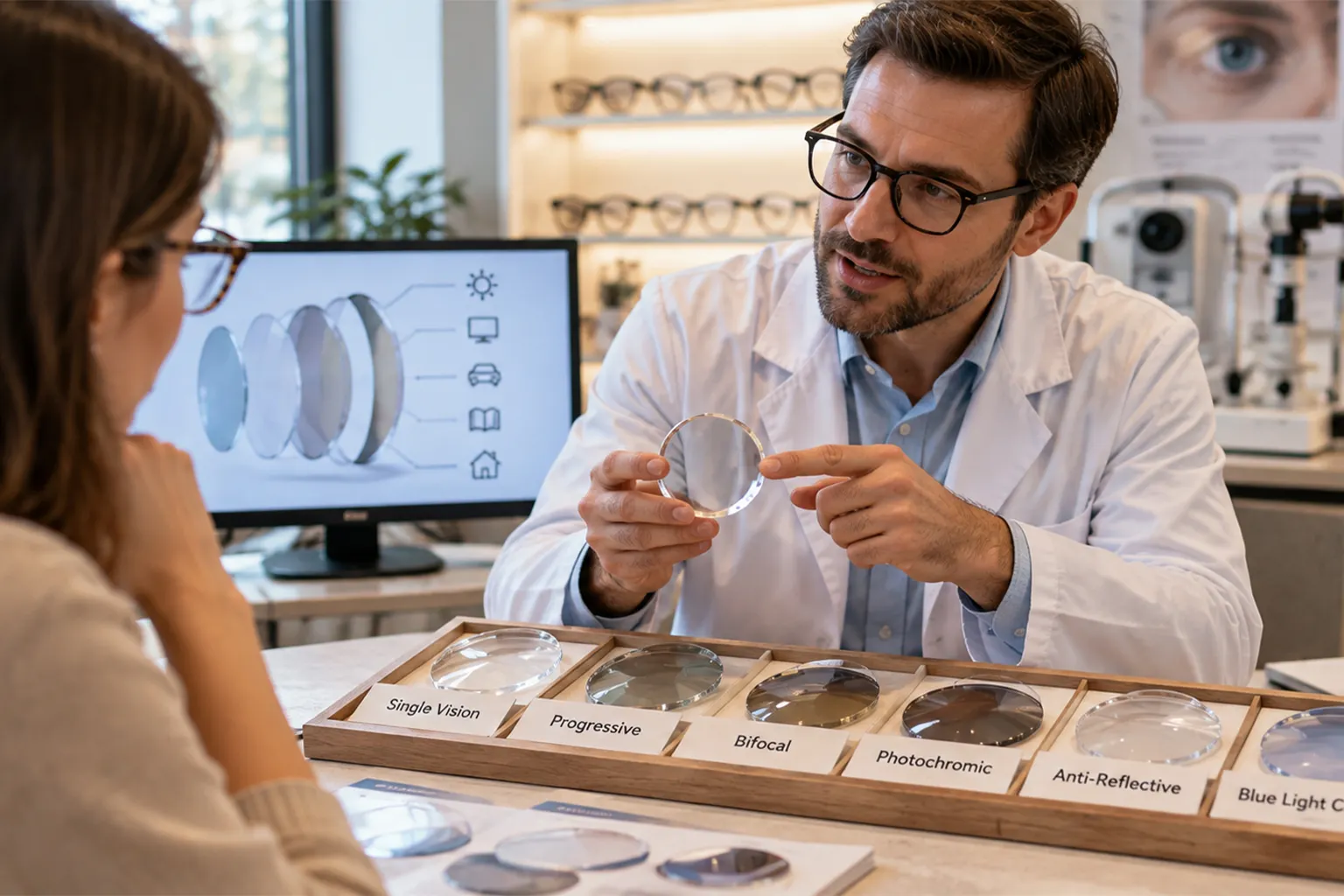
Lens design is one of the most important factors affecting how a pair of glasses performs. Different designs are intended for different visual tasks.

Single Vision Lenses for Everyday Correction

Single vision lenses contain one prescription power across the usable lens area. They may be prescribed specifically for:

  • Distance vision
  • Reading
  • Computer work
  • Other single-distance visual requirements

Because of their straightforward optical design, single vision lenses remain one of the most commonly used prescription lens options.

Progressive Lenses for Multiple Viewing Distances

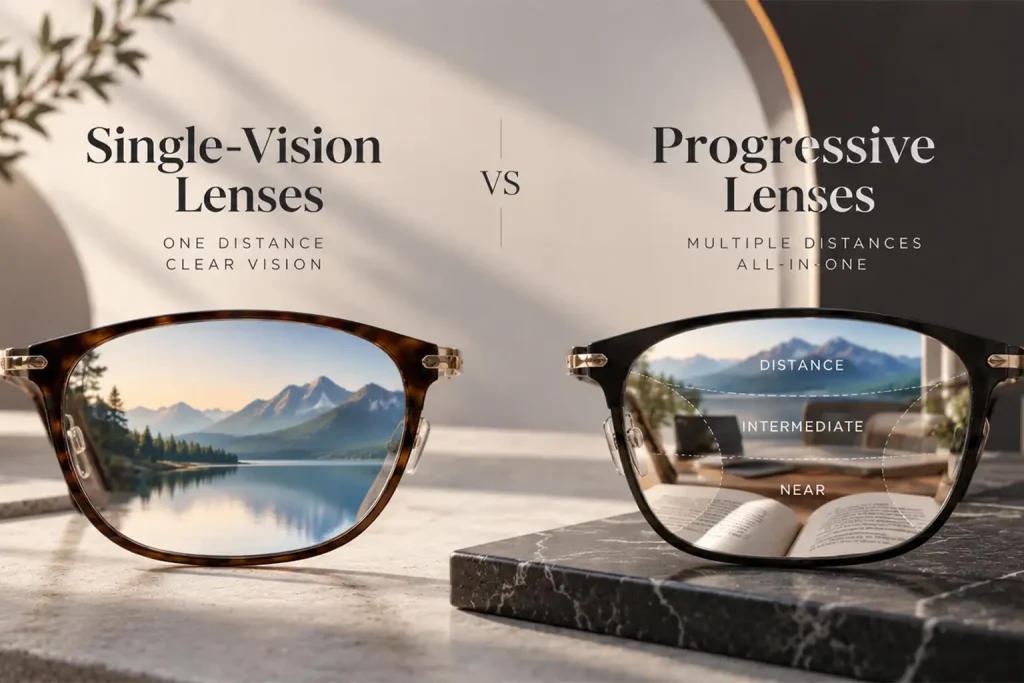
Progressive lenses are designed for people who need correction at more than one viewing distance. Instead of separating the lens into clearly visible sections, the optical power changes gradually from one area to another.

A progressive lens can provide correction for:

  • Far vision
  • Intermediate distances
  • Near vision

This makes progressive lenses especially suitable for activities that require frequent changes in focus, such as driving, using a computer, checking a smartphone, and reading.

Another important difference between progressive and traditional bifocal designs is appearance. Progressive lenses do not have the visible dividing line normally associated with bifocals.

Bifocal Lenses and Dual-Zone Vision

Bifocal lenses use two distinct optical areas within one lens. In a typical design, the upper part of the lens supports distance vision, while another section is dedicated to near tasks.

Bifocals continue to be used for certain prescriptions, although progressive designs provide an alternative for wearers who prefer a gradual transition between viewing distances.

Photochromic Lenses for Changing Light Conditions

Photochromic lenses respond to changes in light conditions. They become darker when exposed to outdoor light and gradually return toward a clearer state indoors. For people who regularly move between indoor and outdoor environments, this adaptive characteristic can offer additional convenience.

Lens Options Designed for Digital Lifestyles

Extended use of computers, smartphones, tablets, and other digital displays has increased the amount of time many people spend looking at screens. Blue light filtering lens technologies are designed with digital visual comfort in mind and are frequently selected by people who spend considerable time using screens.

Common users include:

  • Office professionals
  • Students
  • Gamers
  • Frequent computer users
  • People who regularly use smartphones and tablets

Lens selection for digital use should still be based on individual visual requirements and the recommendation of an eye-care professional.
Choosing the Right Lens Material

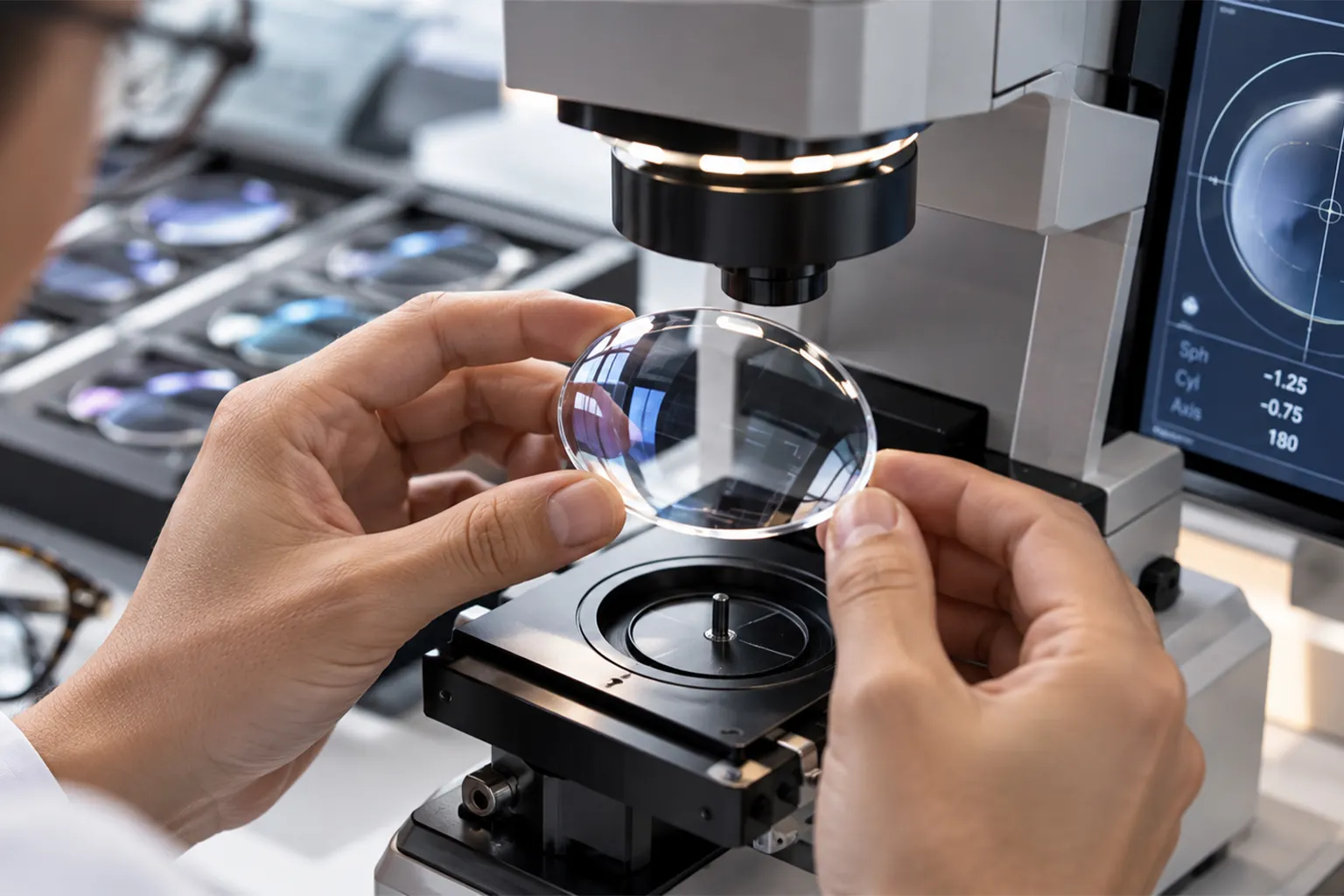
Two lenses with the same prescription can feel very different depending on the material from which they are produced. Material selection can affect lens thickness, weight, durability, and appearance.

Standard Plastic Lenses

Conventional plastic lenses offer a practical combination of light weight and affordability. They are suitable for many everyday prescriptions and continue to be widely used.

Polycarbonate for Lightweight Durability

Polycarbonate is known for its relatively high impact resistance and lighter construction. Because of these characteristics, it is often considered for applications such as:

  • Children’s eyewear
  • Sports glasses
  • Eyewear used during active lifestyles

High-Index Lenses for Stronger Prescriptions

As prescription strength increases, conventional lens materials may become noticeably thicker. High-index materials are designed to bend light more efficiently, allowing stronger prescriptions to be produced with a thinner profile than many standard materials.

This can improve both the appearance and wearing comfort of glasses with higher prescriptions.

Lens Coatings That Improve Everyday Performance

The performance of an eyeglass lens is not determined only by its prescription and material. Different surface treatments can also influence durability, clarity, glare, and everyday comfort.

Reducing Glare with Anti-Reflective Coatings

Reflections from artificial lighting, vehicle headlights, computer displays, and other light sources can interfere with visual comfort. An anti-reflective coating is designed to minimize unwanted reflections on the surfaces of the lens.

Potential advantages include improved lens transparency, reduced glare, more comfortable screen viewing, and better cosmetic appearance because the wearer’s eyes can be seen more clearly through the lenses.

Anti-reflective technology can also be particularly useful during nighttime driving when glare from headlights and street lighting becomes more noticeable.

Improving Durability with Scratch-Resistant Treatments

Eyeglass lenses are exposed to frequent handling and everyday wear. Scratch-resistant treatments add an additional protective surface intended to reduce minor damage during normal use.

They do not make lenses completely scratch-proof, but they can help improve durability when lenses are properly handled and cleaned.

UV Protection and Outdoor Eye Comfort

Ultraviolet protection is another important consideration when selecting lenses. Many modern lens materials and treatments are designed to reduce the amount of harmful ultraviolet radiation reaching the eyes.

For people who spend considerable time outdoors, UV protection can be an important feature to consider alongside prescription performance.

How Digital Technology Is Transforming Eyeglass Lenses

Lens manufacturing has evolved significantly from conventional production methods. Digital surfacing and freeform manufacturing allow the lens surface to be produced with a high degree of precision.

Depending on the lens design, prescription, and fitting parameters, modern manufacturing can provide benefits such as:

  • More precise optical correction
  • Improved clarity toward different areas of the lens
  • Smoother transitions between viewing zones
  • Greater personalization
  • Better overall wearing comfort

This is especially relevant for advanced progressive lenses, where small differences in design and manufacturing accuracy can significantly affect the wearer’s experience.

Modern lens development is therefore increasingly focused not simply on correcting prescription power but on optimizing how the lens performs during real-world visual activities.

What to Consider Before Choosing Your Lenses

There is no single lens that is ideal for every wearer. The correct choice depends on a combination of prescription requirements, daily activities, and personal preferences.

Your Prescription

The type and strength of the prescription can influence which lens designs and materials are most appropriate. Higher prescriptions, for example, may benefit from materials designed to reduce lens thickness.

Your Daily Visual Routine

Someone who spends most of the day using a computer may have different visual requirements from someone who drives frequently or works primarily outdoors. Understanding how the glasses will actually be used is therefore an important part of the selection process.

Screen and Computer Use

Frequent use of digital devices can increase the importance of comfortable intermediate vision and appropriate lens treatments.

Outdoor Activities

People who spend significant time outdoors may place greater importance on ultraviolet protection or adaptive lens technologies.

Driving Needs

Glare, reflections, and visual clarity can become especially important during driving, particularly at night. Anti-reflective treatments may therefore be worth considering for drivers.

Lens Thickness and Weight

For stronger prescriptions, lens material can have a noticeable effect on the final thickness and weight of the glasses. Choosing an appropriate index can make the finished eyewear look and feel more refined.

Budget and Lens Features

Different lens designs, materials, coatings, and customization technologies can affect cost. The goal should be to identify the features that provide meaningful benefits for the wearer’s actual visual requirements rather than selecting features based only on price or marketing terminology.

Why Lens Quality Matters as Much as Frame Design

Frames naturally receive a lot of attention because they determine the visible style of the glasses. However, the optical performance of the eyewear depends primarily on the lenses.

Lens quality can influence:

  • Clarity
  • Visual comfort
  • Adaptation
  • Peripheral vision
  • Lens thickness
  • Glare
  • Long-term satisfaction with the glasses

For this reason, selecting eyewear based exclusively on the frame may overlook the component that has the greatest impact on everyday vision. A well-designed frame combined with correctly selected lenses creates a much more complete optical solution.

The Shift Toward Personalized Optical Solutions

Visual habits have changed considerably. People now move continuously between smartphones, computer displays, dashboards, printed material, indoor environments, and outdoor spaces.

As a result, modern lenses increasingly need to support a broader range of visual tasks. Advanced optical technologies such as digitally surfaced and freeform lenses make it possible to develop more sophisticated lens geometries and optimize visual performance for specific requirements.

Brands such as Smart Vision focus on developing optical solutions that combine modern lens manufacturing with the visual demands of contemporary lifestyles.

Common Questions About Eyeglass Lenses

What is the difference between single vision and progressive lenses?

Single vision lenses generally provide one prescription correction throughout the lens, while progressive lenses provide several viewing distances through a gradual change in optical power.

Are thinner lenses always better?

Not necessarily. Lens thickness depends on factors including prescription, lens material, frame dimensions, and lens design. High-index materials can be useful for stronger prescriptions, but the most suitable material should be selected according to individual requirements.

What does anti-reflective coating do?

Anti-reflective technology reduces reflections from the lens surfaces. This can improve transparency and visual comfort, particularly under artificial lighting or during nighttime driving.

Who may benefit from photochromic lenses?

Photochromic lenses can be convenient for people who frequently transition between indoor and outdoor environments because the lenses automatically respond to changing light conditions.

Why is lens material important?

Lens material can influence thickness, weight, impact resistance, appearance, and wearing comfort. The ideal material therefore depends on the prescription and intended use.

Making a Smarter Choice for Everyday Vision

Understanding eyeglass lenses makes it easier to make informed decisions when purchasing new eyewear.

Instead of viewing all prescription lenses as essentially the same, it is useful to consider the complete combination of lens design, material, optical technology, surface treatments, and individual visual requirements.

Single vision, progressive, bifocal, photochromic, and other modern lens solutions are designed for different needs. Likewise, material choices such as standard plastic, polycarbonate, and high-index options can influence the final appearance and comfort of the glasses.

Modern manufacturing has also made lens personalization increasingly sophisticated, allowing optical solutions to be designed around a wider range of everyday activities.

Ultimately, the best eyeglass lens is not simply the most advanced or expensive option. It is the one that appropriately matches the wearer’s prescription, lifestyle, visual habits, and comfort requirements.

How Eyeglass Lenses Shape the Way You See

How Eyeglass Lenses Shape the Way You See
 

Single Vision or Progressive Lenses? How to Choose the Right Lens for Your Daily Routine

Single Vision or Progressive Lenses? How to Choose the Right Lens for Your Daily Routine

Choosing eyeglass lenses is not simply a matter of picking a prescription. The right lens design should also match how you work, read, drive, use digital devices, and move between different viewing distances throughout the day.

Two of the most common options are single vision lenses and progressive lenses. Although both are designed to improve visual clarity, they work in very different ways.

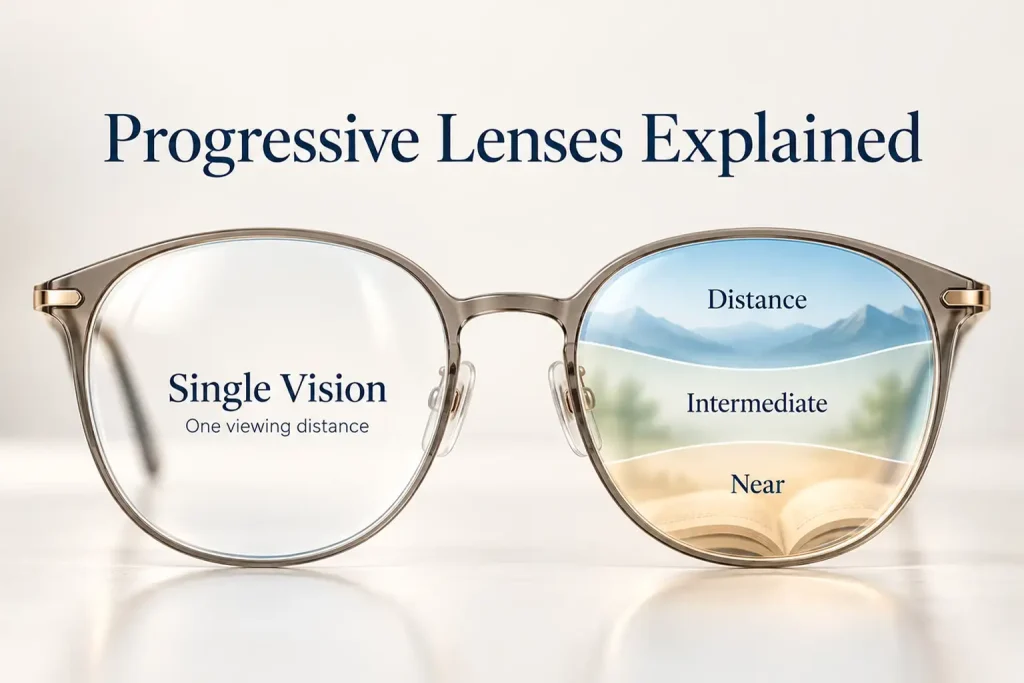
Single vision lenses provide one consistent prescription across the lens, while progressive lenses combine several viewing distances within one continuous design.

Understanding how each option works can make it easier to choose a lens that fits your visual needs, lifestyle, and daily activities. Pasted markdown

How Single Vision Lenses Work

Single vision lenses use the same prescription power across the entire lens surface.

They are designed to provide clear vision at one primary distance, which may be:

  • Distance
  • Intermediate
  • Near

For example, someone with myopia may wear single vision lenses for distance correction, while another person may use a dedicated pair of reading glasses for close work.

Because the optical design is relatively simple, single vision lenses usually provide a broad and consistent viewing area.

They are commonly chosen for:

  • Everyday distance glasses
  • Reading glasses
  • Computer glasses
  • Younger wearers with one primary prescription need

Another advantage is that most people adapt to them quickly because there are no separate viewing zones to learn. Pasted markdown

How Progressive Lenses Provide Multiple Viewing Distances

Progressive lenses are designed for people who need clear vision at more than one distance.

Instead of using separate pairs of glasses, a progressive lens gradually changes power from the upper portion of the lens to the lower portion.

In general, the lens provides:

  • Distance vision toward the top
  • Intermediate vision through the middle
  • Near vision toward the bottom

This allows the wearer to look across a room, work on a computer, and read something up close without changing glasses.

Unlike traditional bifocal lenses, progressive lenses do not contain a visible dividing line between prescription zones. Pasted markdown

Who Usually Needs Progressive Lenses?

Progressive lenses are commonly associated with presbyopia, the age-related reduction in the eye’s ability to focus on nearby objects.

Presbyopia often becomes noticeable after the age of 40.

Someone who previously used glasses only for distance vision may gradually find that:

  • Small text becomes harder to read
  • A phone needs to be held farther away
  • Switching between near and distance vision becomes less comfortable
  • Separate reading glasses become necessary

Progressive lenses can combine these visual requirements into a single pair of glasses. Pasted markdown


Difference Between Single Vision and Progressive Lenses

The main difference between single vision and progressive lenses is the number of viewing distances built into each lens design. Understanding this distinction can also make it easier to compare the different types of eyeglass lenses available for different visual needs.

Single vision lenses use one prescription range across the lens and are typically intended for one primary viewing distance.

Progressive lenses combine several prescription zones within one continuous lens surface, allowing the wearer to move between distance, intermediate, and near vision.

This difference can influence visual performance, adaptation, peripheral vision, and the way the wearer uses their eyes and head throughout the day.

Progressive Lenses for Reading and Driving

Progressive lenses for reading and driving can be useful for people who regularly switch between near and distance vision during the day.

For reading, the lower portion of the lens provides near vision, while the upper portion supports distance vision. This allows the wearer to read a document, look across a room, or check a smartphone without changing glasses.

For driving, progressive lenses can provide clear distance vision while still giving access to intermediate vision for the dashboard and near vision when necessary.

However, the experience can vary depending on prescription strength, lens design, fitting accuracy, and how often the wearer moves between different viewing distances.

For people who spend long periods reading or doing close work, dedicated single vision reading lenses may still provide a wider and more comfortable near-viewing area. Pasted markdown Pasted markdown


Single Vision Lenses for Computer Use

Single vision lenses for computer use are designed to provide clear vision at a specific working distance, usually around the distance between the eyes and a computer screen.

Because the prescription remains consistent across the lens, they can offer a wide and stable field of vision for prolonged desk work.

They may be particularly suitable for people who spend many hours working at a computer and do not need frequent changes between near, intermediate, and distance vision.

Progressive lenses also provide intermediate vision, but wearers need to look through the correct area of the lens. For some users, occupational or computer-specific lens designs may provide another practical option. Pasted markdown


Smartphone and Digital Device Use

Modern visual habits involve frequent switching between distant surroundings and nearby digital screens.

Progressive lenses can be convenient for people who regularly move between these distances.

A wearer can look through different areas of the same lens instead of repeatedly removing or changing glasses. Pasted markdown

Why Progressive Lenses May Require an Adaptation Period

A first-time progressive wearer may need some time to become familiar with the different optical zones.

For example, the wearer gradually learns where to look through the lens for:

  • Distance
  • Computer work
  • Reading

Some people become comfortable quickly, while others require more time.

Proper frame fitting, prescription accuracy, lens measurements, and progressive lens design can all influence the adaptation experience.

Modern digital lens production has helped improve this process considerably. Pasted markdown

How Digital Freeform Technology Changed Progressive Lenses

Older progressive lens designs were often associated with relatively narrow viewing zones and more noticeable peripheral distortion.

Modern digital freeform technology allows the lens surface to be calculated and manufactured with greater precision.

Depending on the lens design, this can help provide:

  • Wider usable vision areas
  • Smoother transitions between distances
  • Improved peripheral comfort
  • Better adaptation
  • Greater personalization

Some advanced progressive lenses can also take individual wearing parameters and lifestyle requirements into account.

This is one of the reasons modern progressive lenses can offer a significantly different visual experience from older generations of multifocal lenses. Pasted markdown

Advantages of Single Vision Lenses

Single vision lenses remain one of the most widely used eyeglass lens designs because of their simplicity and efficiency.

Key advantages include:

  • Wide field of vision for one distance
  • Minimal adaptation
  • Simple optical design
  • Good visual clarity
  • Often lower cost than advanced multifocal designs

They can be particularly suitable when the wearer needs correction mainly for one viewing distance. Pasted markdown

Advantages of Progressive Lenses

The main advantage of progressive lenses is versatility.

One pair of glasses can provide useful vision across several distances.

Benefits may include:

  • Distance, intermediate, and near correction
  • No visible bifocal line
  • Less need to carry several pairs of glasses
  • Convenient transitions between everyday tasks
  • Modern digital customization options

They are particularly useful for people whose daily routine requires frequent changes in viewing distance. Pasted markdown

When Single Vision Lenses May Be the Better Option

Single vision lenses may make more sense when:

  • Only one viewing distance requires correction
  • Maximum width of a specific viewing area is important
  • The glasses are intended for a dedicated task
  • The wearer prefers a simple lens design
  • A separate pair of reading or computer glasses is acceptable

There is no requirement to move to progressive lenses simply because they are more advanced.

The lens should match the wearer’s actual visual needs. Pasted markdown

When Progressive Lenses May Be More Practical

Progressive lenses may be worth considering when someone regularly needs vision correction for several distances.

For example, they may be useful for a person who needs to:

  • Drive
  • Work on a laptop
  • Read documents
  • Check a smartphone
  • Interact with people across a room

Instead of changing glasses throughout the day, these activities can often be managed with one pair. Pasted markdown


Lens Design Is Only Part of the Decision

Choosing between progressive and single vision lenses should not be based only on age.

Other important factors include:

  • Prescription
  • Working distance
  • Reading habits
  • Screen use
  • Driving frequency
  • Frame size and fit
  • Previous lens experience
  • Lifestyle

Two people with similar prescriptions may therefore prefer completely different lens solutions. Pasted markdown

Why Frame Selection Matters

The frame also influences how the final lenses perform.

This is particularly relevant for progressive lenses because sufficient vertical lens space is needed to accommodate different viewing zones.

Accurate fitting measurements are also important.

Frame position, pupillary distance, fitting height, and the way the glasses sit on the wearer’s face can all affect the final visual experience.

For this reason, lens and frame selection should ideally be considered together. Pasted markdown

Modern Lens Solutions for Different Visual Needs

Eyeglass lens technology now includes far more than basic distance or reading correction.

Depending on the wearer’s requirements, modern options may include:

  • Single vision lenses
  • Progressive lenses
  • Occupational lenses
  • Digital device lenses
  • Personalized freeform lenses
  • High-index materials
  • Specialized lens coatings

Smart Vision develops lens solutions designed for different prescriptions and everyday visual demands, including modern single vision and progressive lens designs. Pasted markdown


Which Lenses Are Best for Everyday Use?

Which lenses are best for everyday use depends on how many viewing distances you need to see clearly during a typical day.

If one distance is your main priority, such as distance vision, reading, or computer work, a single vision lens may provide a simple and effective solution.

If your daily routine involves frequent switching between distance, intermediate, and near tasks, progressive lenses may offer greater convenience by combining these viewing zones into one pair of glasses.

Prescription requirements, reading habits, screen use, driving frequency, frame fit, previous lens experience, and lifestyle should all be considered before choosing a final lens design. Pasted markdown

Final Thoughts

Single vision and progressive lenses are not competing solutions designed for the same purpose.

They solve different visual problems.

Single vision lenses provide focused correction for one viewing distance, while progressive lenses combine several viewing zones into one lens.

The right choice depends on how your eyes are used throughout the day, not simply on which technology is newer.

As digital lens design and freeform manufacturing continue to develop, eyeglass lenses are becoming increasingly adaptable to individual visual needs and modern lifestyles. Pasted markdown

Blue Light Glasses for Screen Use: How They Work and What to Expect

Screens are now involved in almost every part of everyday life. From working on a laptop and attending online classes to checking a smartphone or watching television, our eyes regularly shift between different types of digital displays.

This change in visual habits has also increased interest in eyewear designed specifically for screen use. Among the different types of eyeglass lenses available today, blue light filtering lenses have become a familiar option for people who spend long hours using digital devices. These lenses are intended to reduce exposure to selected wavelengths of visible blue light.

But what exactly do these lenses do? Can they make long periods of computer work more comfortable, and who is most likely to benefit from them?

Understanding how blue light filters work — and what they cannot do — can help consumers choose digital eyewear with more realistic expectations.

Why Blue Light Has Become Part of the Digital Vision Conversation

Blue light belongs to the visible portion of the light spectrum. Compared with colors at the other end of the visible spectrum, it has shorter wavelengths and relatively higher energy.

It is important to remember that blue light itself is not exclusive to electronic devices. In fact, sunlight is one of the most significant natural sources of blue light.

Other common sources include:

  • Computer monitors
  • Smartphones
  • Tablets
  • Television displays
  • LED lighting
  • Other illuminated digital screens

Natural exposure during daylight hours is part of normal daily life and contributes to biological processes associated with alertness and the sleep-wake cycle.

The discussion around blue light has grown mainly because modern users spend increasingly long periods looking at illuminated screens, often at close viewing distances and sometimes late into the evening.

What Are Blue Light Filtering Lenses?

Blue light filtering lenses are optical lenses developed to modify the amount of selected blue wavelengths reaching the eyes.

Depending on the lens design, this filtering effect may be created through the lens material itself, through a specialized surface coating, or through a combination of optical technologies.

Different products can therefore look slightly different. Some blue light lenses remain almost completely clear, while others may display a subtle reflection or a mild tint when viewed from certain angles.

Their purpose is generally not to eliminate every wavelength of blue light. Instead, modern lens designs typically aim to selectively manage part of the visible spectrum while maintaining usable optical clarity and natural-looking vision.

How Does Blue Light Lens Technology Work?

When light reaches an optical lens, different wavelengths can be transmitted, reflected, or partially filtered depending on the material and coating technology.

Blue light filtering lenses are engineered to reduce the transmission of selected wavelengths before the light reaches the eye.

The exact filtering performance can vary considerably between products. Factors such as lens material, coating design, filtering range, transmission percentage, and overall optical quality can all influence the final result.

This technology can be incorporated into several types of eyewear, including:

  • Prescription eyeglasses
  • Computer glasses
  • Office lenses
  • Non-prescription screen glasses
  • Everyday lenses designed for digital lifestyles

For this reason, “blue light glasses” should not be viewed as one single lens category with identical specifications. Different products may use very different optical technologies.

Screen Fatigue Is About More Than Blue Light

One of the most important points when discussing digital eyewear is that discomfort during screen use is rarely caused by just one factor.

People who spend several hours working at a computer may experience tired eyes, dryness, temporary visual discomfort, or difficulty maintaining comfortable focus.

However, these symptoms can also be influenced by:

  • Long periods of near-distance focusing
  • Reduced blinking while concentrating
  • Dry indoor environments
  • Inappropriate screen distance
  • Poor workstation ergonomics
  • Excessive display brightness
  • Reflections and glare
  • Extended periods without visual breaks

This means that blue light filtering should be considered one component of a broader approach to digital visual comfort rather than a complete solution to every symptom associated with screen use.


Can Blue Light Glasses Make Screen Use More Comfortable?

Experiences with blue light filtering lenses vary.

Some users prefer the visual experience provided by lenses designed for digital environments, particularly when working with bright screens or artificial lighting for extended periods.

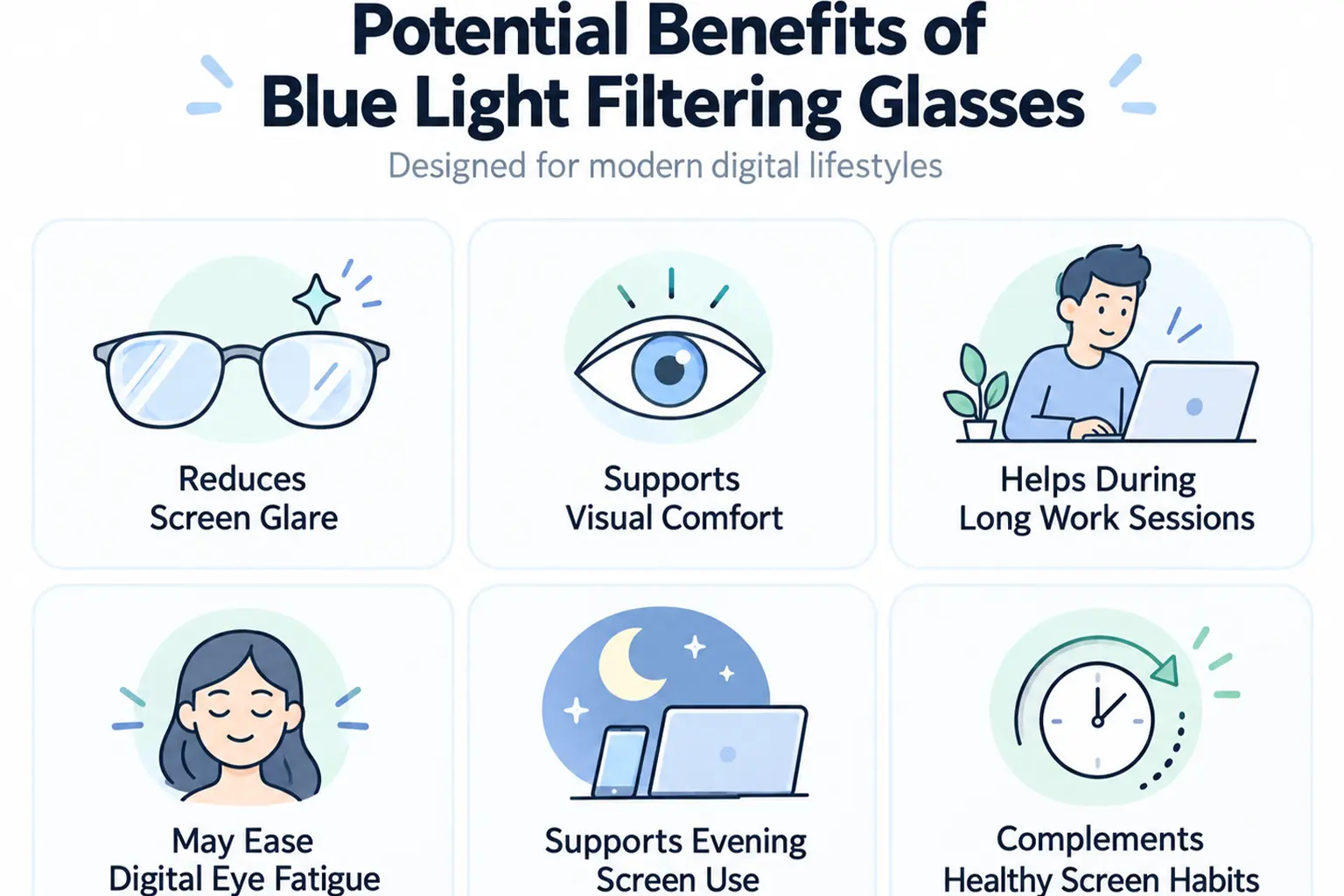
Depending on the lens technology and the individual wearer, potential advantages may include:

A More Comfortable Screen Experience

Bright digital displays can feel visually intense after many hours of continuous use. A lens designed to manage selected wavelengths and reflections may provide a more comfortable viewing experience for some wearers.

Support During Long Computer Sessions

People who work on computers throughout the day often look for eyewear optimized for near and intermediate visual tasks.

Combining an appropriate prescription with suitable lens design and coating technology can be particularly relevant for office environments and prolonged computer use.

Reduced Perception of Reflections

Some digital lens products combine blue light management with anti-reflective technologies.

Managing unwanted reflections can improve lens transparency and may make viewing through the lenses feel more comfortable, particularly around artificial lighting and illuminated displays.

More Comfortable Evening Screen Use

Late-night exposure to bright displays may be undesirable for people who use phones, tablets, or computers close to bedtime.

Managing display brightness, device settings, ambient lighting, and evening screen habits remains important. Specialized eyewear may also form part of an individual’s nighttime screen routine.

Who Commonly Uses Digital Comfort Lenses?

Digital eyewear is not limited to a single profession or age group.

It may be considered by people whose daily routines involve significant amounts of screen time, including:

  • Office professionals
  • Students
  • Remote workers
  • Designers and programmers
  • Gamers
  • Frequent smartphone users
  • People working under LED lighting
  • Anyone regularly switching between multiple digital devices

The most appropriate lens, however, depends on more than the number of hours spent in front of a screen.

Prescription requirements, working distance, visual tasks, age, lens design, coatings, and personal comfort preferences should also be considered.

Are Blue Light Glasses Worth Considering?

There is no universal answer because expectations and visual requirements differ from one wearer to another.

Blue light filtering lenses should not be treated as a cure for digital eye strain or as a substitute for appropriate vision correction.

Instead, they are better understood as an optional optical feature that may complement a broader digital vision strategy.

For someone spending only limited time on digital devices, the difference may be less noticeable. For a person working with multiple screens throughout the day, lens comfort, anti-reflective performance, prescription accuracy, and appropriate viewing conditions can become much more important.

The key is to choose eyewear based on actual visual requirements rather than relying solely on broad marketing claims.

Healthy Screen Habits Still Matter

Even advanced optical lenses cannot compensate for poor screen habits.

A few practical adjustments can make prolonged digital work more manageable:

  • Take regular visual breaks.
  • Keep the monitor at a comfortable working distance.
  • Adjust screen brightness to match the surrounding environment.
  • Reduce distracting reflections on the display.
  • Blink regularly, especially during concentrated work.
  • Avoid working in extremely dark environments with a very bright screen.
  • Maintain a comfortable sitting position and screen height.

A commonly recommended technique is the 20-20-20 rule: after approximately 20 minutes of near work, look at an object around 20 feet away for at least 20 seconds.

The purpose is to give the visual system regular opportunities to shift focus away from continuous near-distance work.

What to Look for When Choosing Blue Light Lenses

Blue light filtering performance is only one element of a good optical lens.

Before choosing digital eyewear, it is useful to consider the complete lens system.

Optical Clarity

A quality lens should provide clear vision without unnecessary distortion or an excessive change in color appearance.

Lens Coating Quality

Anti-reflective and surface coatings can affect transparency, reflections, maintenance, durability, and everyday visual comfort.

Appropriate Prescription

For prescription wearers, accurate correction remains essential. A filtering feature cannot compensate for an unsuitable prescription.

Filtering Technology

Different lens manufacturers use different approaches to blue light management. The amount and range of filtered light may therefore differ from one lens to another.

Comfortable Long-Term Wear

Eyewear intended for prolonged computer use should remain visually comfortable over several hours rather than simply offering an attractive technical specification.

Modern Lenses for an Increasingly Digital Lifestyle

Today’s visual environment is considerably different from that of previous generations.

Many people now move continuously between smartphones, laptops, office monitors, vehicle displays, tablets, televisions, and other illuminated interfaces.

As these habits evolve, optical manufacturers are developing lens technologies designed around modern visual behavior rather than focusing exclusively on traditional distance and reading requirements.

Digital comfort solutions may combine multiple features, such as prescription correction, optimized lens design, reflection management, surface coatings, and selective light filtering.

The result is a more complete approach to eyewear for people whose visual routines are strongly connected to digital devices.

Smart Vision Solutions for Everyday Digital Vision

Smart Vision develops optical solutions for the changing requirements of modern lifestyles.

For people who regularly work, study, communicate, or consume content through digital devices, selecting the right lens involves more than simply adding a blue light filter.

Optical quality, lens design, coating performance, prescription accuracy, and long-term comfort all contribute to the overall visual experience.

Smart Vision digital lens solutions are developed with these everyday requirements in mind, offering options designed for contemporary screen-focused environments.

Why Consider Smart Vision Digital Lens Solutions?

  • Developed for today’s screen-intensive lifestyles
  • Designed to support comfortable everyday vision
  • Available with modern lens and coating technologies
  • Focused on clear and natural visual performance
  • Suitable for different digital viewing requirements
A Better Approach to Digital Eye Comfort

Blue light filtering lenses can be a useful addition to modern eyewear, but their role should be understood realistically.

Comfort during digital device use depends on several factors working together: the correct prescription, appropriate lens technology, good workstation conditions, suitable lighting, regular visual breaks, and healthy viewing habits.

Rather than looking for a single solution to every type of screen-related discomfort, users can benefit from considering their entire visual environment.

As digital devices continue to play a larger role in work, education, communication, and entertainment, eyewear designed around digital lifestyles is likely to remain an important part of modern optical technology.


In modern eyewear, clarity is no longer defined only by prescription strength. Visual comfort, reduced glare, and better light transmission all play a critical role in how well you see and how comfortable your eyes feel throughout the day. This is where anti-reflective (AR) coating becomes essential.

Anti-reflective coating is one of the most widely recommended lens enhancements by opticians and eye care professionals worldwide. Whether you drive at night, work long hours in front of digital screens, or simply want your glasses to look better, AR coating can dramatically improve your visual experience.

This comprehensive guide explains everything you need to know about anti-reflective coating for glasses. The content is written in clear, engaging language, structured according to SEO best practices, and designed to keep readers informed and interested from start to finish.


What Is Anti-Reflective (AR) Coating?

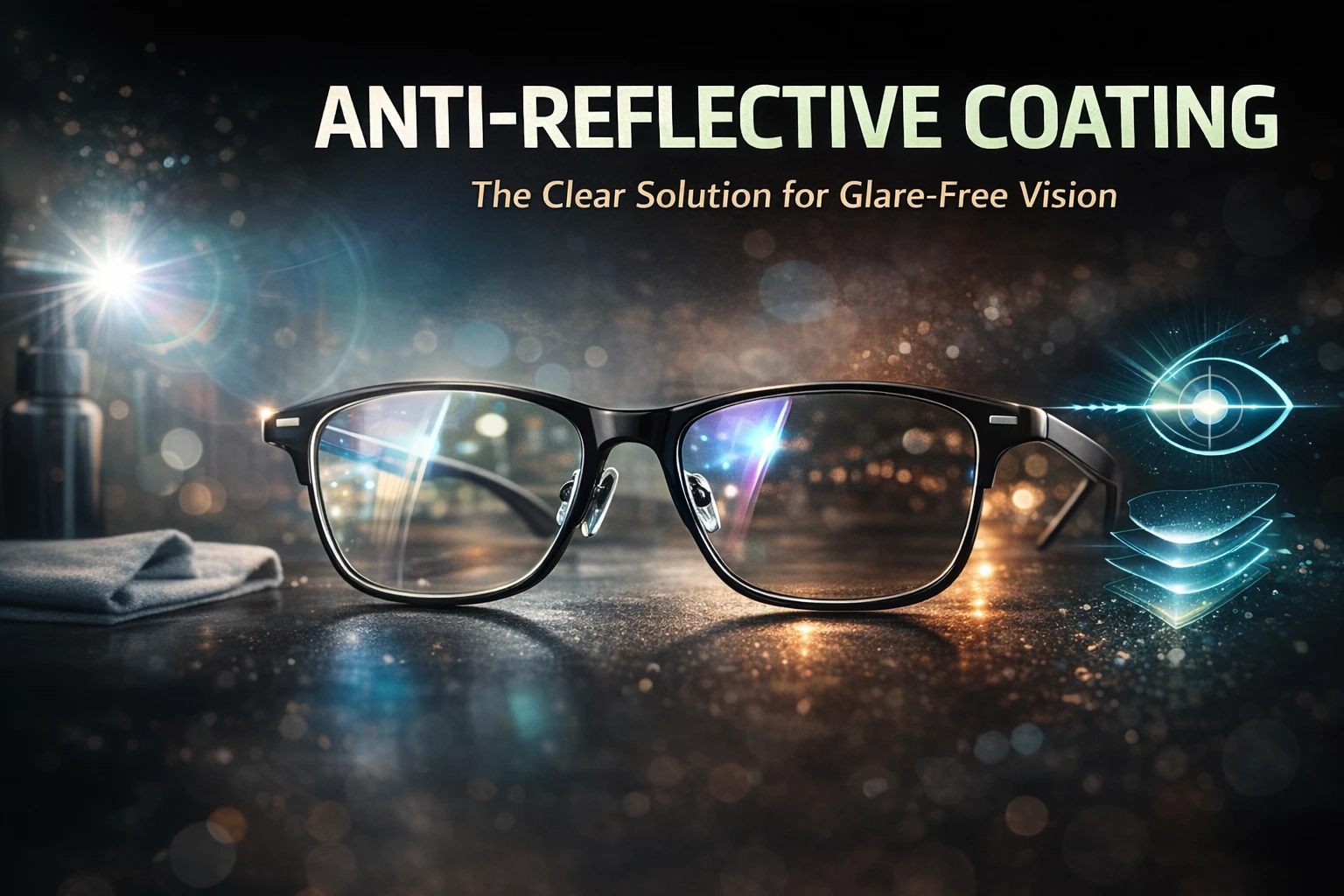
Anti-reflective (AR) coating is a thin, multi-layer treatment applied to the surface of eyeglass lenses. Its primary purpose is to reduce reflections and glare by allowing more light to pass through the lens rather than bouncing off its surface.

Standard lenses reflect a noticeable percentage of incoming light, which can cause distracting glare, halos around lights, and reduced visual clarity. AR coating minimizes these reflections on both the front and back surfaces of the lens, resulting in sharper, more comfortable vision.

AR coating is also commonly referred to as anti-glare coating and is available for nearly all lens materials, including plastic, polycarbonate, and high-index lenses.

Anti-Reflective (AR) Coating

How Does Anti-Reflective Coating Work?

The technology behind AR coating is based on optical physics and precise engineering.

AR coatings are made by applying multiple ultra-thin layers of metal oxides to the lens surface. Each layer is engineered to interfere with specific wavelengths of light. When light waves hit the lens, these layers cancel out reflected light waves through a process known as destructive interference.

As a result:

  • Reflections are significantly reduced
  • More light passes through the lens
  • Visual clarity improves in various lighting conditions

Modern AR coatings can allow up to 99.5% of available light to reach the eyes, compared to much lower transmission rates in uncoated lenses.


Key Benefits of Anti-Reflective (AR) Coating

Reduced Glare for Safer Night Driving

Night driving can be particularly challenging due to headlights, streetlights, and reflective road surfaces. AR coating helps by reducing glare and internal reflections that cause visual distractions.

Benefits for night driving include:

  • Fewer halos around headlights
  • Reduced ghost images
  • Less discomfort from blue-tinted LED headlights
  • Faster glare recovery time

These improvements support safer and more confident driving after dark.


Improved Comfort for Screen and Computer Use

Extended screen time is one of the most common causes of eye strain today. Reflections from screens and overhead lighting can worsen symptoms such as:

  • Headaches
  • Blurry vision
  • Dry eyes
  • Visual fatigue

Anti-reflective coating reduces surface reflections on lenses, helping maintain consistent visual performance during long periods of computer or smartphone use. This makes AR-coated lenses especially valuable for office workers, students, and remote professionals.


Clearer, Sharper Vision

By increasing light transmission, AR coating enhances overall visual clarity. Many wearers report that small text, fine details, and low-contrast objects appear easier to see.

In controlled studies conducted under glare or stray-light conditions, participants wearing AR-coated lenses consistently reported better visual comfort and fewer perceived reflections compared to those wearing uncoated lenses.


Better Appearance and Clearer Photos

Anti-reflective coating improves not only how you see, but also how your glasses look.

Without AR coating, lenses can appear shiny or reflective, making it harder to see the wearer’s eyes. This effect becomes more noticeable in photographs, video calls, and social settings.

AR-coated lenses:

  • Reduce visible lens reflections
  • Make eyes more visible behind glasses
  • Improve appearance in photos and videos

For stronger minus prescriptions, AR coating also reduces internal reflections that can cause faint circular patterns along thick lens edges.


Types of Anti-Reflective Coatings

Standard AR Coatings

Basic AR coatings focus primarily on reducing glare and reflections. They improve clarity but may require more careful handling.

Premium AR Coatings

High-quality AR coatings often include additional features such as:

  • Scratch resistance
  • Smudge resistance
  • Anti-fog properties
  • Easier cleaning

These coatings are designed for longer durability and better everyday performance.

Blue-Light Filtering AR Coatings

Some AR coatings are designed to filter blue-violet light emitted by digital screens. While research is ongoing, many optometrists consider these coatings safe and potentially beneficial for people with heavy screen exposure.


How to Choose the Right Anti-Reflective Coating

Not all AR coatings are the same. Each manufacturer uses a unique formula with varying numbers of layers and added features.

High-quality AR coatings may include up to seven ultra-thin layers, each targeting different wavelengths of light. Despite this complexity, the total thickness of the coating is extremely small—typically around 0.2 to 0.3 microns.

Your optician may recommend a specific AR coating based on:

  • Your prescription strength
  • Lens material
  • Daily activities
  • Screen usage habits
  • Night driving needs

Factors to Consider Before Choosing AR Coating

Lens Material

Certain lens materials, such as polycarbonate and high-index lenses, naturally reflect more light. These lenses benefit the most from AR coating.

Prescription Type

Progressive, bifocal, and trifocal lenses often perform better with AR coating, as it improves clarity across multiple viewing zones.

Lifestyle

If you frequently drive at night, work on digital devices, or appear on camera, AR coating can significantly enhance comfort and appearance.


Factory-Applied vs Lab-Applied AR Coatings

Some lenses come with factory-applied AR coating on both surfaces, while others receive the coating after being customized to your prescription in an optical lab.

Both methods are effective when done correctly, but premium lab-applied coatings often allow for more customization based on individual needs.


How to Clean and Care for AR-Coated Lenses

Proper care is essential to maintain the performance of anti-reflective coatings.

Best practices include:

  • Use only lens cleaners recommended by your optician
  • Rinse lenses with water before wiping
  • Clean with a microfiber cloth
  • Avoid harsh chemicals or paper products

Never clean dry AR-coated lenses with a dry cloth, as this can cause fine scratches that are more visible on coated surfaces.


Is Anti-Reflective Coating Worth It?

Whether AR coating is worth the investment depends on your visual needs and lifestyle. While the coating can wear over time, proper care supports long-lasting performance.

Many wearers find premium AR coatings especially valuable due to their added durability, scratch resistance, and ease of cleaning. For people who rely on their glasses throughout the day, AR coating is often considered a worthwhile upgrade.


Frequently Asked Questions About AR Coating

How Can I Tell If My Glasses Have AR Coating?

Look at your lenses from an angle. AR-coated lenses usually reflect a soft green, blue, or yellow-green hue instead of a strong white glare.

Does AR Coating Block Blue Light?

Some AR coatings include blue-violet light filtering as an additional feature. While their long-term benefits are still being studied, they are considered safe and commonly recommended.

How Long Does Anti-Reflective Coating Last?

Most AR coatings are designed to last the lifespan of your lenses. However, prescriptions typically change every one to two years, making regular eye exams important.


Final Thoughts

Anti-reflective coating is one of the most impactful enhancements you can add to your eyeglass lenses. By reducing glare, improving clarity, and enhancing appearance, AR coating supports both visual performance and everyday comfort.

For anyone seeking clearer vision, safer night driving, and better screen comfort, anti-reflective coating is a smart and practical investment in eye health.

Photochromic lenses have transformed the way people experience vision correction in changing light conditions. These intelligent lenses automatically adapt to their environment, darkening outdoors and returning to clear indoors—offering comfort, protection, and convenience in a single solution.

In today’s world, where eye strain, UV exposure, and lifestyle flexibility matter more than ever, photochromic lenses are no longer a luxury—they are a smart vision choice. This comprehensive guide explores everything you need to know about photochromic lenses, how they work, their benefits, limitations, and who they’re best suited for.

This article is written following strict SEO principles, proper heading hierarchy, and engaging, reader-focused content to keep users scrolling and search engines satisfied.

Photochromic Lenses

What Are Photochromic Lenses?

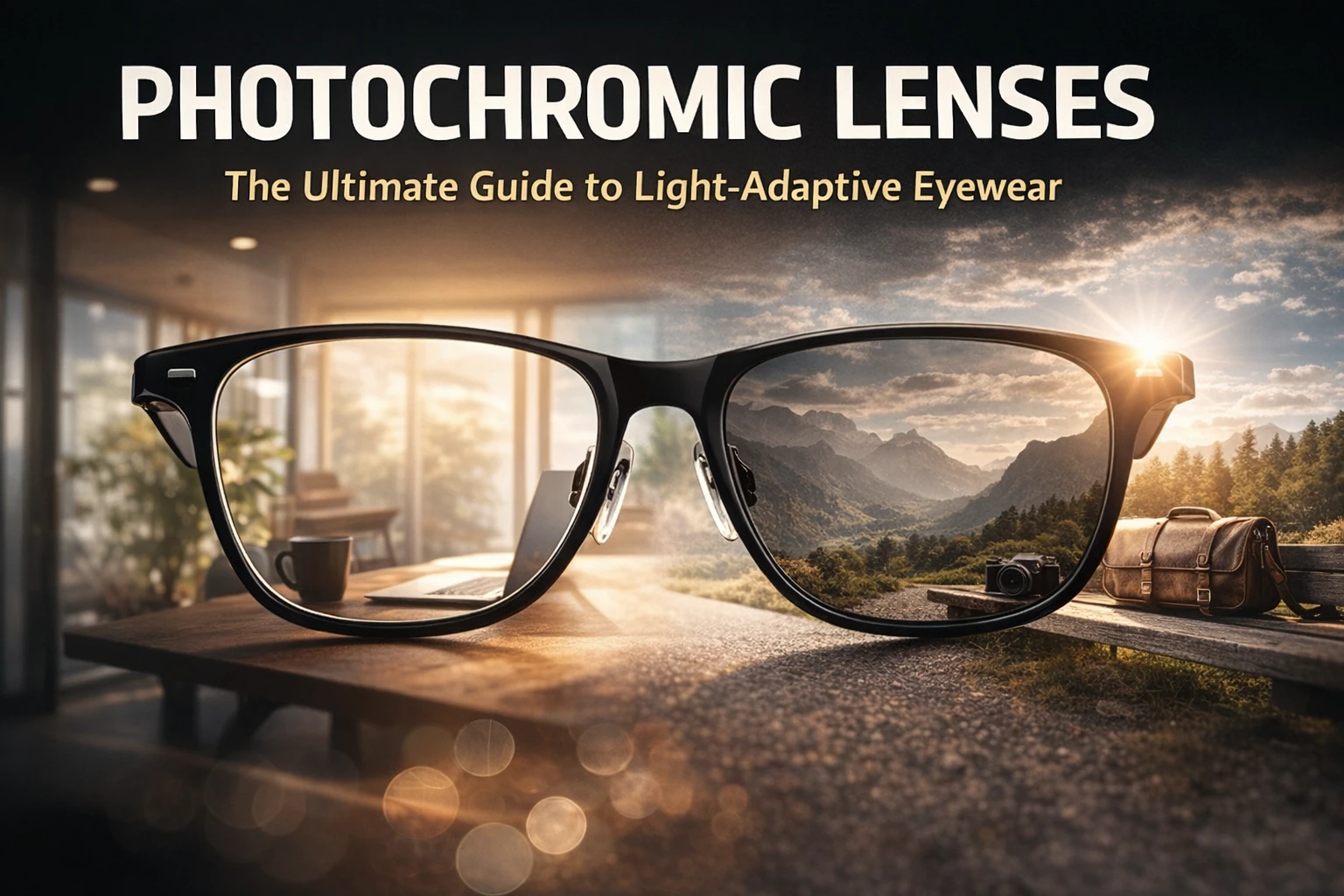
Photochromic lenses are optical lenses that automatically change their tint in response to ultraviolet (UV) light. When exposed to sunlight, they darken; when UV exposure decreases, such as indoors or at night, they gradually return to a clear state.

Unlike traditional sunglasses that must be removed indoors, photochromic lenses provide a seamless transition between lighting conditions, making them ideal for everyday wear.

These lenses are commonly used in eyeglasses and are available in prescription and non-prescription forms.


How Do Photochromic Lenses Work?

The science behind photochromic lenses is both elegant and effective.

Inside the lens material are special photochromic molecules—usually silver halide or organic compounds. When exposed to UV rays, these molecules undergo a chemical reaction that causes them to change structure and absorb light, resulting in a darker tint.

When UV exposure is removed, the molecules return to their original state, and the lenses become clear again.

This process is:

  • Automatic
  • Reversible
  • Repeated thousands of times without losing effectiveness

Types of Photochromic Lenses

Plastic Photochromic Lenses

Most modern photochromic lenses are made from plastic materials, which allow the photochromic technology to be embedded directly into the lens.

Glass Photochromic Lenses

Glass lenses were the first to feature photochromic technology. While they offer excellent optical clarity, they are heavier and less impact-resistant than plastic lenses.

Polarized Photochromic Lenses

These lenses combine photochromic technology with polarization, reducing glare from reflective surfaces such as water, snow, and roads.

Blue Light Photochromic Lenses

Designed for digital lifestyles, these lenses provide indoor blue light filtering while still darkening outdoors.


Benefits of Photochromic Lenses

Photochromic lenses offer a wide range of advantages for daily vision and eye health.

Automatic Light Adaptation

They adjust seamlessly without requiring the wearer to switch glasses.

UV Protection

Most photochromic lenses block 100% of harmful UVA and UVB rays, helping protect the eyes from long-term damage.

Visual Comfort

By reducing brightness and glare, they minimize eye strain and squinting.

Convenience

One pair of glasses works in multiple environments, reducing the need for prescription sunglasses.

Aesthetic Appeal

Modern photochromic lenses are available in various colors and coatings, offering both function and style.


Limitations of Photochromic Lenses

While highly effective, photochromic lenses are not without limitations.

Reduced Activation in Cars

Car windshields block most UV rays, which can prevent lenses from fully darkening while driving.

Temperature Sensitivity

Cold temperatures may cause lenses to darken more, while heat can slow the darkening process.

Transition Time

Although modern lenses are fast, they still require time to darken and clear.

Understanding these limitations helps users set realistic expectations.


Who Should Use Photochromic Lenses?

Photochromic lenses are suitable for a wide range of users, including:

  • People sensitive to light
  • Individuals who spend time both indoors and outdoors
  • Children and teenagers
  • Adults who prefer convenience
  • Patients seeking UV eye protection

They are especially useful for people who want eye protection without carrying multiple pairs of glasses.


Photochromic Lenses vs Sunglasses

While sunglasses provide instant darkness, they lack the versatility of photochromic lenses.

Photochromic lenses:

  • Adapt automatically
  • Can be worn indoors
  • Provide continuous eye protection

Sunglasses:

  • Offer immediate shading
  • May provide stronger tint
  • Require switching

For many users, photochromic lenses serve as an all-in-one solution.


Prescription Compatibility

Photochromic lenses are compatible with most prescriptions, including:

  • Single vision
  • Bifocal
  • Progressive lenses

They can also be combined with anti-reflective, scratch-resistant, and blue light coatings.


Are Photochromic Lenses Safe for Children?

Yes. In fact, many eye care professionals recommend photochromic lenses for children.

Children’s eyes are more sensitive to UV radiation, and these lenses provide constant protection during outdoor activities while remaining clear indoors for schoolwork.


Caring for Photochromic Lenses

Proper care ensures long-lasting performance:

  • Clean with a microfiber cloth
  • Use lens-safe cleaning solutions
  • Avoid excessive heat exposure
  • Store in a protective case

With good care, photochromic lenses maintain their responsiveness for years.


Cost and Value

Photochromic lenses typically cost more than standard lenses, but they often replace the need for prescription sunglasses, offering long-term value.

Prices vary based on:

  • Lens material
  • Brand
  • Additional coatings

Future of Photochromic Technology

Advancements continue to improve:

  • Faster transition speeds
  • Better performance in vehicles
  • Improved color consistency

As technology evolves, photochromic lenses are becoming more efficient and accessible.


Final Thoughts

Photochromic lenses are a smart, modern solution for dynamic vision needs. By combining convenience, protection, and comfort, they adapt to your lifestyle rather than forcing you to adapt to your eyewear.

For anyone seeking a balance between clear indoor vision and outdoor eye protection, photochromic lenses are an investment in long-term eye health and daily comfort.

Myopia, commonly known as nearsightedness, is one of the most widespread vision conditions in the modern world. With the rapid growth of digital lifestyles, increased screen exposure, and reduced outdoor activity, myopia has become a global public health concern rather than a minor vision inconvenience.

In this in‑depth guide, you’ll learn exactly what myopia is, why it happens, how common it is, who is at risk, and what modern medicine can do to manage or slow its progression. This article is written using SEO best practices, structured headings, and engaging storytelling to keep you reading while delivering real value.

If you’re a parent, a student, a professional, or simply someone who cares about long‑term eye health, this guide will give you a clear and practical understanding of myopia.


What Is Myopia?

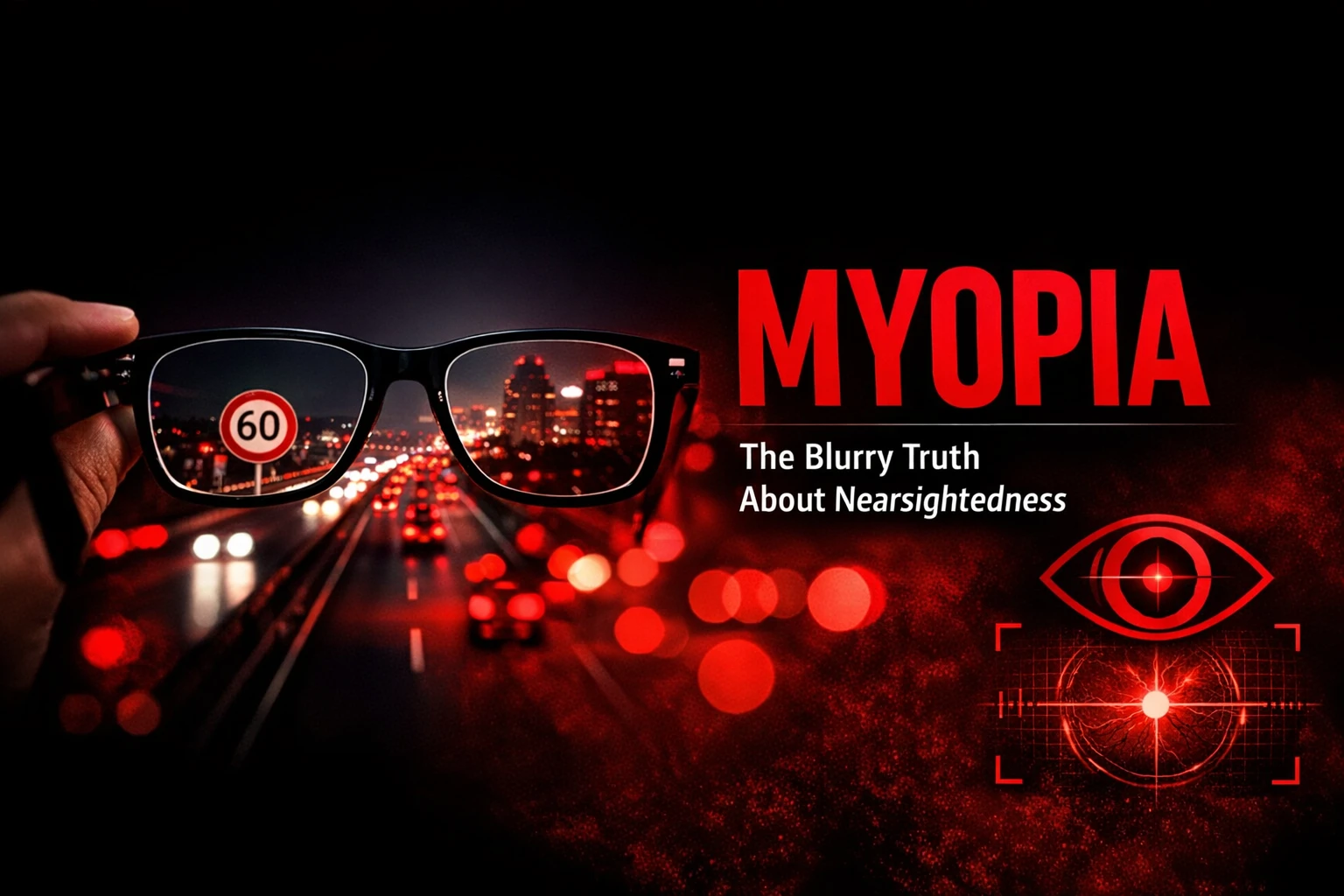
Myopia is a refractive error of the eye in which close objects appear clear, but distant objects look blurred. This happens because light entering the eye focuses in front of the retina instead of directly on it.

In a healthy eye, the cornea and lens bend light precisely so that images land on the retina. In a myopic eye, either the eyeball is too long or the cornea is too curved, causing the focal point to fall short of the retina. The result is blurry distance vision.

Common real‑life examples of myopia include difficulty reading road signs, recognizing faces from far away, or seeing the board clearly in a classroom.

Myopia (Nearsightedness)

How Common Is Myopia?

Myopia is extremely common and becoming more prevalent every year. In many developed countries, over 40% of the population is affected, and in some parts of East Asia, rates among young adults exceed 80%.

Eye care experts predict that by 2050, nearly half of the world’s population may have myopia. This rapid rise is strongly linked to lifestyle changes such as:

  • Increased screen time
  • Prolonged near‑work activities
  • Reduced exposure to natural daylight

Children are being diagnosed at younger ages than ever before, which increases the likelihood of developing high myopia later in life.


Types of Myopia

Simple Myopia

Simple myopia is the most common form. It typically develops in childhood or adolescence and stabilizes in early adulthood. Vision can usually be corrected fully with glasses, contact lenses, or refractive surgery.

High Myopia

High myopia occurs when the refractive error is severe, usually −6.00 diopters or more. People with high myopia are at a greater risk for serious eye complications later in life.

Pathologic (Degenerative) Myopia

Pathologic myopia is a progressive and potentially sight‑threatening condition. Even with corrective lenses, vision may not be fully clear due to structural damage in the eye, such as retinal degeneration.


Symptoms of Myopia

The symptoms of myopia often develop gradually and may include:

  • Blurry distance vision
  • Squinting to see clearly
  • Frequent headaches
  • Eye strain or fatigue
  • Difficulty driving at night

Signs of Myopia in Children

Children may not realize their vision is abnormal. Warning signs include:

  • Sitting very close to screens
  • Holding books close to the face
  • Poor academic performance
  • Short attention span
  • Complaints of headaches

Early detection is critical, as untreated myopia can worsen rapidly during growth years.


What Causes Myopia?

There is no single cause of myopia. Most experts agree it develops due to a combination of genetic and environmental factors.

Genetic Factors

If one or both parents have myopia, the risk for their children increases significantly. Genetics can influence eye shape and growth patterns.

Environmental Factors

Lifestyle plays a major role, especially in children:

  • Excessive near work (reading, screens)
  • Limited outdoor time
  • Poor lighting conditions

Myopia often appears in early childhood and progresses through adolescence before stabilizing.


Risk Factors for Developing Myopia

Several factors increase the likelihood of developing myopia:

  • Family history of nearsightedness
  • Long hours of screen use
  • Intensive academic demands
  • Lack of outdoor activity
  • Certain ethnic backgrounds

Understanding these risks allows for earlier intervention and better outcomes.


Complications of Myopia

While mild myopia is generally manageable, high or pathologic myopia can lead to serious complications, including:

  • Retinal detachment
  • Glaucoma
  • Cataracts
  • Myopic macular degeneration
  • Optic nerve damage

These risks make regular eye examinations essential, especially for individuals with high myopia.


Diagnosis and Eye Testing

How Myopia Is Diagnosed

Myopia is diagnosed through a comprehensive eye exam that includes:

  • Visual acuity testing
  • Retinoscopy
  • Refraction testing with a phoropter

Myopia Testing in Children

Children should receive their first eye exam early in life, with regular follow‑ups throughout childhood. Pediatric screenings are vital for catching myopia before it progresses.


Treatment Options for Myopia

Eyeglasses

Eyeglasses are the most common and safest method of correction. Single‑vision lenses are typically sufficient, though older adults may require progressive lenses.

Contact Lenses

Contact lenses provide a wider field of vision and sharper distance clarity for some people, but require careful hygiene.

Orthokeratology (Ortho‑K)

Special contact lenses worn overnight temporarily reshape the cornea, allowing clear vision during the day without lenses.

Refractive Surgery

  • LASIK reshapes the cornea using a laser
  • PRK removes the surface layer and reshapes the cornea
  • LASEK combines elements of LASIK and PRK

Intraocular Lenses

For severe myopia, lens implants may be placed inside the eye, either supplementing or replacing the natural lens.


Outlook and Prognosis

Myopia does not disappear on its own, but it can be effectively managed. Most people with simple myopia live normal lives with proper correction.

High myopia requires lifelong monitoring due to increased risk of complications. Early diagnosis significantly improves long‑term outcomes.


Can Myopia Be Prevented?

Myopia cannot be completely prevented, but its onset and progression may be slowed.

Prevention Strategies

  • Increase outdoor time
  • Limit continuous screen use
  • Follow the 20‑20‑20 rule
  • Ensure proper lighting

Some studies suggest that atropine eye drops and special contact lenses may slow progression in children.


Living With Myopia

Daily habits play a major role in protecting long‑term vision:

  • Schedule regular eye exams
  • Take frequent screen breaks
  • Maintain a balanced diet
  • Wear protective eyewear when needed

Nutrition and Eye Health

Key nutrients for eye health include:

  • Vitamin A for retinal function
  • Vitamin C for eye tissue health
  • Lutein for blue‑light protection

Whole foods are always preferable to supplements unless otherwise advised by a healthcare provider.


When to See an Eye Doctor

You should see an eye care professional if you notice:

  • Sudden vision changes
  • Increased floaters or flashes
  • Eye pain or pressure
  • Rapid progression of nearsightedness

Some symptoms may indicate medical emergencies requiring immediate attention.


Final Thoughts

Myopia is more than just needing glasses—it’s a condition that reflects how modern lifestyles impact eye health. With awareness, early detection, and the right treatment strategy, myopia can be effectively managed.

Protecting your vision today means clearer sight for years to come.

Related Posts

Woman wearing eyeglasses with single vision and progressive lens comparison

Single Vision or Progressive Lenses? How to Choose the Right Lens for Your Daily Routine

Single Vision or Progressive Lenses? How to Choose the Right Lens for Your Daily Routine Single Vision or Progressive Lenses? How to Choose the Right Lens for Your Daily Routine Choosing eyeglass lenses is not simply a matter of picking a prescription. The right lens design should also match how you work, read, drive, use […]

Woman wearing blue light glasses while using a laptop

Blue Light Glasses for Screen Use: How They Work and What to Expect

Blue Light Glasses for Screen Use: How They Work and What to Expect Screens are now involved in almost every part of everyday life. From working on a laptop and attending online classes to checking a smartphone or watching television, our eyes regularly shift between different types of digital displays. This change in visual habits […]

Different eyeglass lenses for everyday vision needs

The Complete Guide to Modern Eyeglass Lenses

The Complete Guide to Modern Eyeglass Lenses Choosing the right eyeglass lenses depends on your prescription, lifestyle, and how you use your glasses every day. Single vision lenses are designed for one viewing distance, while progressive lenses can support distance, intermediate, and near vision within a single pair of glasses. Lens materials also matter. They […]

Anti-Reflective (AR) Coating

Anti-Reflective (AR) Coating

In modern eyewear, clarity is no longer defined only by prescription strength. Visual comfort, reduced glare, and better light transmission all play a critical role in how well you see and how comfortable your eyes feel throughout the day. This is where anti-reflective (AR) coating becomes essential. Anti-reflective coating is one of the most widely […]