

Best Computer Glasses Lenses: Choosing the Right Lenses for Digital Eye Comfort
How Digital Screen Use Affects Your Eyes
From working at a computer and attending virtual meetings to studying online and using smartphones, digital screens have become an essential part of everyday life. Although these devices make many tasks easier, spending extended periods focusing on screens can sometimes lead to uncomfortable visual symptoms.
This condition, commonly known as digital eye strain or computer vision syndrome, can affect people of different ages and professions.
Common symptoms include:
-
Dry, irritated, or tired eyes
-
Blurred or fluctuating vision
-
Headaches after prolonged screen use
-
Difficulty maintaining focus
-
Neck and shoulder discomfort
-
Increased sensitivity to glare
Fortunately, understanding the different types of eyeglass lenses can help individuals identify optical solutions that match their prescriptions, working distances, and daily visual requirements.
Finding the best computer glasses lenses involves more than selecting a fashionable frame or choosing a blue-light coating. The most suitable option depends on how your eyes function throughout the day and which visual tasks require the greatest attention.
Understanding the Main Causes of Computer Vision Syndrome
Looking at a digital display requires continuous coordination between the eyes’ focusing and alignment systems. Unlike viewing objects in the distance, computer work often involves maintaining visual attention at a relatively short distance for extended periods.
Several everyday habits can contribute to visual discomfort.
Reduced Blinking During Screen Activities
People often blink less frequently or incompletely when concentrating on digital content. This may cause the tear film to become unstable, increasing dryness and irritation.
Continuous Near-Distance Focusing
Reading documents, writing code, and working with spreadsheets require sustained close or intermediate vision. Depending on the individual’s visual condition, prolonged focusing can contribute to discomfort.
Reflections and Poor Lighting Conditions
Bright windows, overhead lights, and reflections on spectacle lenses can interfere with comfortable viewing. Inadequate lighting and excessive screen brightness may make these problems more noticeable.
Incorrect Prescription or Working Distance
Glasses designed primarily for distance vision may not always provide the most comfortable correction for prolonged computer use, particularly for people with presbyopia.
Recognizing these factors is an important first step toward selecting lenses that support comfortable digital activities.
BlueCut Technology: Understanding Blue-Light Filtering Eyeglass Lenses
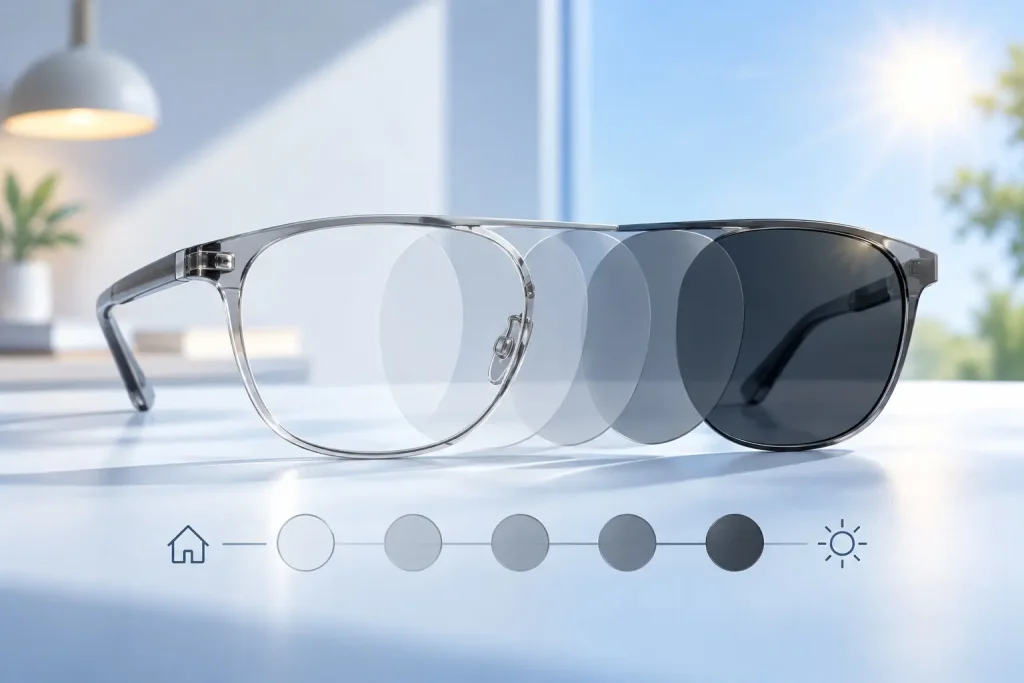
BlueCut lenses are designed to filter selected wavelengths of blue light while allowing users to maintain clear vision during everyday activities.
Digital devices and modern LED lighting emit visible blue light, although the amount of blue light produced by typical screens is considerably lower than that received from natural daylight.
BlueCut technology can be considered by people who prefer lenses with specific light-filtering characteristics.
What Makes BlueCut Lenses Different?
Depending on their design and specifications, BlueCut lenses may offer:
-
Filtering of selected blue-light wavelengths
-
Options for prescription or non-prescription eyewear
-
Compatibility with everyday visual activities
-
A relatively clear appearance in some designs
-
Availability alongside additional lens coatings
Students, office employees, and people who regularly use digital devices may consider these lenses based on their preferences.
However, scientific evidence has not consistently demonstrated that blue-light filtering glasses reduce digital eye strain or improve sleep compared with ordinary clear lenses.
For this reason, BlueCut technology should be viewed as an optional lens feature rather than a guaranteed treatment for screen-related discomfort.

BlueControl Lenses: Exploring Advanced Light-Management Options
For individuals interested in modern optical coatings, BlueControl lenses represent another category of blue-light management technology.
These lenses are developed to modify the transmission or reflection of selected wavelengths of visible light, depending on the particular coating or lens design.
Although BlueControl and BlueCut technologies may share similar objectives, their exact filtering characteristics can vary between manufacturers.
Who Might Consider BlueControl Eyeglass Lenses?
BlueControl options may appeal to individuals who regularly perform visually demanding digital tasks, including:
-
Software developers and programmers
-
Graphic designers and creative professionals
-
Engineers and technical specialists
-
Office employees using multiple monitors
-
Students and people who frequently use digital devices
When comparing BlueControl lenses, it is important to consider their optical clarity, color appearance, reflection characteristics, and compatibility with the wearer’s prescription.
The presence of a blue-light filtering feature alone does not establish that a lens will prevent eye fatigue.
For intensive computer users, accurate prescription correction, comfortable viewing distances, and suitable lens design generally deserve greater attention.
Anti-Fatigue Eyeglass Lenses: Supporting Comfortable Near Vision
Not every case of visual discomfort is directly related to screen brightness or blue light. For some individuals, the effort required to maintain focus during prolonged near work may contribute to tired eyes.
Anti-Fatigue lenses are designed with a small amount of additional focusing power in the lower portion of the lens to assist with certain near-vision tasks.
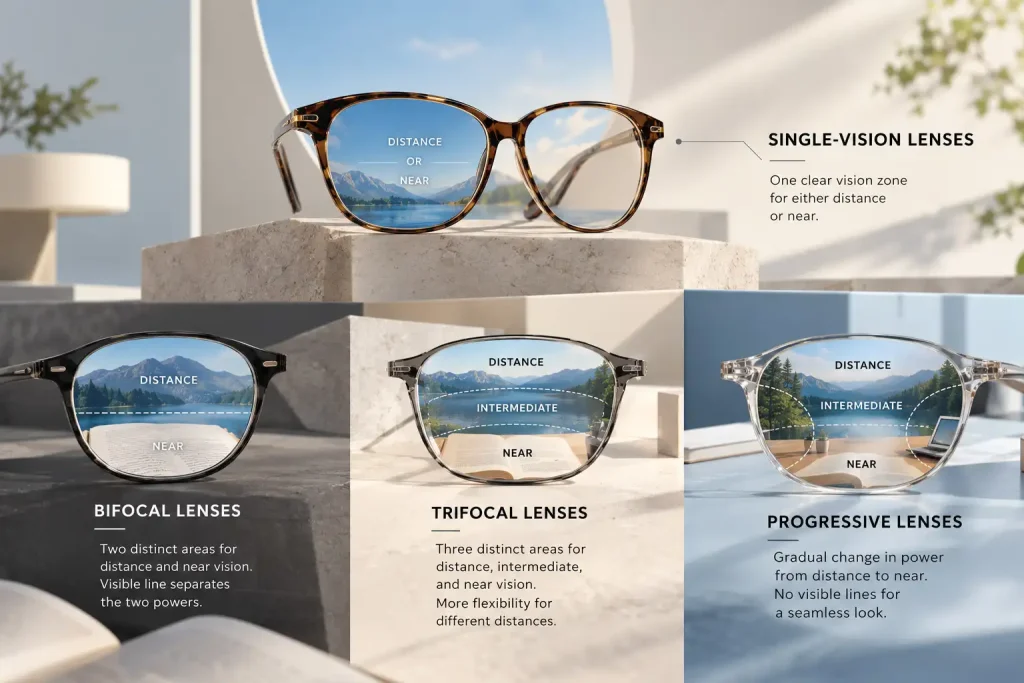
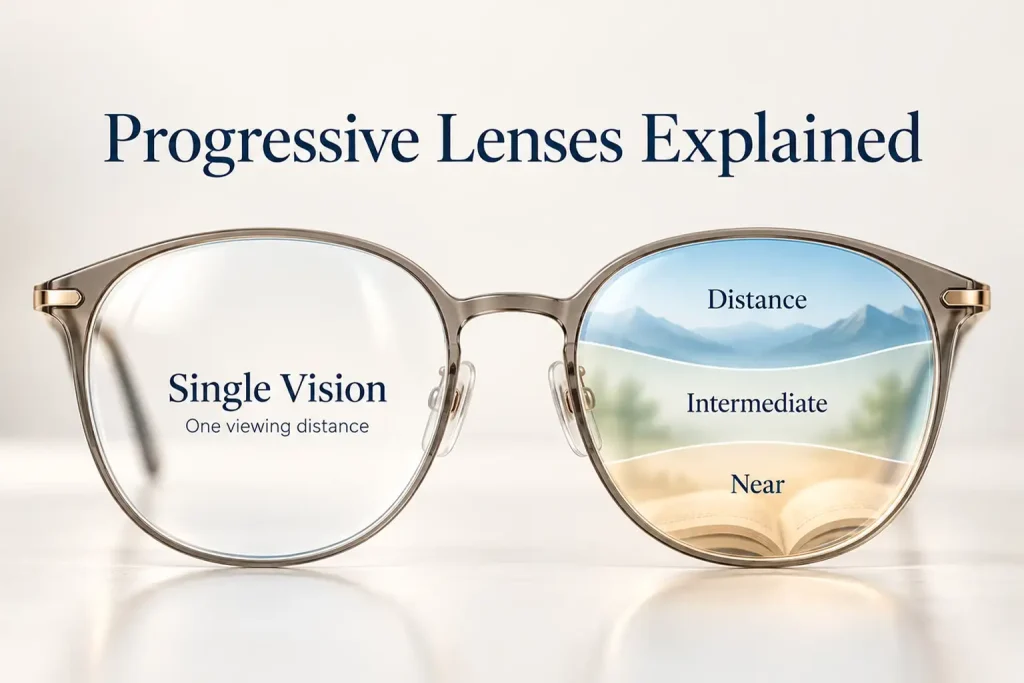
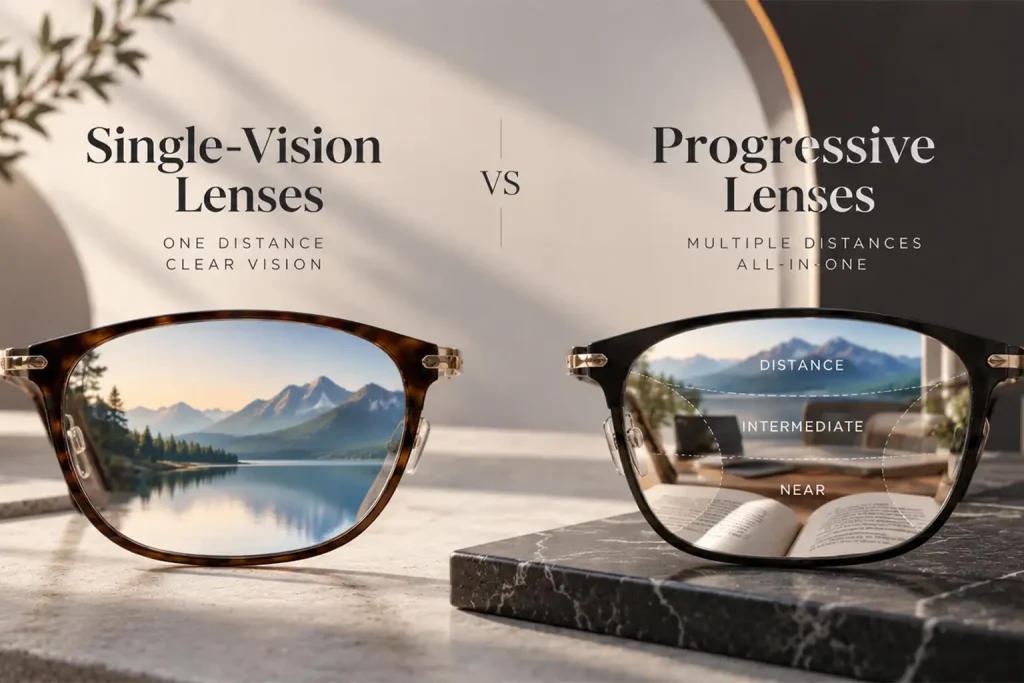
Unlike conventional single-vision lenses, which generally provide one prescribed optical power, these designs include an additional near-support zone.
Potential Advantages of Anti-Fatigue Lens Designs
Depending on individual visual needs, Anti-Fatigue lenses may provide:
-
Additional optical support for close-up activities
-
Comfortable transitions between selected viewing distances
-
Reduced focusing demand during certain near tasks
-
A practical option for some younger wearers with near-vision symptoms
-
Compatibility with selected modern lens coatings
The benefits depend on the wearer’s prescription, focusing ability, working distance, and the specific lens design.
When Should You Consider Anti-Fatigue Glasses?
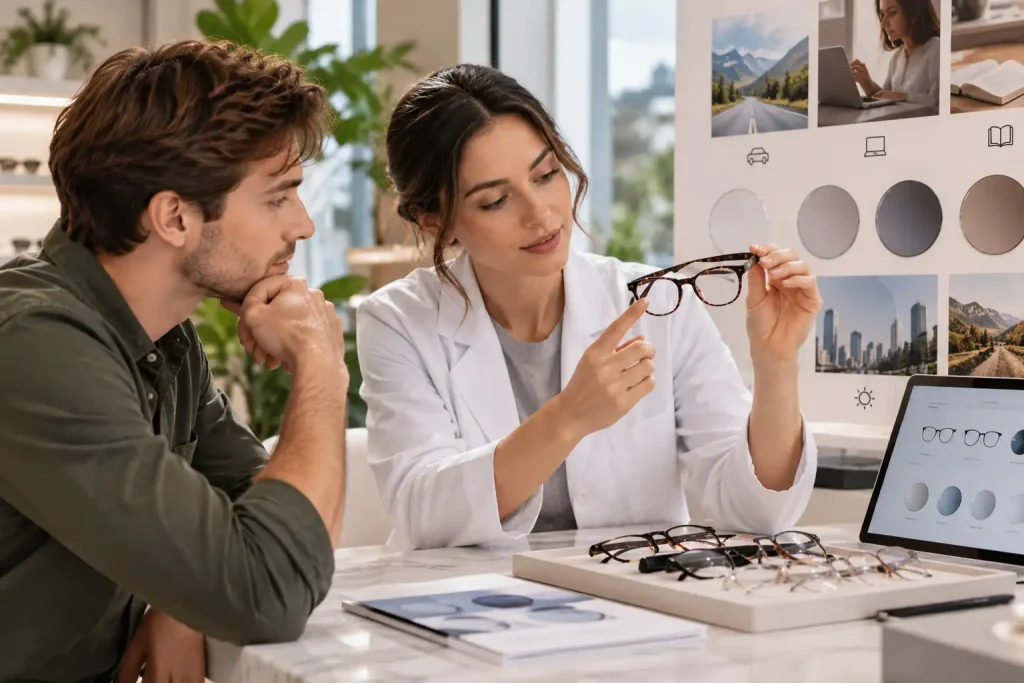
Anti-Fatigue lenses may be worth discussing with an eye care professional if you frequently experience discomfort while reading, studying, or using a computer.
They may be particularly relevant for some students, young professionals, and office workers with sustained near-vision demands.
However, they are not suitable for everyone, and symptoms should be evaluated before selecting this type of lens.

How Anti-Reflective Coatings Improve the Computer Glasses Experience
Even an accurately prescribed pair of glasses may produce distracting reflections under certain lighting conditions.
Modern offices often contain multiple light sources, including overhead fixtures, windows, desk lamps, and illuminated displays.
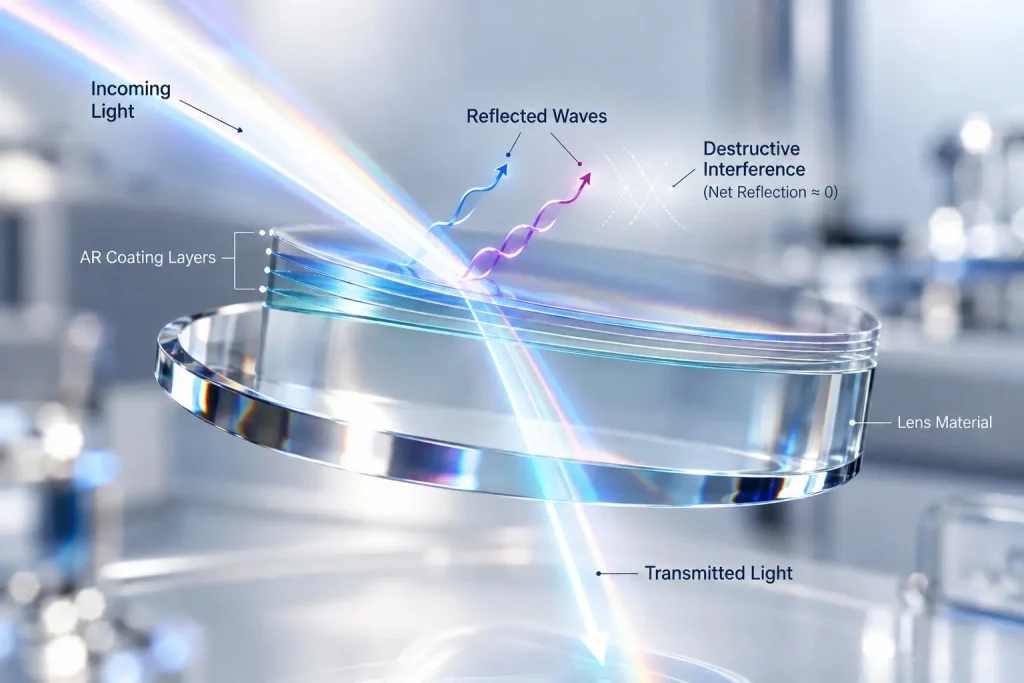
These reflections can appear on the front or back surfaces of spectacle lenses and may interfere with comfortable viewing.
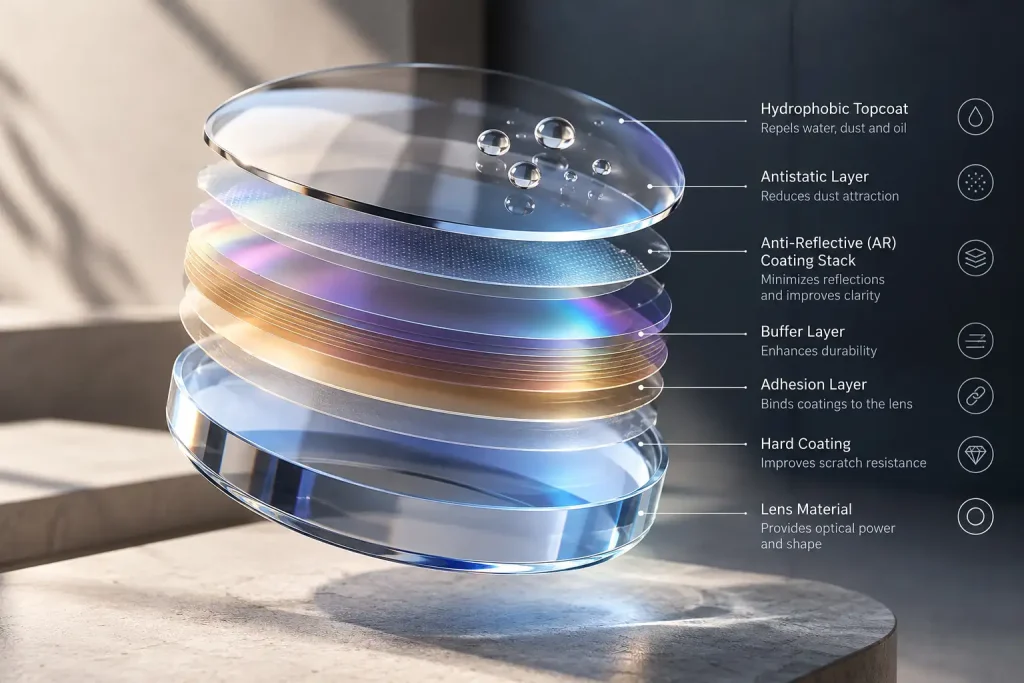
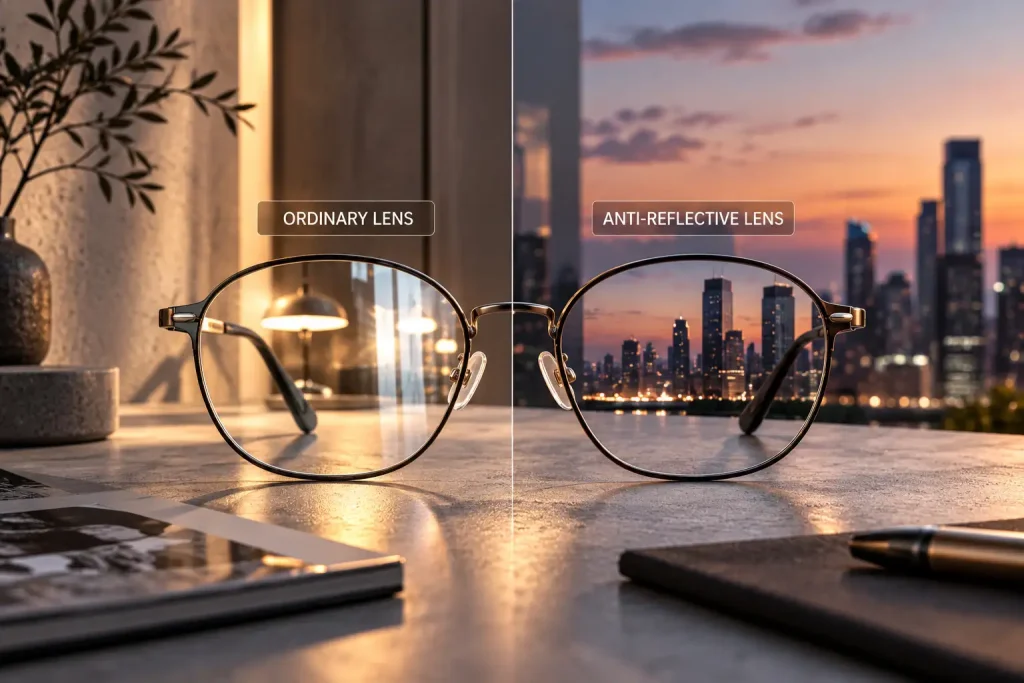
High-quality anti-reflective lens coatings are designed to reduce unwanted surface reflections and allow more light to pass through the lenses.
Key Benefits of Anti-Reflective Coatings
-
Reduced distracting reflections on lens surfaces
-
Improved lens transparency
-
Clearer visibility of the wearer’s eyes
-
More comfortable viewing in some lighting conditions
-
Compatibility with different prescription lens materials and designs
For people working in environments with bright lighting, anti-reflective coatings can be a valuable addition to their prescription glasses.
It is important to remember that these coatings reduce reflections from spectacle lenses; they do not eliminate every source of glare in the surrounding environment.
Choosing Computer Glasses for Programming and Professional Screen Work
Programmers, digital designers, and other technology professionals often spend much of their working day switching between monitors, keyboards, smartphones, and printed documents.
Because these activities involve different viewing distances, selecting suitable lenses requires attention to the actual working environment.
Single-Vision Computer Glasses
Single-vision lenses can be prescribed specifically for a computer’s working distance.
They may be suitable for individuals who primarily focus on one monitor positioned at a consistent distance.
Anti-Fatigue Lenses for Extended Near Tasks
Some people who experience focusing discomfort during prolonged near work may benefit from a lens design that provides additional support for close viewing.
An eye examination can help determine whether these lenses are appropriate.
Occupational Lenses for Multiple Working Distances
Occupational or office lenses are designed to provide useful vision across specific near and intermediate distances.
They may be particularly helpful for people with presbyopia who need to see a monitor, documents, and objects around their workspace.
Anti-Reflective Coatings for Clearer Lens Surfaces
Adding an anti-reflective coating can help limit distracting reflections from office lighting and improve lens transparency.
Ultimately, the best glasses for programmers depend on their prescription, monitor position, age-related focusing needs, and workspace arrangement.
How to Select the Best Computer Glasses Lenses for Your Lifestyle
Different screen habits place different demands on the visual system. A lens that works well for occasional smartphone use may not be ideal for someone who spends an entire working day using several monitors.
The following considerations can help narrow down the available options.
For Students and Occasional Digital Device Users
An accurate prescription and comfortable viewing habits are usually the starting point. BlueCut lenses may be considered as an optional light-filtering feature.
For Office Workers Using Screens Daily
Single-vision computer prescriptions or suitable occupational designs may improve clarity at the intended working distance. Anti-reflective coatings can also help manage reflections.
For Individuals Experiencing Frequent Eye Fatigue
An eye examination is recommended to identify possible prescription errors, dry eye, focusing difficulties, or other contributing factors.
Selected Anti-Fatigue designs may be useful when additional near support is appropriate.
For Professionals Working Across Multiple Screens
Occupational lenses can be particularly relevant when clear vision is needed at several near and intermediate distances.
A professional assessment helps determine the most suitable lens configuration.
Comparing Modern Eyeglass Lens Technologies
Today’s optical market offers a wide variety of materials, coatings, and specialized lens designs.
Understanding the differences between these technologies makes it easier to identify solutions that meet individual visual needs.
Optical brands such as Schneider Lenses, Smart Vision, and Sky Lenses contribute to this evolving market through eyeglass lens products and technologies intended for different prescriptions, lifestyles, and everyday visual requirements.
When evaluating products from different manufacturers, consumers and eye care professionals should consider optical performance, lens design, material properties, coating quality, and the intended application.
Choosing an established optical brand can be one factor in the decision, but the suitability of the individual lens remains the most important consideration.
Smart Vision Lens Technologies for Today’s Digital Lifestyles
As screen-based activities become increasingly common, the demand for specialized optical solutions continues to grow.
Smart Vision offers a range of eyeglass lens technologies intended to address different visual preferences and everyday requirements.
Its digital-oriented lens portfolio includes options designed around light management, near-vision support, and surface reflection control.
BlueCut Lens Options
Blue-light filtering technology for individuals seeking specific light-transmission characteristics in their everyday glasses.
BlueControl Lens Options
Light-management technology developed around the selective filtering or reflection of certain visible wavelengths.
Anti-Fatigue Lens Designs
Specialized optical designs that provide additional near-vision support for suitable wearers.
Premium Anti-Reflective Treatments
Lens coatings developed to reduce surface reflections and improve transparency under a range of lighting conditions.
Whether the wearer is studying, programming, managing office tasks, or spending time on digital entertainment, selecting the appropriate combination of prescription and lens features is essential.
Smart Vision provides options that can be considered alongside professional optical advice and individual visual requirements.

Practical Ways to Reduce Eye Strain During Long Screen Sessions
Choosing suitable glasses is only one part of maintaining comfortable vision throughout the day.
Small changes to daily habits and workspace conditions can also make a meaningful difference.
Follow the 20-20-20 Rule
Every 20 minutes, look at something approximately 20 feet away for at least 20 seconds.
This is a commonly recommended habit for introducing regular breaks from sustained near focusing.
Adjust Your Monitor Position
Place your screen at a comfortable distance, usually around an arm’s length away, and position it slightly below eye level when appropriate.
Remember to Blink Regularly
Conscious blinking can help maintain the tear film and may reduce dryness during concentrated screen activities.
Control Unnecessary Glare
Adjust room lighting, window coverings, and monitor placement to minimize distracting reflections.
Schedule Regular Eye Examinations
Persistent headaches, blurred vision, or eye discomfort may indicate an underlying visual issue that requires professional evaluation.
Combining these habits with appropriately prescribed lenses offers a more complete approach to digital visual comfort.
Final Thoughts: Finding the Right Optical Solution for Everyday Screen Use
There is no universal lens design that works equally well for every computer user.
Some individuals need nothing more than an updated single-vision prescription, while others may benefit from specialized near-vision or occupational lenses.
BlueCut and BlueControl technologies offer optional blue-light management features, whereas Anti-Fatigue designs address selected focusing needs. Anti-reflective coatings can further improve lens transparency by reducing distracting surface reflections.
The most effective approach is to consider these features in relation to the wearer’s prescription, visual symptoms, and working environment rather than relying on screen time alone.
As modern lifestyles continue to create new visual demands, access to reliable optical products and appropriate lens technologies remains increasingly important. Smart Optic, positioned as one of the best eyeglass lens distributors, is active in the international optical industry, supplying modern eyeglass lens solutions for diverse vision requirements. Through its involvement in optical production and distribution, Smart Optic helps connect evolving lens technologies with the needs of optical professionals and consumers seeking clarity, quality, and everyday visual comfort.