
Best Eyeglass Lenses for Optical Shops: How to Build a Competitive Lens Portfolio
Beyond Eyewear Frames: Why the Right Lenses Shape Retail Success
A stylish frame may capture a customer’s attention, but the quality and suitability of the lenses often determine their long-term satisfaction.
For optical shops, selecting the right eyeglass lenses is about more than correcting vision. It involves understanding eyeglass lens types and technologies, recognizing customer lifestyles, offering meaningful product choices, and helping people find solutions that fit their everyday activities.
From students spending hours reading and studying to professionals working across multiple digital screens, today’s eyewear customers have increasingly diverse visual requirements.
This creates an important question for optical retailers: Which lens technologies deserve a place in a modern optical shop’s product portfolio?
The answer depends on prescription requirements, customer demographics, lifestyle habits, product quality, and local purchasing preferences.
Understanding how to choose eyeglass lenses allows optical professionals to recommend more suitable products while developing opportunities for premium services and sustainable business growth.
In this guide, we explore essential eyeglass lens categories, their practical applications, and how optical retailers can create a balanced portfolio that supports both visual performance and commercial success.

The Changing Expectations of Eyewear Customers
The way people use their eyes throughout the day has changed considerably.
Digital communication, computer-based employment, online learning, and modern lifestyles have introduced new visual demands. At the same time, consumers have become more interested in product durability, convenience, comfort, and personalized optical solutions.
For retailers, understanding these expectations is essential when selecting lens products.
Several factors influence modern lens purchasing decisions.
-
Digital lifestyles: Frequent screen use increases awareness of visual comfort, reflections, and viewing-distance requirements.
-
Personalized vision: Customers expect lenses that accommodate their prescriptions and daily routines.
-
Product durability: Scratch resistance, reliable coatings, and easy maintenance remain important considerations.
-
Lens appearance: Lightweight materials and thinner lens profiles can improve the overall eyewear experience.
-
Everyday convenience: Features such as photochromic technology appeal to customers looking for versatile eyewear.
-
Premium optical performance: Many buyers are willing to consider additional features when their practical benefits are clearly explained.
Optical businesses that recognize these differences can create a more relevant selection of products instead of relying exclusively on basic prescription lenses.
Single Vision Lenses: The Essential Starting Point for Every Optical Store
Single vision lenses form the foundation of a well-rounded optical product range.
Designed to correct one primary viewing distance, they are commonly prescribed for myopia, hyperopia, or other refractive needs, depending on the patient’s prescription.
Their broad range of applications makes them an important product category for optical retailers serving different age groups.
Who Typically Needs Single Vision Lenses?
These lenses are commonly suitable for:
-
Children and teenagers requiring prescription eyewear
-
University students and young adults
-
Customers with nearsightedness or farsightedness
-
First-time prescription glasses wearers
-
Individuals who need correction for a specific viewing distance
However, not all single vision lenses deliver the same wearing experience.
Lens material, refractive index, optical design, thickness, and coating quality can influence comfort, appearance, durability, and overall satisfaction.
Creating Additional Value Through Lens Customization
Rather than treating single vision lenses as a single basic product, optical retailers can introduce several options based on individual requirements.
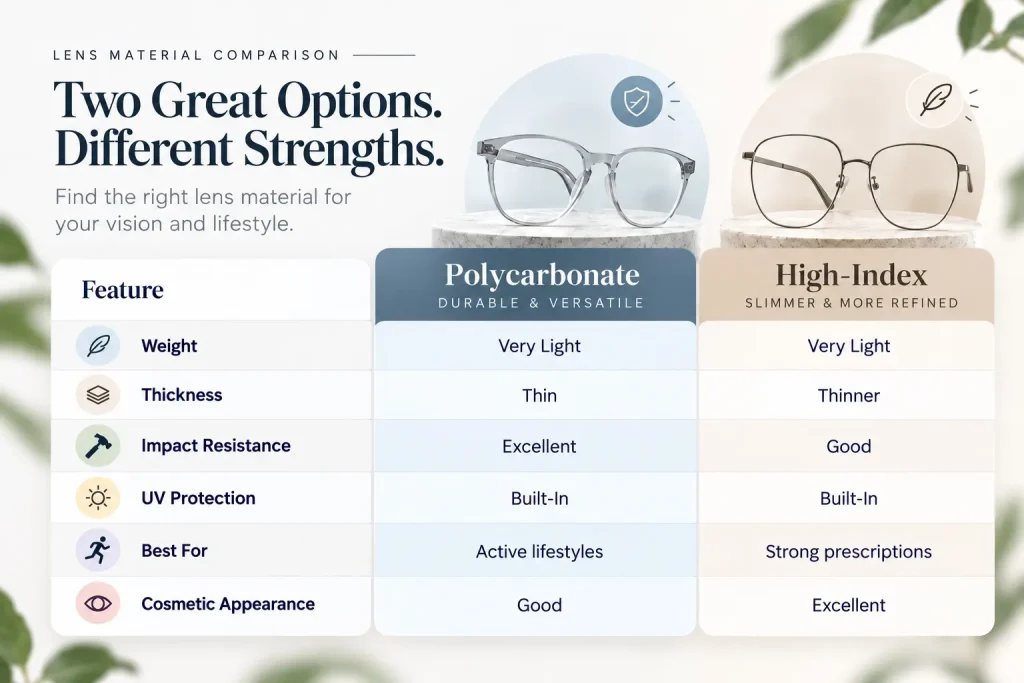
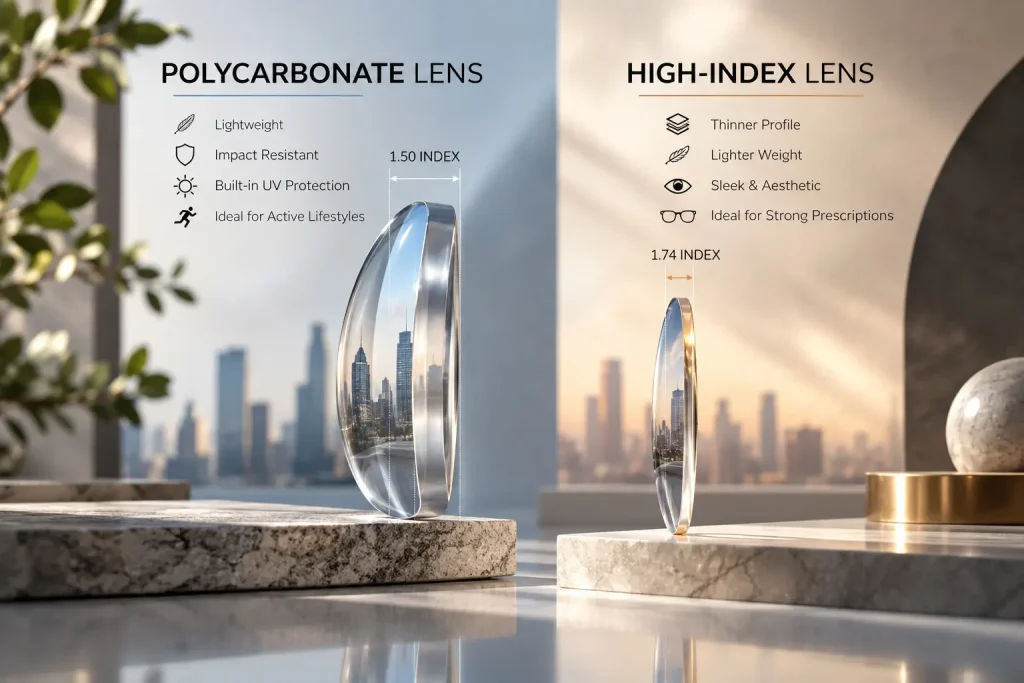
For example, customers with stronger prescriptions may benefit from higher-index materials, while those concerned about reflections may prefer premium anti-reflective coatings.
This approach gives optical shops an opportunity to explain meaningful product differences without recommending unnecessary upgrades.
BlueCut Lenses: A Familiar Option for Digital-Focused Customers
Digital devices are part of everyday life for students, office employees, and people who regularly use smartphones.
This has increased consumer awareness of blue light and lens technologies designed to filter selected portions of the visible light spectrum.
BlueCut lenses represent one option within this category.
Depending on their design and specifications, these lenses selectively filter certain blue-light wavelengths while providing the prescription correction required by the wearer.
Which Customers May Be Interested in BlueCut Technology?
Potential customers include:
-
Students attending online classes
-
Office workers using computers daily
-
Remote employees
-
Individuals who frequently use smartphones
-
Customers specifically requesting blue-light-filtering lenses
How Optical Retailers Can Explain Their Benefits
BlueCut products are relatively straightforward to introduce because many customers are already familiar with discussions surrounding digital screens.
However, accurate product education remains essential.
Current research does not establish that blue-light-filtering spectacle lenses reliably reduce digital eye strain or prevent eye damage associated with routine screen exposure.
For customers experiencing discomfort during extended screen use, opticians should also discuss viewing distance, appropriate prescriptions, regular breaks, blinking habits, and environmental lighting.
By presenting BlueCut technology accurately, optical shops can maintain customer trust while offering additional lens choices.
BlueControl Lenses: Expanding the Range of Specialized Digital Eyewear
Customers who spend significant portions of their working day using electronic devices may be interested in comparing different lens technologies.
BlueControl lenses provide another option within the digital eyewear category, although their exact filtering properties and performance depend on the manufacturer’s product specifications.
For optical retailers, offering clearly differentiated digital lens products can help customers understand the available choices.
Common Customer Groups
BlueControl lenses may attract interest from:
-
Software developers and programmers
-
Graphic designers
-
Engineers
-
Professionals working with several monitors
-
Gamers and digital content creators
Positioning BlueControl in an Optical Product Range
Rather than presenting BlueControl lenses as a guaranteed solution to screen-related fatigue, optical professionals should focus on explaining their specific features.
Relevant comparison points include the lens’s filtering characteristics, coating performance, visible reflections, color perception, and overall optical design.
When a manufacturer offers distinct BlueCut and BlueControl products, providing a transparent comparison helps customers select the option that best matches their preferences.
This strategy supports premium product positioning while avoiding exaggerated performance claims.
Anti-Fatigue Lenses: Supporting Comfortable Near-Vision Activities
Not every customer who experiences visual discomfort requires progressive lenses.
Some individuals, particularly younger adults, may benefit from lens designs intended to support demanding near-vision tasks.
Anti-Fatigue lenses typically incorporate a small amount of additional near-vision support within the lower portion of the lens.
Their purpose is to assist selected wearers during activities such as reading, studying, and extended close-up work.
When Should Opticians Consider Anti-Fatigue Designs?
Potential candidates may include:
-
Students spending long periods reading
-
Young professionals performing detailed near work
-
Customers with specific accommodation-related difficulties
-
Individuals reporting discomfort during prolonged close-up activities
-
Suitable wearers identified through a professional vision assessment
Why This Category Deserves Attention
Anti-Fatigue lenses occupy a distinct position between conventional single vision options and more complex multifocal designs.
They can help optical retailers serve customers whose needs are not fully addressed by standard lens recommendations.
However, visual fatigue can result from several causes, including uncorrected prescriptions, dry eye, binocular vision problems, and unsuitable working conditions.
For this reason, Anti-Fatigue lenses should be recommended following an appropriate assessment rather than automatically offered to every frequent screen user.

Progressive Lenses: A Premium Solution for Multiple Viewing Distances
As people age, the eye’s ability to focus comfortably on nearby objects gradually decreases.
This age-related change, known as presbyopia, commonly becomes noticeable during the forties.
Progressive lenses are designed to provide multiple prescription powers within a single lens, allowing suitable wearers to see at different distances without visible bifocal lines.
For optical retailers, this category represents an important opportunity to provide specialized, higher-value vision solutions.
Understanding Progressive Lens Customer Needs
Progressive lenses are frequently considered by customers who:
-
Have developed presbyopia
-
Need correction for distance and near vision
-
Prefer not to switch between multiple pairs of glasses
-
Want a lens design without visible multifocal segments
-
Require a convenient solution for everyday activities
What Makes a Progressive Lens Portfolio Competitive?
Progressive lens quality and suitability depend on several important factors.
These include the optical design, available viewing zones, frame dimensions, fitting accuracy, prescription, and the wearer’s visual habits.
Optical shops can consider offering different levels of progressive lens customization to accommodate varying budgets and individual requirements.
For example, some customers may prefer an entry-level design, while others may appreciate advanced personalized lenses tailored to their prescription and fitting measurements.
Clear explanations and accurate fitting are particularly important because adaptation and visual comfort can vary between individuals.
Photochromic Lenses: Practical Eyewear for Changing Light Conditions
Many eyewear customers regularly move between indoor environments and outdoor spaces.
Photochromic lenses respond to certain light conditions by changing their level of tint, offering a convenient alternative for people who prefer adaptable everyday eyewear.
Depending on the technology, the lenses typically become darker when exposed to activating light and return toward a clearer appearance when that exposure decreases.
Customers Who Appreciate Light-Adaptive Lenses
Photochromic solutions may be particularly interesting for:
-
People who frequently spend time outdoors
-
Travelers moving between different environments
-
Customers who value convenience
-
Individuals sensitive to bright outdoor conditions
-
Wearers who prefer using fewer pairs of prescription glasses
Important Considerations Before Recommending Photochromic Lenses
Not every photochromic lens performs identically.
Activation speed, maximum darkness, temperature response, available colors, and performance behind vehicle windshields can vary considerably.
Because many automotive windshields block much of the ultraviolet radiation used to activate conventional photochromic lenses, some products may not darken significantly inside a car.
Optical professionals should explain these limitations and select products according to the customer’s actual activities.
This helps create realistic expectations and improves the purchasing experience.
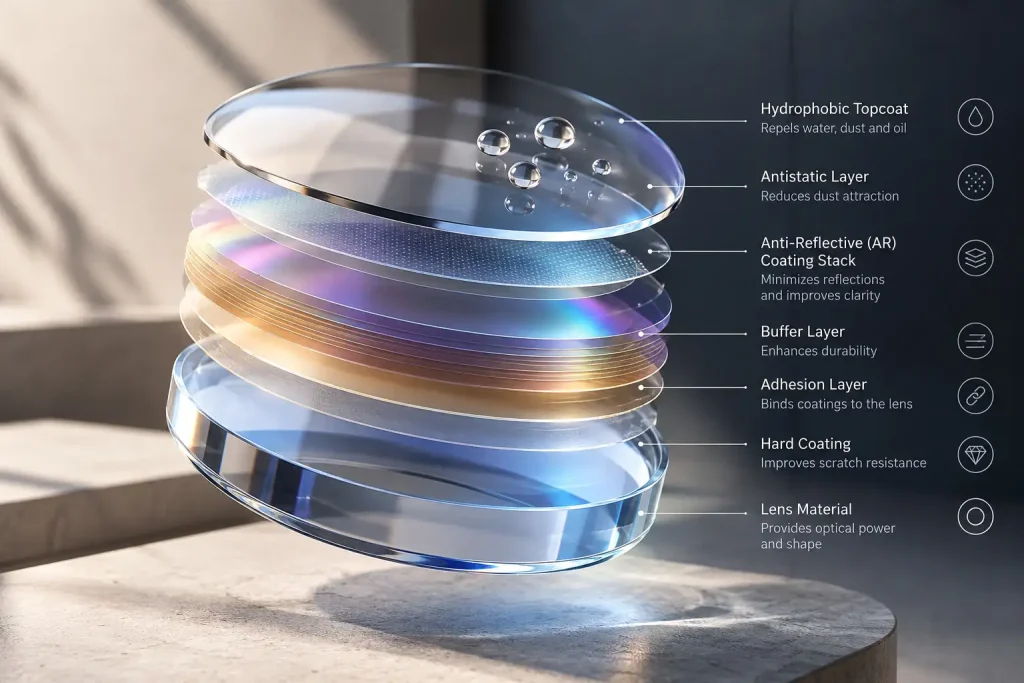
Premium Anti-Reflective Coatings: A Valuable Addition to Prescription Lenses
Although optical retailers often focus on lens designs and materials, coating technology also plays an important role in product performance.
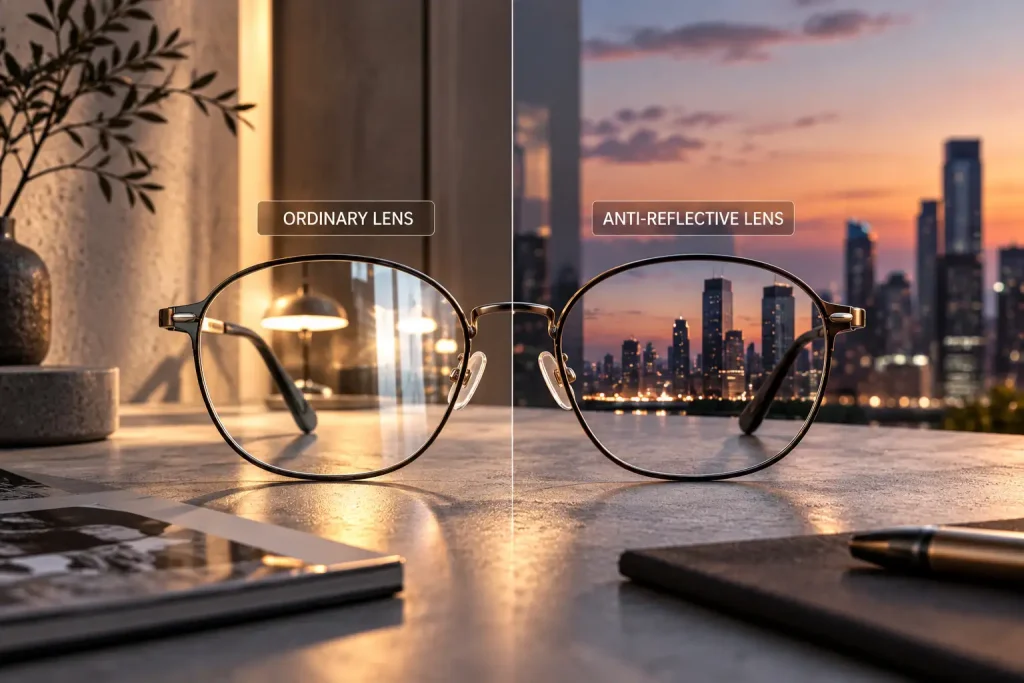
Anti-reflective coatings are designed to reduce unwanted reflections from lens surfaces.
When appropriately applied, they can improve light transmission, reduce visible lens reflections, and enhance the appearance of prescription eyewear.
Why Coating Quality Matters
Customers may appreciate premium coating systems for several reasons:
-
Reduced distracting surface reflections
-
Improved lens appearance in photographs and video calls
-
Easier cleaning when suitable hydrophobic and oleophobic layers are included
-
Greater resistance to everyday surface wear when compatible protective coatings are used
-
Improved overall lens experience
Different coating packages offer different benefits, making it important to distinguish anti-reflective performance from additional scratch-resistant or easy-clean treatments.
Optical shops can use this category to introduce practical upgrades that complement the customer’s chosen prescription lenses.
Comparing Lens Categories for Different Customer Requirements
A successful lens portfolio should make product selection easier for both opticians and customers.
The following comparison provides a practical overview of common lens categories and their potential roles within an optical store.
| Lens Category | Typical Customer Needs | Main Product Advantage | Retail Opportunity |
|---|---|---|---|
| Single Vision | Correction at one primary distance | Versatile prescription solution | Essential inventory category |
| BlueCut | Interest in blue-light filtering | Selective light filtering | Additional lens choice |
| BlueControl | Specialized digital eyewear preferences | Product-specific filtering features | Differentiated offering |
| Anti-Fatigue | Selected near-vision support needs | Additional near-vision assistance | Specialized upgrade |
| Progressive | Presbyopia and multiple viewing distances | Multifocal correction | Premium lens category |
| Photochromic | Changing indoor and outdoor lighting | Adaptive lens tint | Convenience-focused upgrade |
| Anti-Reflective Coatings | Surface reflection reduction | Improved light transmission and appearance | Coating customization |
This comparison should serve as a starting point rather than a substitute for professional prescription assessment or detailed manufacturer specifications.
How to Recommend Prescription Lenses Based on Customer Lifestyle
A successful lens consultation begins with understanding the customer rather than immediately presenting product options.
Two customers with similar prescriptions may require different lens solutions because their daily activities and visual priorities are not the same.
A structured conversation helps optical professionals identify these differences.
Ask Questions That Reveal Real Visual Requirements
Useful questions include:
-
What activities occupy most of your working day?
-
How frequently do you switch between near and distant objects?
-
Do you experience difficulties while reading or performing close-up tasks?
-
How much time do you spend outdoors?
-
Do reflections or bright lighting interfere with your daily activities?
-
Have you previously worn progressive or specialized lenses?
-
What matters most to you: thinness, durability, convenience, or price?
These questions provide valuable context for interpreting the prescription and identifying suitable product options.
Connect Lens Features to Everyday Benefits
Technical terminology alone rarely helps customers make confident decisions.
For example, instead of focusing exclusively on refractive index values, an optician can explain how certain high-index materials may reduce lens thickness for suitable prescriptions.
Similarly, the benefits of photochromic lenses can be presented through everyday convenience, while progressive lens designs can be explained in terms of switching between different viewing distances.
The goal is to translate optical technology into understandable and relevant information.
Building a Balanced Eyeglass Lens Inventory Without Unnecessary Complexity
Offering a broad selection does not necessarily mean stocking every available lens design.
Successful inventory planning requires a balance between essential products, specialized solutions, and the purchasing patterns of the local market.
Optical retailers can develop a more efficient assortment by considering several practical factors.
Prioritize Essential Prescription Categories
Single vision lenses should remain a core part of the portfolio because they address a broad range of prescription needs.
The required materials, indices, and prescription ranges should reflect the store’s actual customer demand.
Introduce Specialized Products Strategically
Progressive, Anti-Fatigue, digital filtering, and photochromic products can expand the range of available solutions.
However, the relative importance of each category should be determined by customer demographics, prescription patterns, and local demand.
Evaluate Supplier Reliability
Lens availability, prescription accuracy, manufacturing consistency, coating performance, and delivery times can influence the customer experience.
Working with reliable optical lens manufacturers and distributors helps stores maintain consistent product standards.
Review Sales and Customer Feedback
Product selection should evolve as the business develops.
Tracking reorder frequency, customer satisfaction, returns, adaptation concerns, and product category performance can help identify which lenses deserve greater attention.
Smart Vision Lenses: Creating More Choice for Optical Professionals
An effective optical lens portfolio should provide flexibility without making recommendations unnecessarily complicated.
Smart Vision Lenses offers product categories intended to address different prescription requirements, wearing preferences, and everyday visual activities.
By organizing lens solutions around practical customer needs, optical retailers can create clearer product comparisons and support more personalized consultations.
Exploring the Smart Vision Product Range
BlueCut Lenses
A lens option for customers interested in selective blue-light filtering and everyday prescription eyewear.
BlueControl Lenses
An additional digital lens category for customers comparing specialized filtering characteristics and optical features.
Anti-Fatigue Lenses
Designed for suitable wearers who may benefit from additional near-vision support during specific activities.
Progressive Lenses
Multifocal designs intended to accommodate the changing visual requirements associated with presbyopia.
Photochromic Lenses
Light-adaptive solutions for customers who want greater convenience across different lighting environments.
Premium Lens Coatings
Additional treatments developed to improve selected aspects of lens performance, protection, appearance, and maintenance.
Together, these categories allow optical shops to offer a more versatile selection of prescription lenses while adapting recommendations to individual customer requirements.
How Smart Optic Supports a More Complete Optical Lens Offering
Developing a competitive optical business also depends on choosing the right manufacturing and distribution partners.
Beyond lens variety, optical retailers need access to dependable products, clear technical information, and solutions that reflect current market expectations.
Smart Optik operates within the optical lens production and distribution industry, offering access to different lens brands and technologies, including Smart Vision Lenses.
Its involvement in the optical market reflects the importance of connecting lens manufacturing capabilities with the practical requirements of retailers and eyewear consumers.
For optical shops, cooperation with experienced industry suppliers can support product selection, improve access to specialized lens categories, and contribute to a more consistent customer experience.
As the market continues to evolve, manufacturers and distributors that understand both optical technology and retail needs can play an important role in helping businesses develop competitive product offerings.
Final Thoughts: Choosing the Right Lenses for Long-Term Optical Business Growth
The success of an optical shop depends not only on the variety of frames it displays but also on how effectively it addresses individual vision requirements.
A carefully planned lens portfolio combines essential prescription products with specialized technologies, including BlueCut, BlueControl, Anti-Fatigue, Progressive, Photochromic, and premium anti-reflective solutions. When optical professionals recommend these products according to actual customer needs, they can strengthen satisfaction, build lasting relationships, and create valuable opportunities for sustainable retail growth.
As optical technology advances and consumer expectations continue to change, choosing reliable lens suppliers becomes increasingly important. Smart Optik, positioning itself as one of the best eyeglass lens manufacturers, focuses on providing diverse optical lens solutions through its production and distribution activities, helping optical retailers meet evolving market demands while delivering quality, comfort, and practical visual performance.