

Blue Light Glasses for Screen Use: How They Work and What to Expect
Screens are now involved in almost every part of everyday life. From working on a laptop and attending online classes to checking a smartphone or watching television, our eyes regularly shift between different types of digital displays.
This change in visual habits has also increased interest in eyewear designed specifically for screen use. Among the different types of eyeglass lenses available today, blue light filtering lenses have become a familiar option for people who spend long hours using digital devices. These lenses are intended to reduce exposure to selected wavelengths of visible blue light.
But what exactly do these lenses do? Can they make long periods of computer work more comfortable, and who is most likely to benefit from them?
Understanding how blue light filters work — and what they cannot do — can help consumers choose digital eyewear with more realistic expectations.

Why Blue Light Has Become Part of the Digital Vision Conversation
Blue light belongs to the visible portion of the light spectrum. Compared with colors at the other end of the visible spectrum, it has shorter wavelengths and relatively higher energy.
It is important to remember that blue light itself is not exclusive to electronic devices. In fact, sunlight is one of the most significant natural sources of blue light.
Other common sources include:
- Computer monitors
- Smartphones
- Tablets
- Television displays
- LED lighting
- Other illuminated digital screens
Natural exposure during daylight hours is part of normal daily life and contributes to biological processes associated with alertness and the sleep-wake cycle.
The discussion around blue light has grown mainly because modern users spend increasingly long periods looking at illuminated screens, often at close viewing distances and sometimes late into the evening.
What Are Blue Light Filtering Lenses?
Blue light filtering lenses are optical lenses developed to modify the amount of selected blue wavelengths reaching the eyes.
Depending on the lens design, this filtering effect may be created through the lens material itself, through a specialized surface coating, or through a combination of optical technologies.
Different products can therefore look slightly different. Some blue light lenses remain almost completely clear, while others may display a subtle reflection or a mild tint when viewed from certain angles.
Their purpose is generally not to eliminate every wavelength of blue light. Instead, modern lens designs typically aim to selectively manage part of the visible spectrum while maintaining usable optical clarity and natural-looking vision.
How Does Blue Light Lens Technology Work?
When light reaches an optical lens, different wavelengths can be transmitted, reflected, or partially filtered depending on the material and coating technology.
Blue light filtering lenses are engineered to reduce the transmission of selected wavelengths before the light reaches the eye.
The exact filtering performance can vary considerably between products. Factors such as lens material, coating design, filtering range, transmission percentage, and overall optical quality can all influence the final result.

This technology can be incorporated into several types of eyewear, including:
- Prescription eyeglasses
- Computer glasses
- Office lenses
- Non-prescription screen glasses
- Everyday lenses designed for digital lifestyles
For this reason, “blue light glasses” should not be viewed as one single lens category with identical specifications. Different products may use very different optical technologies.
Screen Fatigue Is About More Than Blue Light
One of the most important points when discussing digital eyewear is that discomfort during screen use is rarely caused by just one factor.
People who spend several hours working at a computer may experience tired eyes, dryness, temporary visual discomfort, or difficulty maintaining comfortable focus.
However, these symptoms can also be influenced by:
- Long periods of near-distance focusing
- Reduced blinking while concentrating
- Dry indoor environments
- Inappropriate screen distance
- Poor workstation ergonomics
- Excessive display brightness
- Reflections and glare
- Extended periods without visual breaks
This means that blue light filtering should be considered one component of a broader approach to digital visual comfort rather than a complete solution to every symptom associated with screen use.
Can Blue Light Glasses Make Screen Use More Comfortable?
Experiences with blue light filtering lenses vary.
Some users prefer the visual experience provided by lenses designed for digital environments, particularly when working with bright screens or artificial lighting for extended periods.
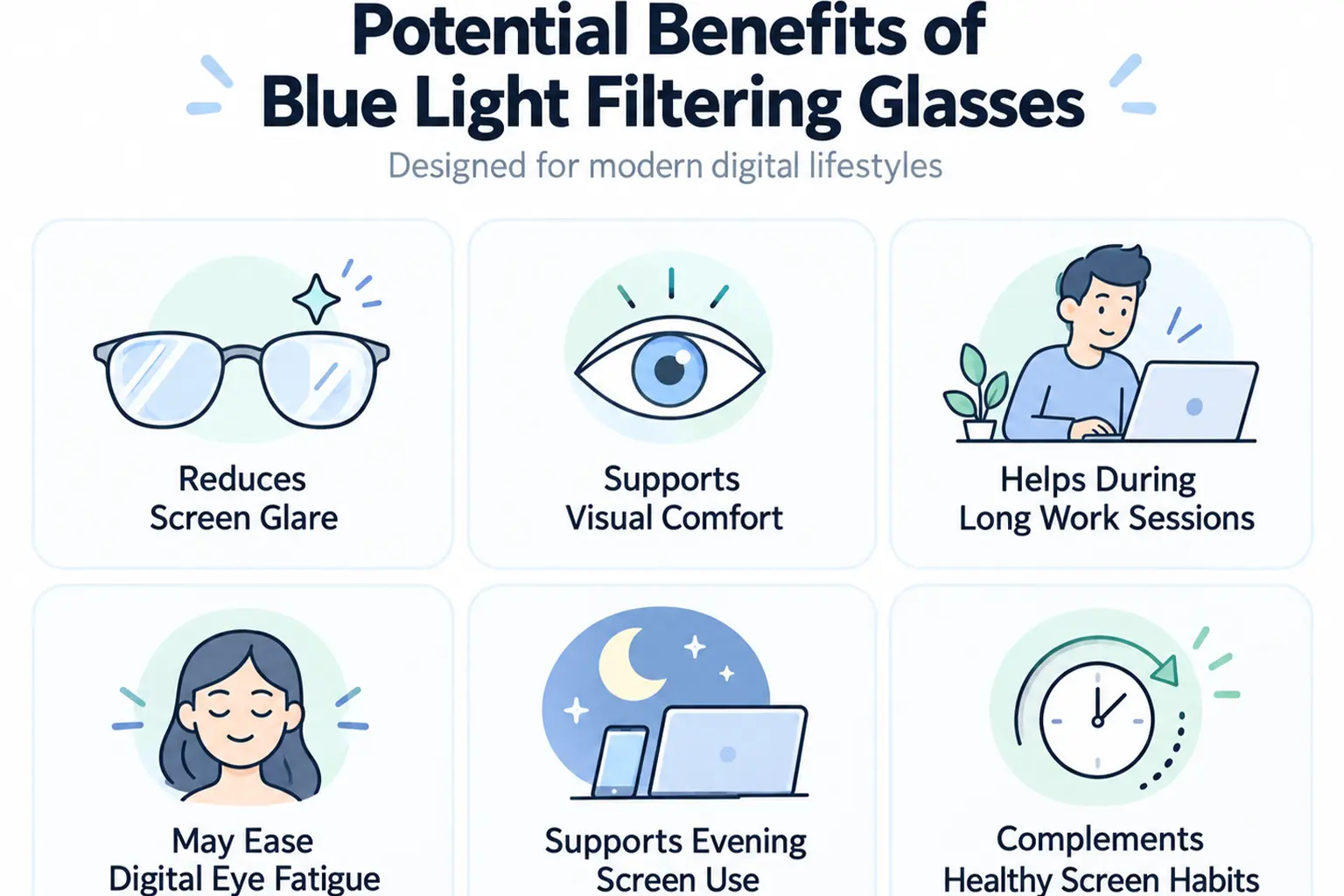
Depending on the lens technology and the individual wearer, potential advantages may include:
A More Comfortable Screen Experience
Bright digital displays can feel visually intense after many hours of continuous use. A lens designed to manage selected wavelengths and reflections may provide a more comfortable viewing experience for some wearers.
Support During Long Computer Sessions
People who work on computers throughout the day often look for eyewear optimized for near and intermediate visual tasks.
Combining an appropriate prescription with suitable lens design and coating technology can be particularly relevant for office environments and prolonged computer use.
Reduced Perception of Reflections
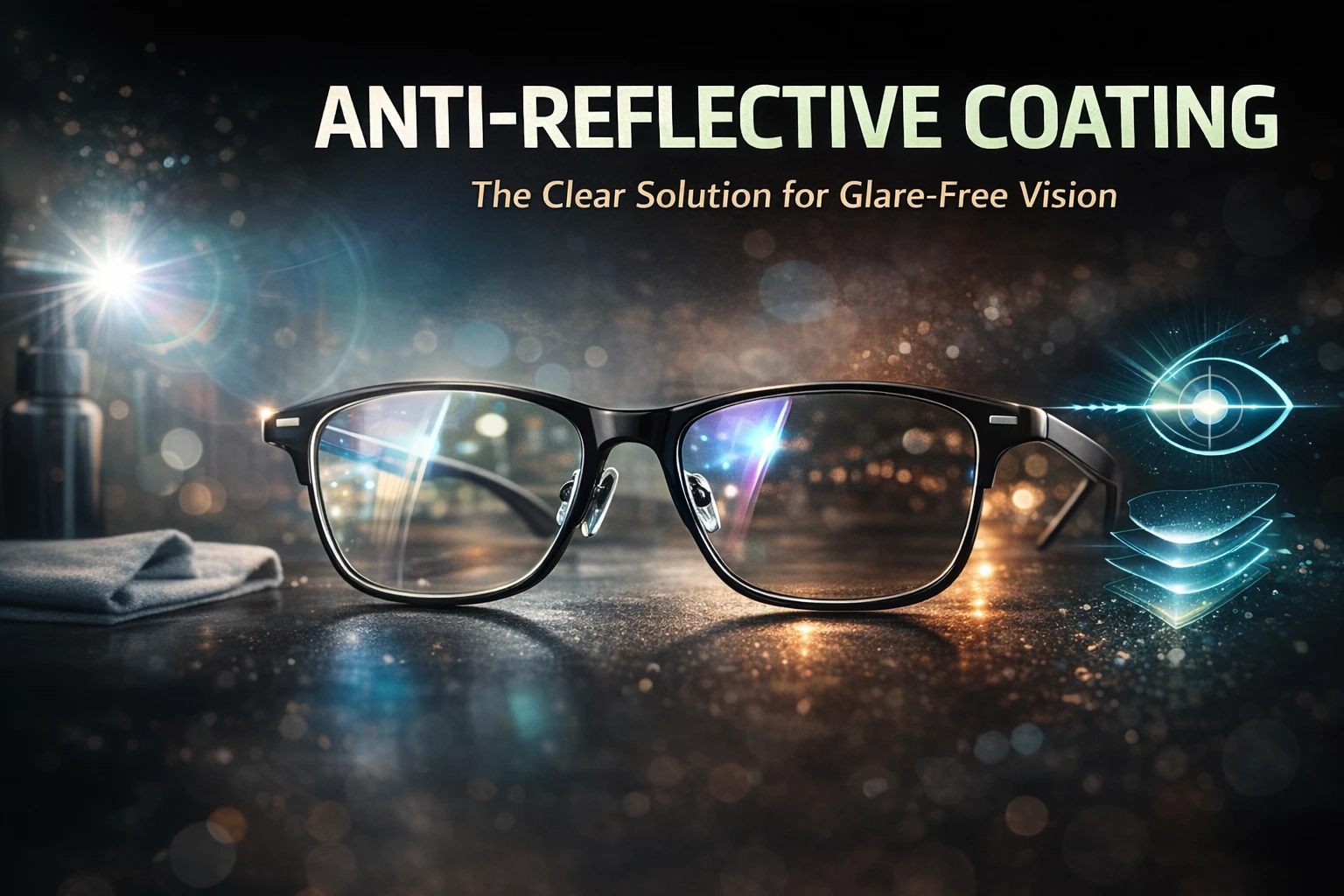
Some digital lens products combine blue light management with anti-reflective technologies.
Managing unwanted reflections can improve lens transparency and may make viewing through the lenses feel more comfortable, particularly around artificial lighting and illuminated displays.
More Comfortable Evening Screen Use
Late-night exposure to bright displays may be undesirable for people who use phones, tablets, or computers close to bedtime.
Managing display brightness, device settings, ambient lighting, and evening screen habits remains important. Specialized eyewear may also form part of an individual’s nighttime screen routine.
Who Commonly Uses Digital Comfort Lenses?
Digital eyewear is not limited to a single profession or age group.
It may be considered by people whose daily routines involve significant amounts of screen time, including:
- Office professionals
- Students
- Remote workers
- Designers and programmers
- Gamers
- Frequent smartphone users
- People working under LED lighting
- Anyone regularly switching between multiple digital devices
The most appropriate lens, however, depends on more than the number of hours spent in front of a screen.
Prescription requirements, working distance, visual tasks, age, lens design, coatings, and personal comfort preferences should also be considered.
Are Blue Light Glasses Worth Considering?
There is no universal answer because expectations and visual requirements differ from one wearer to another.
Blue light filtering lenses should not be treated as a cure for digital eye strain or as a substitute for appropriate vision correction.
Instead, they are better understood as an optional optical feature that may complement a broader digital vision strategy.
For someone spending only limited time on digital devices, the difference may be less noticeable. For a person working with multiple screens throughout the day, lens comfort, anti-reflective performance, prescription accuracy, and appropriate viewing conditions can become much more important.
The key is to choose eyewear based on actual visual requirements rather than relying solely on broad marketing claims.
Healthy Screen Habits Still Matter
Even advanced optical lenses cannot compensate for poor screen habits.
A few practical adjustments can make prolonged digital work more manageable:
- Take regular visual breaks.
- Keep the monitor at a comfortable working distance.
- Adjust screen brightness to match the surrounding environment.
- Reduce distracting reflections on the display.
- Blink regularly, especially during concentrated work.
- Avoid working in extremely dark environments with a very bright screen.
- Maintain a comfortable sitting position and screen height.
A commonly recommended technique is the 20-20-20 rule: after approximately 20 minutes of near work, look at an object around 20 feet away for at least 20 seconds.
The purpose is to give the visual system regular opportunities to shift focus away from continuous near-distance work.
What to Look for When Choosing Blue Light Lenses
Blue light filtering performance is only one element of a good optical lens.
Before choosing digital eyewear, it is useful to consider the complete lens system.
Optical Clarity
A quality lens should provide clear vision without unnecessary distortion or an excessive change in color appearance.
Lens Coating Quality
Anti-reflective and surface coatings can affect transparency, reflections, maintenance, durability, and everyday visual comfort.
Appropriate Prescription
For prescription wearers, accurate correction remains essential. A filtering feature cannot compensate for an unsuitable prescription.
Filtering Technology
Different lens manufacturers use different approaches to blue light management. The amount and range of filtered light may therefore differ from one lens to another.
Comfortable Long-Term Wear
Eyewear intended for prolonged computer use should remain visually comfortable over several hours rather than simply offering an attractive technical specification.
Modern Lenses for an Increasingly Digital Lifestyle
Today’s visual environment is considerably different from that of previous generations.
Many people now move continuously between smartphones, laptops, office monitors, vehicle displays, tablets, televisions, and other illuminated interfaces.
As these habits evolve, optical manufacturers are developing lens technologies designed around modern visual behavior rather than focusing exclusively on traditional distance and reading requirements.
Digital comfort solutions may combine multiple features, such as prescription correction, optimized lens design, reflection management, surface coatings, and selective light filtering.
The result is a more complete approach to eyewear for people whose visual routines are strongly connected to digital devices.

Smart Vision Solutions for Everyday Digital Vision
Smart Vision develops optical solutions for the changing requirements of modern lifestyles.
For people who regularly work, study, communicate, or consume content through digital devices, selecting the right lens involves more than simply adding a blue light filter.
Optical quality, lens design, coating performance, prescription accuracy, and long-term comfort all contribute to the overall visual experience.
Smart Vision digital lens solutions are developed with these everyday requirements in mind, offering options designed for contemporary screen-focused environments.
Why Consider Smart Vision Digital Lens Solutions?
- Developed for today’s screen-intensive lifestyles
- Designed to support comfortable everyday vision
- Available with modern lens and coating technologies
- Focused on clear and natural visual performance
- Suitable for different digital viewing requirements
A Better Approach to Digital Eye Comfort
Blue light filtering lenses can be a useful addition to modern eyewear, but their role should be understood realistically.
Comfort during digital device use depends on several factors working together: the correct prescription, appropriate lens technology, good workstation conditions, suitable lighting, regular visual breaks, and healthy viewing habits.
Rather than looking for a single solution to every type of screen-related discomfort, users can benefit from considering their entire visual environment.
As digital devices continue to play a larger role in work, education, communication, and entertainment, eyewear designed around digital lifestyles is likely to remain an important part of modern optical technology.