

Single Vision or Progressive Lenses? How to Choose the Right Lens for Your Daily Routine
Single Vision or Progressive Lenses? How to Choose the Right Lens for Your Daily Routine
Choosing eyeglass lenses is not simply a matter of picking a prescription. The right lens design should also match how you work, read, drive, use digital devices, and move between different viewing distances throughout the day.
Two of the most common options are single vision lenses and progressive lenses. Although both are designed to improve visual clarity, they work in very different ways.
Single vision lenses provide one consistent prescription across the lens, while progressive lenses combine several viewing distances within one continuous design.
Understanding how each option works can make it easier to choose a lens that fits your visual needs, lifestyle, and daily activities. Pasted markdown
How Single Vision Lenses Work
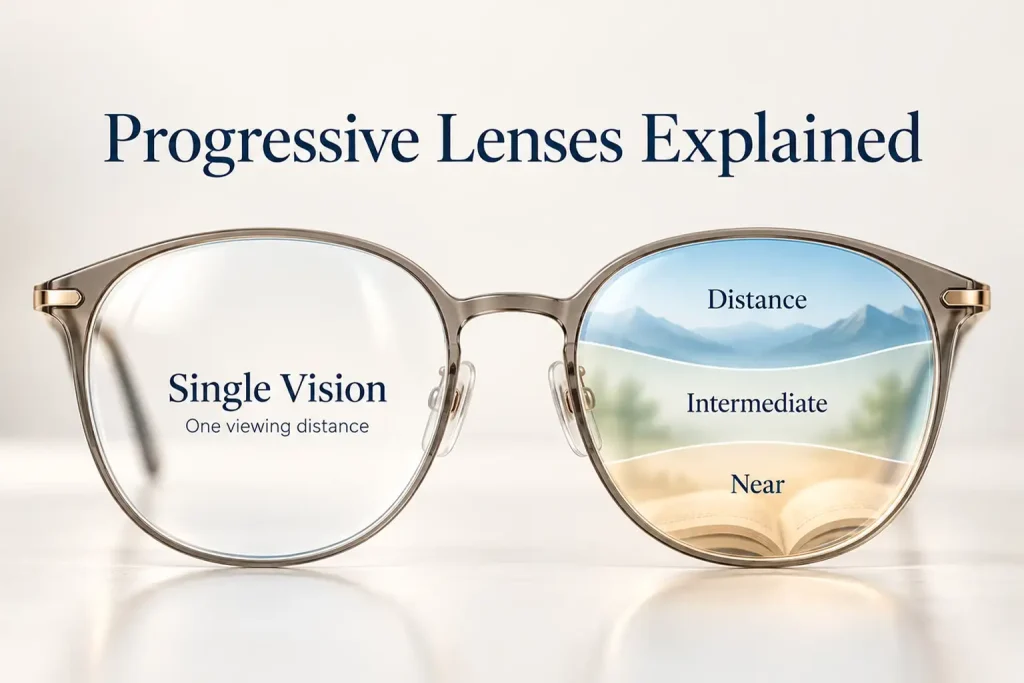
Single vision lenses use the same prescription power across the entire lens surface.
They are designed to provide clear vision at one primary distance, which may be:
- Distance
- Intermediate
- Near
For example, someone with myopia may wear single vision lenses for distance correction, while another person may use a dedicated pair of reading glasses for close work.
Because the optical design is relatively simple, single vision lenses usually provide a broad and consistent viewing area.
They are commonly chosen for:
- Everyday distance glasses
- Reading glasses
- Computer glasses
- Younger wearers with one primary prescription need
Another advantage is that most people adapt to them quickly because there are no separate viewing zones to learn. Pasted markdown
How Progressive Lenses Provide Multiple Viewing Distances
Progressive lenses are designed for people who need clear vision at more than one distance.
Instead of using separate pairs of glasses, a progressive lens gradually changes power from the upper portion of the lens to the lower portion.
In general, the lens provides:
- Distance vision toward the top
- Intermediate vision through the middle
- Near vision toward the bottom
This allows the wearer to look across a room, work on a computer, and read something up close without changing glasses.
Unlike traditional bifocal lenses, progressive lenses do not contain a visible dividing line between prescription zones. Pasted markdown
Who Usually Needs Progressive Lenses?
Progressive lenses are commonly associated with presbyopia, the age-related reduction in the eye’s ability to focus on nearby objects.
Presbyopia often becomes noticeable after the age of 40.
Someone who previously used glasses only for distance vision may gradually find that:
- Small text becomes harder to read
- A phone needs to be held farther away
- Switching between near and distance vision becomes less comfortable
- Separate reading glasses become necessary
Progressive lenses can combine these visual requirements into a single pair of glasses. Pasted markdown
Difference Between Single Vision and Progressive Lenses
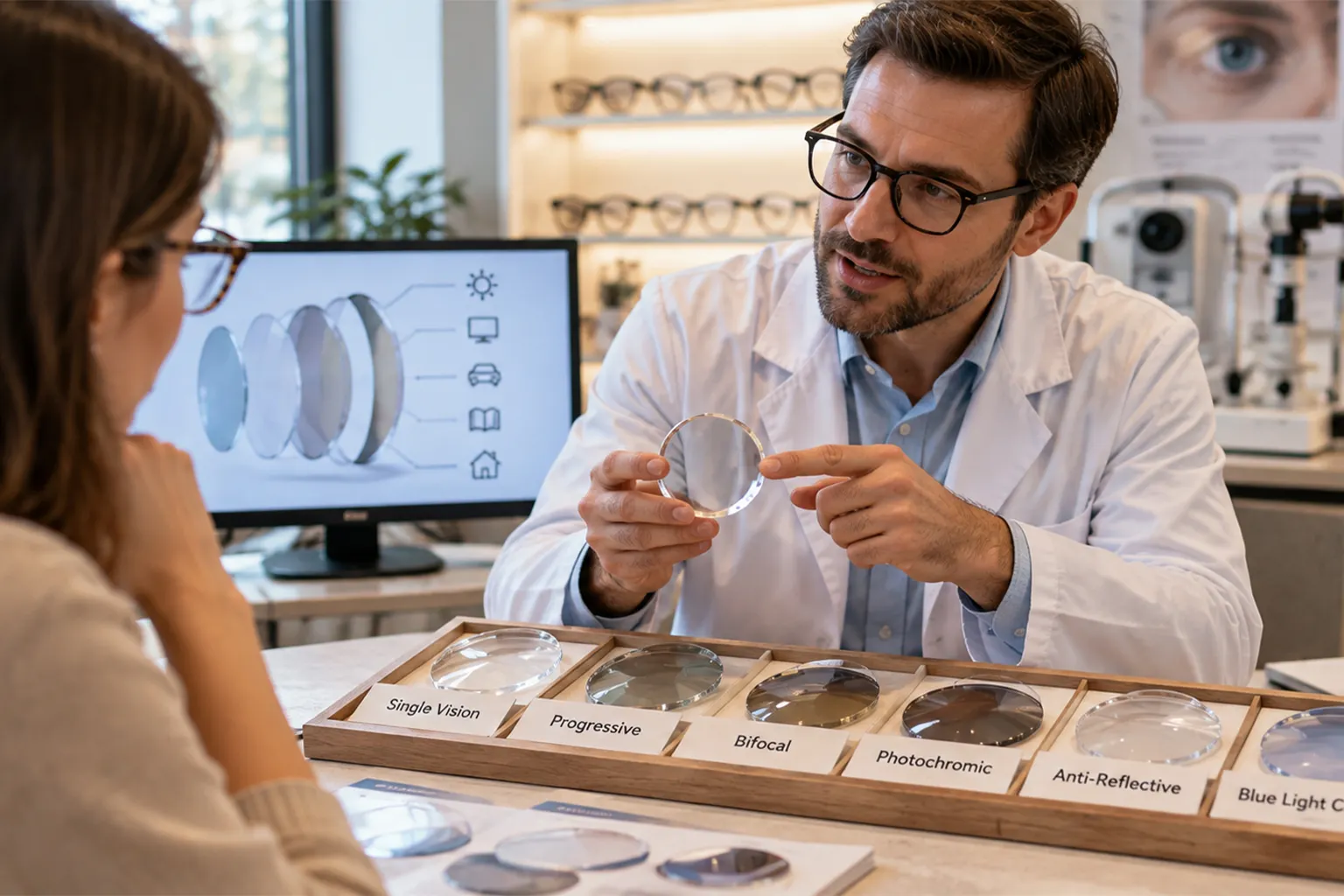
The main difference between single vision and progressive lenses is the number of viewing distances built into each lens design. Understanding this distinction can also make it easier to compare the different types of eyeglass lenses available for different visual needs.
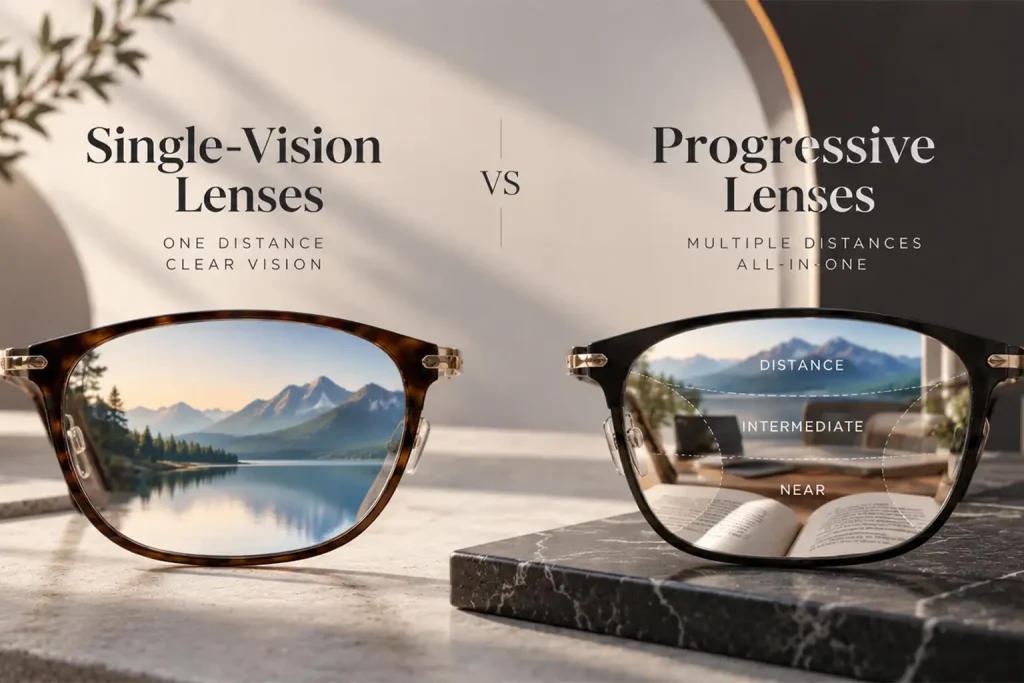
Single vision lenses use one prescription range across the lens and are typically intended for one primary viewing distance.
Progressive lenses combine several prescription zones within one continuous lens surface, allowing the wearer to move between distance, intermediate, and near vision.
This difference can influence visual performance, adaptation, peripheral vision, and the way the wearer uses their eyes and head throughout the day.
Progressive Lenses for Reading and Driving
Progressive lenses for reading and driving can be useful for people who regularly switch between near and distance vision during the day.
For reading, the lower portion of the lens provides near vision, while the upper portion supports distance vision. This allows the wearer to read a document, look across a room, or check a smartphone without changing glasses.
For driving, progressive lenses can provide clear distance vision while still giving access to intermediate vision for the dashboard and near vision when necessary.
However, the experience can vary depending on prescription strength, lens design, fitting accuracy, and how often the wearer moves between different viewing distances.
For people who spend long periods reading or doing close work, dedicated single vision reading lenses may still provide a wider and more comfortable near-viewing area. Pasted markdown Pasted markdown

Single Vision Lenses for Computer Use
Single vision lenses for computer use are designed to provide clear vision at a specific working distance, usually around the distance between the eyes and a computer screen.
Because the prescription remains consistent across the lens, they can offer a wide and stable field of vision for prolonged desk work.
They may be particularly suitable for people who spend many hours working at a computer and do not need frequent changes between near, intermediate, and distance vision.
Progressive lenses also provide intermediate vision, but wearers need to look through the correct area of the lens. For some users, occupational or computer-specific lens designs may provide another practical option. Pasted markdown
Smartphone and Digital Device Use
Modern visual habits involve frequent switching between distant surroundings and nearby digital screens.
Progressive lenses can be convenient for people who regularly move between these distances.
A wearer can look through different areas of the same lens instead of repeatedly removing or changing glasses. Pasted markdown
Why Progressive Lenses May Require an Adaptation Period
A first-time progressive wearer may need some time to become familiar with the different optical zones.
For example, the wearer gradually learns where to look through the lens for:
- Distance
- Computer work
- Reading
Some people become comfortable quickly, while others require more time.
Proper frame fitting, prescription accuracy, lens measurements, and progressive lens design can all influence the adaptation experience.
Modern digital lens production has helped improve this process considerably. Pasted markdown
How Digital Freeform Technology Changed Progressive Lenses
Older progressive lens designs were often associated with relatively narrow viewing zones and more noticeable peripheral distortion.
Modern digital freeform technology allows the lens surface to be calculated and manufactured with greater precision.
Depending on the lens design, this can help provide:
- Wider usable vision areas
- Smoother transitions between distances
- Improved peripheral comfort
- Better adaptation
- Greater personalization
Some advanced progressive lenses can also take individual wearing parameters and lifestyle requirements into account.
This is one of the reasons modern progressive lenses can offer a significantly different visual experience from older generations of multifocal lenses. Pasted markdown
Advantages of Single Vision Lenses
Single vision lenses remain one of the most widely used eyeglass lens designs because of their simplicity and efficiency.
Key advantages include:
- Wide field of vision for one distance
- Minimal adaptation
- Simple optical design
- Good visual clarity
- Often lower cost than advanced multifocal designs
They can be particularly suitable when the wearer needs correction mainly for one viewing distance. Pasted markdown
Advantages of Progressive Lenses
The main advantage of progressive lenses is versatility.
One pair of glasses can provide useful vision across several distances.
Benefits may include:
- Distance, intermediate, and near correction
- No visible bifocal line
- Less need to carry several pairs of glasses
- Convenient transitions between everyday tasks
- Modern digital customization options
They are particularly useful for people whose daily routine requires frequent changes in viewing distance. Pasted markdown
When Single Vision Lenses May Be the Better Option
Single vision lenses may make more sense when:
- Only one viewing distance requires correction
- Maximum width of a specific viewing area is important
- The glasses are intended for a dedicated task
- The wearer prefers a simple lens design
- A separate pair of reading or computer glasses is acceptable
There is no requirement to move to progressive lenses simply because they are more advanced.
The lens should match the wearer’s actual visual needs. Pasted markdown
When Progressive Lenses May Be More Practical
Progressive lenses may be worth considering when someone regularly needs vision correction for several distances.
For example, they may be useful for a person who needs to:
- Drive
- Work on a laptop
- Read documents
- Check a smartphone
- Interact with people across a room
Instead of changing glasses throughout the day, these activities can often be managed with one pair. Pasted markdown
Lens Design Is Only Part of the Decision
Choosing between progressive and single vision lenses should not be based only on age.
Other important factors include:
- Prescription
- Working distance
- Reading habits
- Screen use
- Driving frequency
- Frame size and fit
- Previous lens experience
- Lifestyle
Two people with similar prescriptions may therefore prefer completely different lens solutions. Pasted markdown
Why Frame Selection Matters
The frame also influences how the final lenses perform.
This is particularly relevant for progressive lenses because sufficient vertical lens space is needed to accommodate different viewing zones.
Accurate fitting measurements are also important.
Frame position, pupillary distance, fitting height, and the way the glasses sit on the wearer’s face can all affect the final visual experience.
For this reason, lens and frame selection should ideally be considered together. Pasted markdown
Modern Lens Solutions for Different Visual Needs
Eyeglass lens technology now includes far more than basic distance or reading correction.
Depending on the wearer’s requirements, modern options may include:
- Single vision lenses
- Progressive lenses
- Occupational lenses
- Digital device lenses
- Personalized freeform lenses
- High-index materials
- Specialized lens coatings
Smart Vision develops lens solutions designed for different prescriptions and everyday visual demands, including modern single vision and progressive lens designs. Pasted markdown
Which Lenses Are Best for Everyday Use?
Which lenses are best for everyday use depends on how many viewing distances you need to see clearly during a typical day.
If one distance is your main priority, such as distance vision, reading, or computer work, a single vision lens may provide a simple and effective solution.
If your daily routine involves frequent switching between distance, intermediate, and near tasks, progressive lenses may offer greater convenience by combining these viewing zones into one pair of glasses.
Prescription requirements, reading habits, screen use, driving frequency, frame fit, previous lens experience, and lifestyle should all be considered before choosing a final lens design. Pasted markdown
Final Thoughts
Single vision and progressive lenses are not competing solutions designed for the same purpose.
They solve different visual problems.
Single vision lenses provide focused correction for one viewing distance, while progressive lenses combine several viewing zones into one lens.
The right choice depends on how your eyes are used throughout the day, not simply on which technology is newer.
As digital lens design and freeform manufacturing continue to develop, eyeglass lenses are becoming increasingly adaptable to individual visual needs and modern lifestyles. Pasted markdown