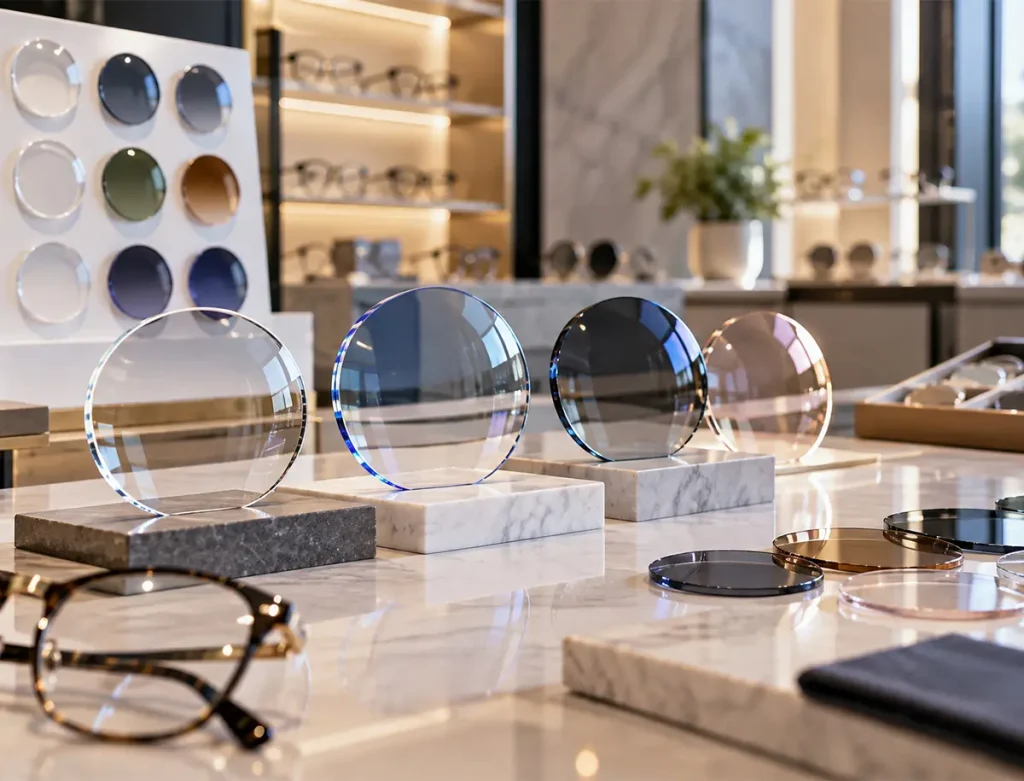


Eyeglass Lens Market Trends: What Optical Retailers Should Know in 2026
Most Popular Eyeglass Lenses: What Modern Customers Really Look For
Choosing eyeglass lenses has become a much more personal decision than it was a decade ago. Today, customers walking into an optical store are not simply asking for lenses that correct their prescription. They are looking for solutions that fit their routines, improve everyday convenience, and provide a more comfortable visual experience.
Someone who spends eight hours working at a computer may have completely different expectations from a customer who frequently drives, enjoys outdoor activities, or needs clear vision at several distances.
This shift in consumer behavior has encouraged optical professionals to offer a wider selection of lens designs, materials, and coatings. From traditional single-vision lenses to advanced progressive designs, modern eyewear technology now addresses a broad range of visual requirements.
Understanding these options is essential for anyone looking to explore the complete guide to modern eyeglass lenses and discover which lens categories are gaining attention in today’s optical market.
What Makes Certain Eyeglass Lenses More Popular?
The popularity of a lens depends on more than its optical specifications. Customers generally respond to products that offer clear benefits in situations they encounter every day.
For example, an office employee may prioritize comfortable computer viewing, while an active professional might appreciate lenses that respond to changing outdoor light conditions.
Several factors influence purchasing decisions in optical stores:
-
Everyday usability: Lenses that suit work, travel, reading, and other daily activities.
-
Visual clarity: Optical designs and coatings that help provide clear, consistent vision.
-
Personal comfort: Solutions selected according to individual prescriptions and viewing habits.
-
Convenience: Lens technologies that reduce the need to switch between different pairs of glasses.
-
Long-term value: Durable materials, reliable coatings, and designs that remain practical over time.
Rather than selecting the most technologically advanced option, many customers prefer lenses that offer the right combination of performance, convenience, and affordability.
Anti-Reflective Coatings: A Practical Upgrade for Everyday Eyewear
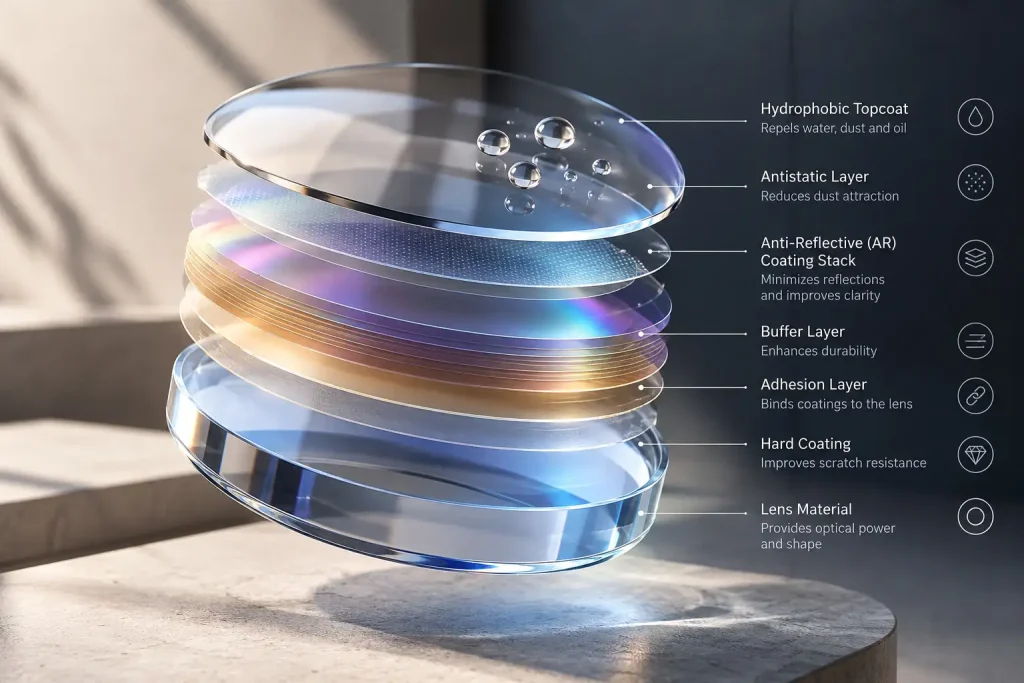
One of the most familiar recommendations in an optical store is an anti-reflective (AR) coating.
Although technically a lens treatment rather than a separate prescription lens design, anti-reflective technology has become an important part of modern eyewear.
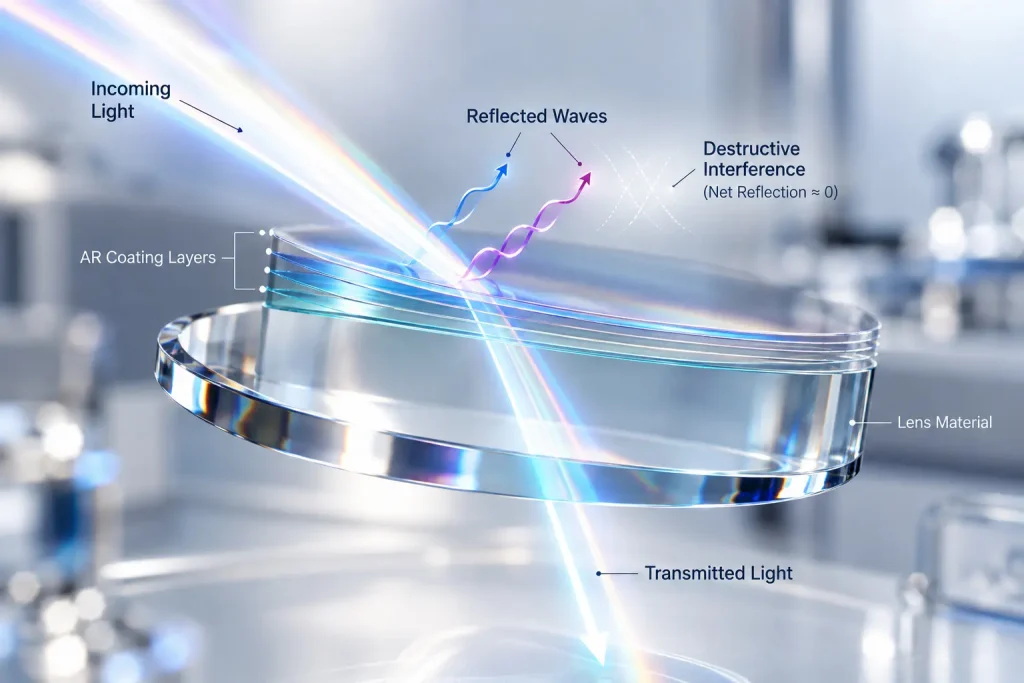
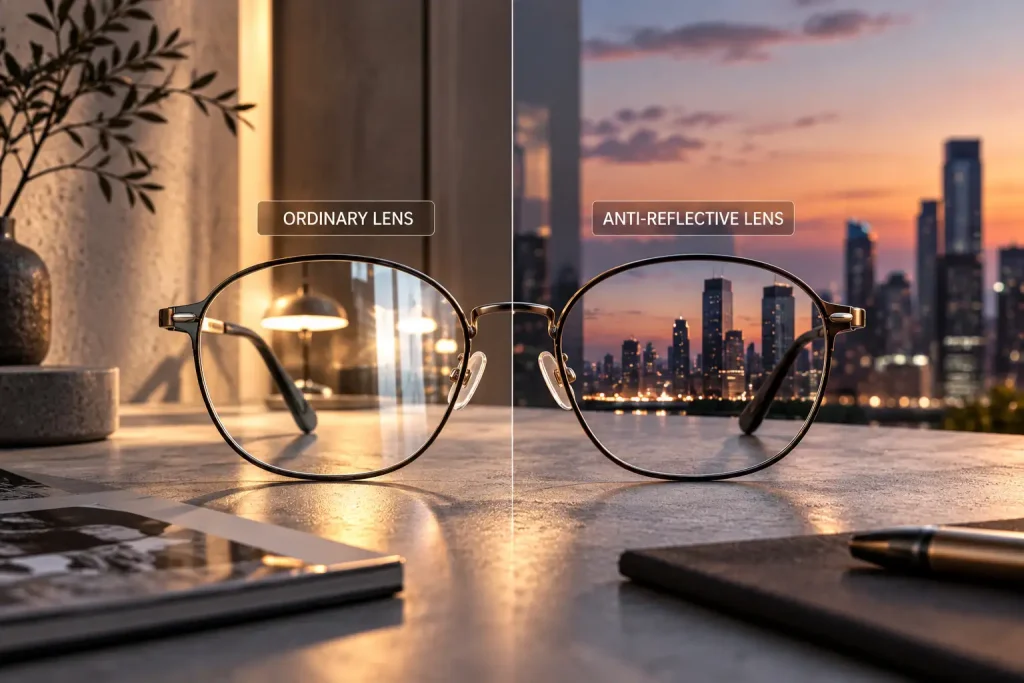
By reducing reflections from the lens surfaces, these coatings improve lens transparency and can make glasses more comfortable to wear in environments with artificial lighting.
They are particularly useful for people who regularly experience distracting reflections while working, communicating face-to-face, or using digital devices.
Why Customers Choose Anti-Reflective Lenses
-
Reduced reflections on lens surfaces
-
Improved cosmetic transparency
-
Clearer visibility of the wearer’s eyes
-
Less distraction from certain light reflections
-
Compatibility with many prescription lens designs
Because anti-reflective coatings can be combined with single-vision, progressive, and other prescription lenses, they remain a versatile option for optical retailers.
Progressive Lenses: A Convenient Solution for Changing Vision
As people reach their forties and beyond, near-vision tasks often become more challenging because of presbyopia, an age-related reduction in the eye’s ability to focus on nearby objects.
Progressive lenses offer a practical solution by incorporating several viewing powers into a single lens.
Instead of switching between reading glasses and distance glasses, wearers can use different areas of a progressive lens for different visual tasks.
These designs typically support three main viewing zones:
-
Distance vision: For activities such as walking and looking across a room.
-
Intermediate vision: For computer monitors and objects at arm’s length.
-
Near vision: For reading, checking a smartphone, and other close-up tasks.
Unlike traditional bifocals, progressive lenses provide gradual power transitions without a visible dividing line.
Their combination of functionality and appearance makes them an important premium category for optical businesses.
However, proper measurements, frame selection, and adaptation are essential for achieving a satisfactory wearing experience.
Photochromic Lenses: Comfort That Responds to Sunlight
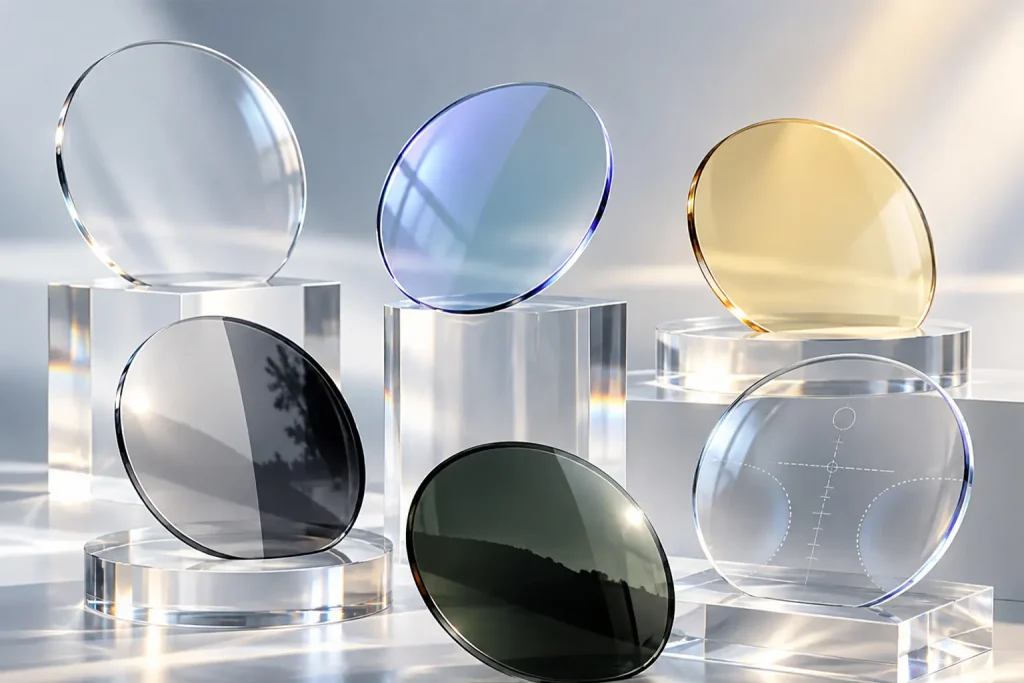
For customers who move frequently between indoor and outdoor environments, photochromic lenses offer an appealing combination of prescription correction and changing light transmission.
These lenses react to ultraviolet light and, depending on the technology, other light conditions. They generally become darker outdoors and return toward a clearer state indoors.
This adaptive behavior makes them useful for commuting, traveling, outdoor walking, and other daily activities involving changing lighting conditions.
What Makes Photochromic Technology Attractive?
Photochromic lenses provide several practical advantages:
-
Automatic changes in lens tint under suitable conditions
-
Greater comfort in bright outdoor environments
-
UV protection in properly specified products
-
Reduced dependence on carrying a separate pair of prescription sunglasses for some activities
Their performance can vary according to temperature, lens technology, and environmental conditions. Some conventional photochromic lenses may also darken less effectively inside vehicles because windshields block much of the ultraviolet light needed for activation.
Nevertheless, their convenience continues to make them an attractive option for consumers seeking flexible everyday eyewear.
How Lens Brands Help Optical Stores Offer Better Choices
As consumer expectations become more specific, optical businesses increasingly benefit from offering lens collections that cover different prescription requirements, lifestyles, and price segments.
Brands such as Schneider Lenses, Smart Vision Lenses, and Sky Lenses contribute to this diverse optical landscape by providing lens solutions for a variety of visual needs.
For retailers, the advantage of working with established lens brands is not simply having more products on display. It is the opportunity to recommend suitable optical designs and coatings based on each customer’s prescription, expectations, and daily activities.
A well-balanced collection may include conventional single-vision lenses, progressive designs, photochromic options, and specialized treatments for different wearing preferences.
This approach allows optical stores to move beyond basic product sales and provide a more personalized customer experience.
BlueCut and BlueControl: Lens Options for Digital Lifestyles
Computers, smartphones, and tablets have become essential tools for work, communication, education, and entertainment.
Naturally, this has created greater consumer interest in eyewear products marketed for digital environments.
Among the available options, BlueCut and BlueControl lenses are frequently discussed as choices for people who spend considerable time using electronic devices.
BlueCut Lenses for Everyday Screen Users
BlueCut lenses incorporate filtering technologies designed to manage portions of blue-violet light transmission.
These products may appeal to customers who want particular light-filtering characteristics while maintaining a clear everyday lens appearance.
They can be considered by people who regularly use:
-
Laptop and desktop computers
-
Smartphones
-
Tablets
-
Digital learning platforms
It is important to distinguish consumer preferences from proven clinical benefits. Current research has not established that blue-light filtering lenses reliably prevent digital eye strain compared with ordinary clear lenses.
For screen-related discomfort, prescription accuracy, appropriate viewing distance, regular breaks, and proper lighting remain important considerations.

BlueControl Lenses for Screen-Focused Work Environments
BlueControl is another lens category associated with digital lifestyle applications.
Depending on the specific product design, these lenses may offer light-management characteristics suited to customers interested in specialized eyewear for technology-centered routines.
Professionals who may ask about such options include software developers, graphic designers, engineers, students, and office employees.
However, choosing the right lenses for extended computer work involves more than selecting a blue-light filter.
An accurate prescription, suitable intermediate viewing distance, lens design, and workspace ergonomics all contribute to a comfortable visual experience.
Customers exploring this category can learn more about blue light glasses and digital eye strain.
Anti-Fatigue Lenses: Additional Support for Near-Vision Tasks
Not every customer who experiences visual discomfort needs progressive lenses.
Some younger adults who perform frequent close-up tasks may benefit from discussing specialized lens designs with an eye care professional.
Anti-Fatigue lenses are designed differently from conventional single-vision lenses. Certain designs include a small additional plus-power area intended to reduce accommodative demand during near work.
They may be considered for people who frequently alternate between viewing distant objects and performing close-up activities.
Potential users include:
-
University students with intensive reading schedules
-
Professionals working with documents and screens
-
Individuals performing prolonged near-vision tasks
-
Customers whose visual assessments indicate a need for additional near support
The suitability of these lenses depends on the wearer’s prescription and visual needs. Not all forms of digital eye discomfort can be addressed through lens design alone.
For optical retailers, Anti-Fatigue technology provides another opportunity to recommend a more individualized solution when appropriate.
Comparing Popular Eyeglass Lens Options
The table below highlights the main differences between several commonly requested lens technologies.
| Lens category | Primary purpose | Suitable for |
|---|---|---|
| Anti-Reflective | Reduces surface reflections | Everyday prescription wearers |
| Progressive | Combines multiple viewing distances | Adults with presbyopia |
| Photochromic | Adapts tint to changing light conditions | Indoor-outdoor lifestyles |
| BlueCut | Filters selected wavelengths of light | Customers interested in blue-light filtering |
| BlueControl | Offers product-specific light-management features | Users seeking screen-oriented lens options |
| Anti-Fatigue | Provides additional near support in certain designs | Selected near-work users |
These categories should not be interpreted as a universal sales ranking. Actual demand depends on prescription demographics, regional preferences, product availability, and individual customer needs.
How Should Customers Select the Right Lens?
A popular lens is not necessarily the most appropriate choice for everyone.
The best recommendation begins with a professional assessment and a clear understanding of how the customer uses their eyes throughout the day.
For People Working Long Hours at a Computer
Correct prescription power, comfortable intermediate focus, and reduced environmental glare should be priorities.
Specialized computer lenses may be more appropriate for some users than a blue-light filtering treatment alone.
For Customers Over 40
Progressive lenses may help people experiencing presbyopia manage distance, intermediate, and near-vision activities using a single pair of glasses.
For Active Outdoor Lifestyles
Photochromic lenses can offer convenient sunlight adaptation, especially for customers who regularly move between indoor and outdoor settings.
For Customers Concerned About Reflections
A high-quality anti-reflective coating can improve lens transparency and reduce unwanted surface reflections.
For Intensive Reading and Near Work
Anti-Fatigue or other task-specific lens designs may be worth discussing with an optical professional, depending on the individual’s visual assessment.
The most effective approach is to match lens specifications with actual visual requirements rather than relying on popularity alone.
Smart Vision Lenses: A Collection Built Around Modern Visual Needs
The growing variety of lens technologies has created an opportunity for optical brands to develop collections that address different aspects of daily vision.
Smart Vision Lenses offers a range of solutions reflecting the needs of modern eyewear customers, from practical everyday options to more specialized lens categories.
Its product portfolio includes technologies such as:
BlueCut Lenses
Light-filtering solutions for customers interested in lens options associated with digital lifestyles.
BlueControl Lenses
Specialized light-management options for people who want to explore additional lens features.
Anti-Fatigue Lenses
Lens designs intended to provide extra near-vision support for suitable wearers.
Photochromic Lenses
Adaptive prescription lenses that respond to changes in lighting conditions.
Anti-Reflective Lens Coatings
Surface treatments designed to reduce reflections and improve lens transparency.
By bringing together several commonly requested technologies, Smart Vision Lenses gives optical professionals opportunities to address a wider variety of customer requirements.
The goal is not to recommend the same premium upgrade to everyone, but to help each customer select a lens solution that makes sense for their prescription and lifestyle.
Where Is Consumer Demand for Eyeglass Lenses Heading?
The optical industry continues to evolve as lens manufacturers refine existing technologies and introduce more specialized designs.
Several developments are shaping purchasing decisions.
Personalized visual solutions are becoming increasingly important as consumers recognize that reading, computer work, driving, and outdoor activities involve different visual demands.
Convenience-focused technologies, including photochromic lenses and multifocal designs, appeal to customers who want their eyewear to function across multiple environments.
Premium lens treatments also remain relevant, with attention given to optical transparency, surface durability, and ease of maintenance.
At the same time, customers are becoming more informed about the differences between marketing claims and measurable product benefits.
For optical retailers, this makes accurate product information and personalized recommendations increasingly valuable.
Rather than focusing exclusively on the newest technology, successful lens collections should combine proven optical solutions with innovations that offer meaningful advantages for suitable wearers.

Final Thoughts: The Right Lens Matters More Than the Trend
The most popular eyeglass lenses reflect the changing expectations of modern consumers. Anti-reflective coatings, progressive designs, photochromic technology, and specialized near-vision solutions each address different aspects of everyday life.
BlueCut and BlueControl products also occupy a place in the market for customers interested in digital-lifestyle lens features, although their benefits should be communicated accurately and without unsupported medical claims.
Ultimately, long-term customer satisfaction depends on choosing lenses that deliver appropriate vision correction, reliable quality, and practical comfort.
As the optical industry continues to advance, Smart Optik stands as a major company in the optical sector, positioning itself as one of the best eyeglass lens manufacturers through its commitment to quality, product diversity, and modern optical solutions. By focusing on evolving consumer expectations and the needs of optical professionals, Smart Optik aims to contribute to a future where advanced lens technologies make clearer, more comfortable vision accessible to a wider range of customers.